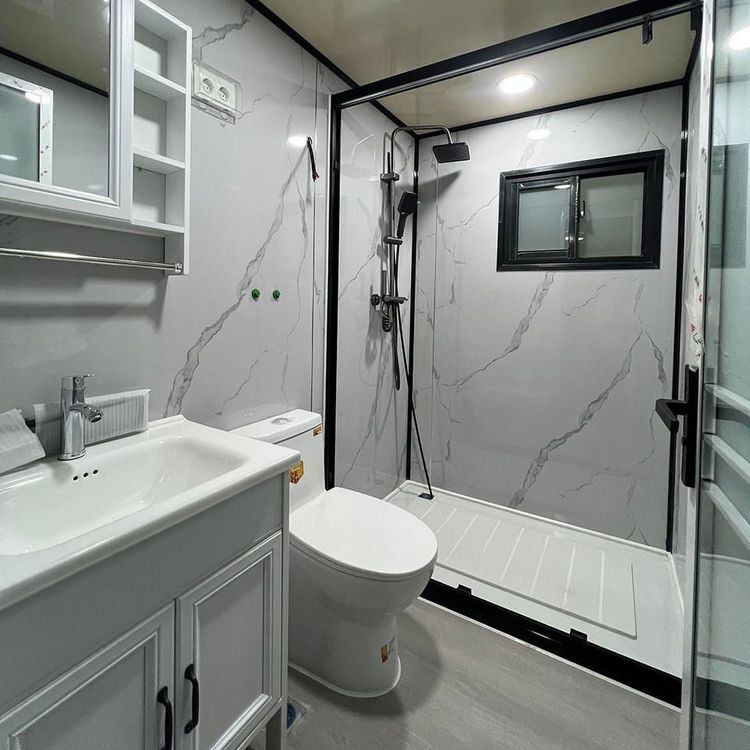
Zhuzhou Mobile Toilet Sewage Pump
Currently, there is no specific product information or related technical data available regarding the 'Zhuzhou Mobile Toilet Sewage Pump'. The following provides a general explanation of the working principles, common types, and key selection considerations for mobile toilet sewage pumps:

Working Principles of Mobile Toilet Sewage Pumps
The core function of a mobile toilet sewage pump is to transport sewage collected in the toilet to a designated treatment or discharge location through mechanical means. Its working principles are typically based on centrifugal pump or screw pump technology:
- Centrifugal Pump: Driven by an electric motor, the impeller rotates at high speed, generating centrifugal force to push sewage from the suction end to the discharge end. It is suitable for sewage containing a small amount of solid particles.
- Screw Pump: Utilizes the rotational motion of a screw to form sealed chambers, gradually squeezing sewage from one end to the other. It is suitable for handling high-viscosity or fiber-containing sewage, but at a higher cost.
Common Types and Characteristics
- Submersible Sewage Pump
- Directly immersed in the sewage tank, requiring no additional installation space, and featuring a compact structure.
- Equipped with anti-corrosion and anti-entanglement designs to adapt to debris that may be present in mobile toilets.
- Dry Sewage Pump
- Installed outside the sewage tank and connected via pipes, facilitating easier maintenance.
- Requires a配套 (should be '配套' changed to '配套's proper English equivalent, here it means 'matching') sealing device to prevent sewage leakage, with higher requirements for the installation environment.
- Self-Priming Sewage Pump
- Can retain a certain amount of liquid in the pump body, eliminating the need for manual priming during startup, and suitable for intermittent sewage discharge scenarios.
Key Selection Parameters
- Flow Rate and Head: Select a matching model based on the number of users of the mobile toilet and the height of the sewage pipe to ensure smooth sewage discharge.
- Material Corrosion Resistance: Prioritize stainless steel or engineering plastic pump bodies to resist corrosion from urine, disinfectants, and other chemicals.
- Flow Passage Component Design: The impeller or screw should have anti-clogging capabilities, such as adopting wide flow passages or open impeller structures.
- Noise Control: Mobile toilets are often used in public places, so a low-noise motor (usually ≤65 decibels) should be selected.
Maintenance Considerations
- Regularly clean debris from inside the pump body to prevent impeller blockage.
- Check the wear condition of seals and replace them promptly to prevent leakage.
- In winter, drain the water from the pump to prevent freezing and cracking.
For further information on specific products, it is recommended to contact mobile toilet manufacturers or professional sewage equipment suppliers, providing parameters such as usage scenarios and sewage volume to obtain customized solutions.