Why Container House Design Matters: A Quick Guide
Container house design is crucial as it integrates cost-effectiveness, sustainability, and adaptability, meeting the diverse needs of modern society.

1. Economy and Affordability
Global housing prices are rising much faster than income growth, making traditional housing prohibitively expensive. Container houses offer an entry-level living option at extremely low costs (just a fraction of conventional housing), making them particularly suitable for budget-constrained groups. Their modular design reduces land, material, and labor costs, making housing more accessible.
2. Environmental Protection and Sustainability
Container houses significantly reduce embodied carbon and construction waste by repurposing industrial-grade steel containers. Statistics show that each repurposed container can reduce carbon dioxide emissions by approximately 3.5 tons, aligning with global carbon neutrality goals. Additionally, their modular structure supports future disassembly and reassembly, extending material lifecycles and further reducing environmental burdens.
3. Rapid Deployment and Flexible Expansion
Container houses use standardized components that can be assembled in weeks, much faster than traditional buildings. Their modular nature allows for horizontal or vertical expansion, accommodating family growth or functional changes (such as adding offices or guest rooms). This flexibility makes them ideal for temporary housing, remote area residences, or mobile homes, especially契合 (fitting well with) the demands of “remote work” and the “side hustle economy” (such as Airbnb short-term rentals).
4. Structural Strength and Durability
Industrial-grade steel containers inherently possess high strength, capable of withstanding extreme weather and transportation impacts. During renovation, reinforcing steel frames, installing anti-corrosion cladding (such as electrostatic spray-coated steel plates), and optimizing load distribution ensure the house can withstand general residential or light storage needs. In harsh environments (such as coastal or high-humidity areas), surface treatment technologies can extend the lifespan to over 50 years.
5. Aesthetics and Functional Customization
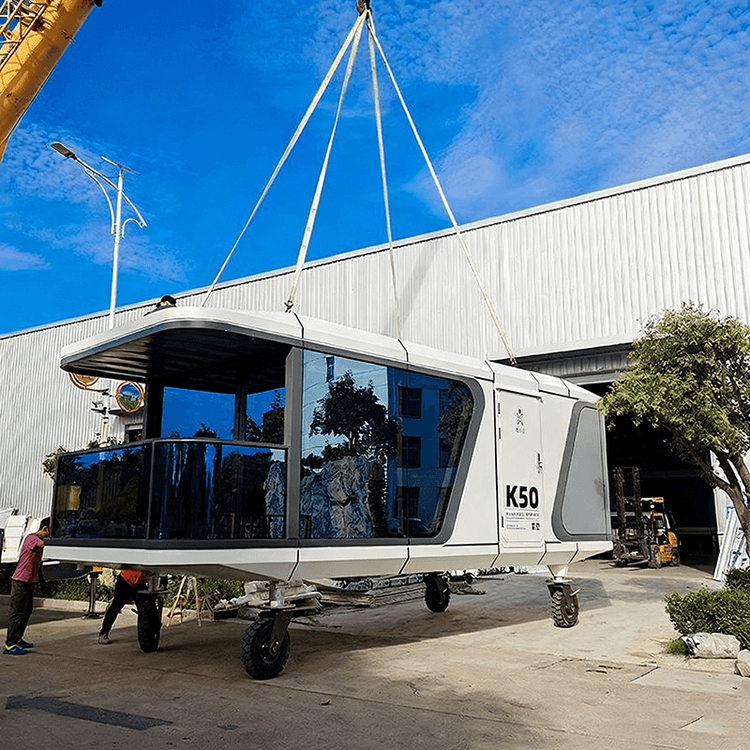
Container houses break away from traditional architectural forms, achieving modern minimalist or industrial designs through cutting, welding, and surface treatments. Their exposed steel structures and clean lines attract users seeking unique spaces, while interior layouts can be fully customized to balance practicality and personalization needs.
6. Climate-Adaptive Design
For different climates, container houses require optimized ventilation, insulation, and sealing systems. For example, while their enclosed box structure provides rain and dust protection, additional passive cooling (such as sunshades and vents) or active air conditioning may be needed in hot regions; in cold regions, enhanced insulation and double-glazed windows are necessary. These designs ensure居住舒适性 (residential comfort) and expand their geographical applicability.
7. Alignment with Lifestyle Trends
With the rise of “nomadic work” and the “tiny house” movement, container houses offer a mobile, cost-effective alternative. Their compact spaces (typically 20-40 square meters) encourage minimalist living, while modular designs support rapid functional transitions (such as switching between office and residential modes), meeting modern demands for flexible living.