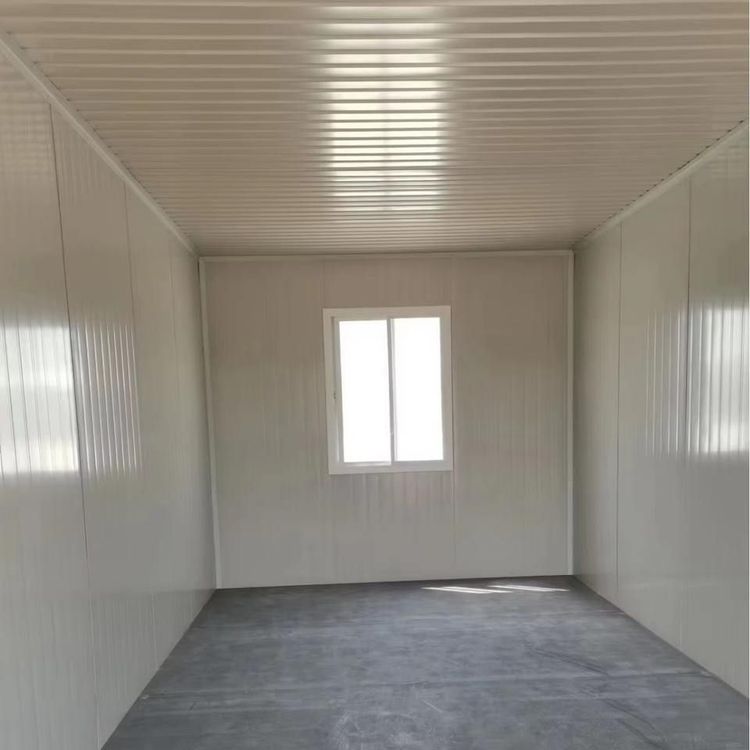
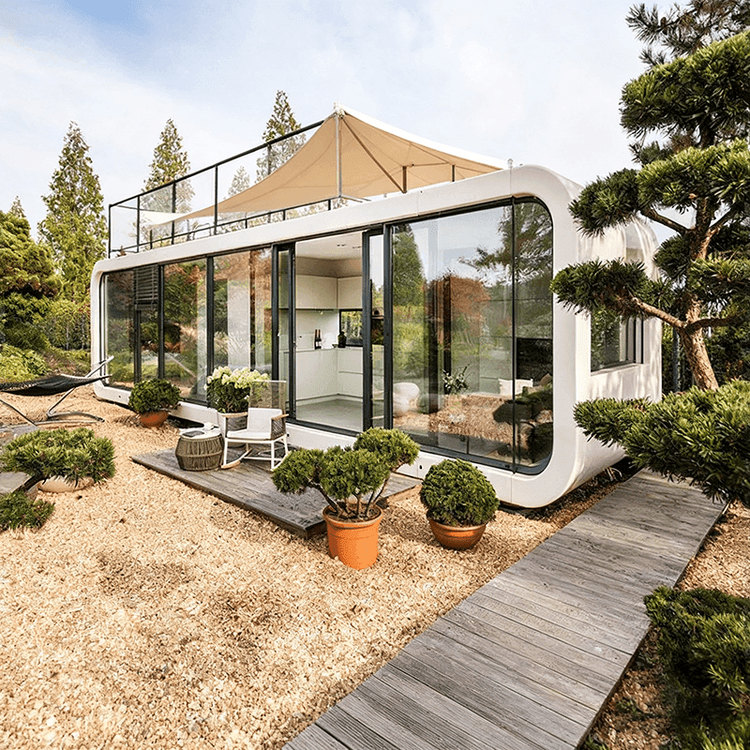
Prefabricated Installation of Rural Houses
Prefabricated installation of rural houses is a new and efficient construction model that achieves house building through factory-prefabricated core components and rapid on-site assembly, featuring short construction periods and a high degree of standardization.

Core Construction Process and Technical Characteristics
In this model, core components such as walls, floor slabs, beams, and columns are all prefabricated in factories using standardized production lines. The dimensional accuracy of the components can reach the millimeter level, and their quality stability is far superior to that of traditional on-site pouring. Taking the first "fully prefabricated" rural house in Yuyao City, Zhejiang Province, as an example, its main structure took only about 7 days to build, shortening the construction period by more than 60% compared to traditional brick-concrete structures. In Jiangbei, Ningbo, prefabricated components with a panel structure are used, and mechanical bolts are employed for connection, significantly improving on-site installation efficiency. In rural areas of Hebei Province, large components such as columns, beams, and wall panels are produced on factory assembly lines and then transported to the homestead for assembly like building with Lego blocks. From the pilot launch in 2022 to the end of 2025, a total of 20,000 rural households in the province have voluntarily chosen this construction method, demonstrating significant results in large-scale application.
Connection Technology and Structural Stability
The connection method of prefabricated components is crucial for ensuring the safety of the house. For example, in one case, a 5-ton foundation pile is fixed with a base plate, and the beams are quickly connected using mortise-and-tenon joints. The stairs are installed by lifting, and the floor slabs are laid with a thickness of 5 centimeters. Finally, grouting is applied to all component gaps to form an overall load-bearing structure. In the pilot project in Hebei Province, the mechanical bolt connection method uses high-strength bolts to achieve rigid connections between components, capable of withstanding an 8-magnitude earthquake. The mortise-and-tenon joint structure utilizes the mechanical advantages of traditional craftsmanship to enhance the shear resistance of the joints, ensuring the stability of the house in extreme weather conditions.
Efficiency and Cost Advantages
Compared with traditional construction methods, the prefabricated installation model can significantly shorten the construction period. For example, one project took only 14 days to complete the main structure, saving 2-3 months compared to traditional methods. Factory prefabrication reduces on-site wet work (such as concrete pouring and bricklaying), lowering labor costs by about 30% while avoiding the impact of weather on construction. In addition, standardized components can be mass-produced, increasing material utilization to over 90% and further reducing construction costs.
Application Prospects and Policy Support
With the advancement of the rural revitalization strategy, prefabricated rural houses have become an important direction for rural construction due to their advantages of being environmentally friendly, efficient, and quality-controllable. Regions such as Hebei and Zhejiang have encouraged farmers to adopt this method through pilot promotions and financial subsidies. In the future, it is expected to be popularized nationwide, driving the industrial transformation of rural construction.