
Mobile Cabin as Toilet
Transforming a mobile cabin into a toilet requires comprehensive consideration of principles such as mobility, cost-effectiveness, durability, and environmental friendliness, while also referencing the design and functional characteristics of mobile toilets for the transformation.
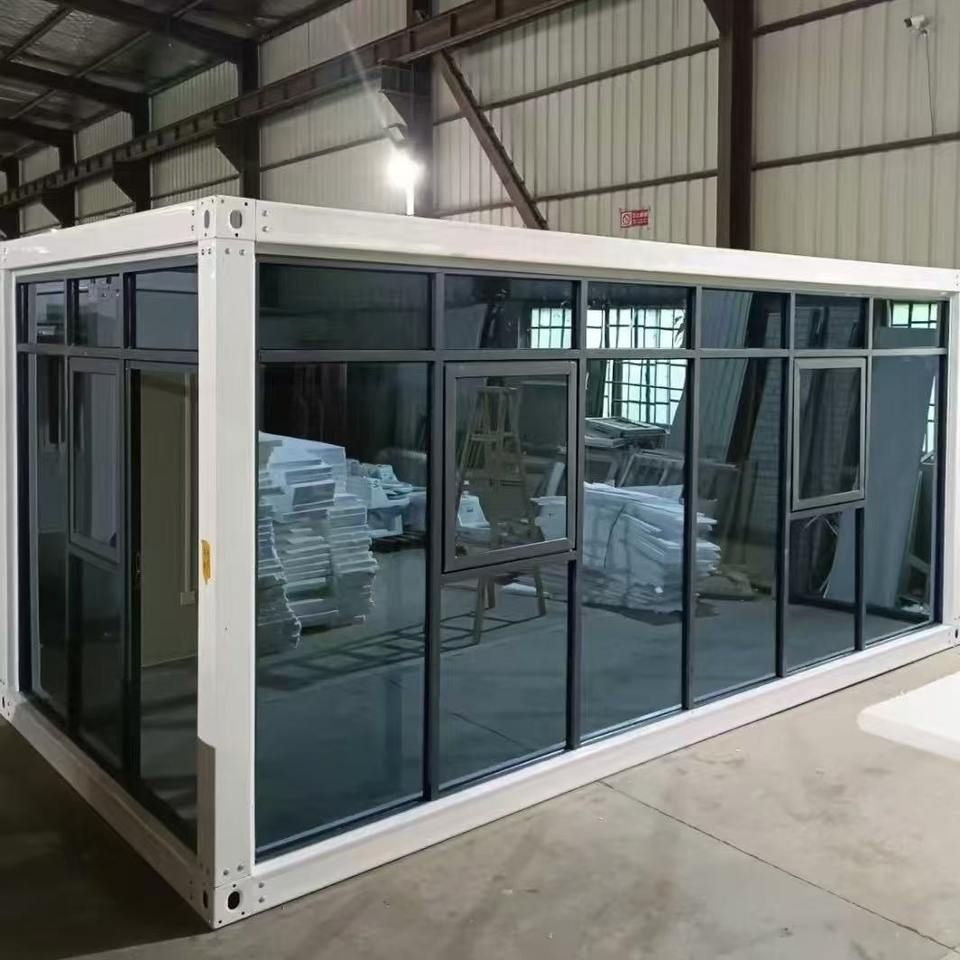
Firstly, the overall structure and material selection are crucial. When transforming a mobile cabin into a toilet, lightweight yet durable materials such as metal carved panels should be used for the overall structure to ensure robustness and ease of movement. For example, the steel-structured public toilet in Xining, which is a mobile and environmentally friendly toilet, uses metal carved panels with dimensions of 480022002900, ensuring structural stability while facilitating overall movement and installation.
Secondly, the design of the mobile device must be complete and reasonable. Mobile toilets can be moved in various ways, including lifting and carrying types, powered and towed types, etc. During the transformation, an appropriate moving method should be selected based on the specific conditions and actual needs of the mobile cabin, and corresponding mobile devices such as wheels and tow hooks should be equipped to ensure convenience and safety during the moving process.
Furthermore, the configuration of internal facilities must meet the basic functional requirements of a toilet. A mobile toilet generally consists of a fecal sewage storage tank (or fecal sewage treatment device), floor, sanitary ware, walls, washing facilities, water tank, roof, etc. During the transformation, the internal space should be reasonably planned, and corresponding sanitary ware and washing facilities such as toilets and washbasins should be configured, along with a fecal sewage storage tank or treatment device to ensure the normal use of the toilet and compliance with environmental requirements.
Lastly, environmental friendliness is also an aspect that cannot be overlooked. During the transformation, environmentally friendly sewage treatment methods such as water flushing, non-water flushing suction, circulating water flushing, or dry packing should be considered to reduce environmental pollution. Additionally, energy-efficient water tanks and lighting fixtures can be selected to reduce energy consumption and achieve green environmental protection.



