
Custom Production of Mobile Toilets
Mobile toilets support custom production and can achieve diverse designs according to different needs.
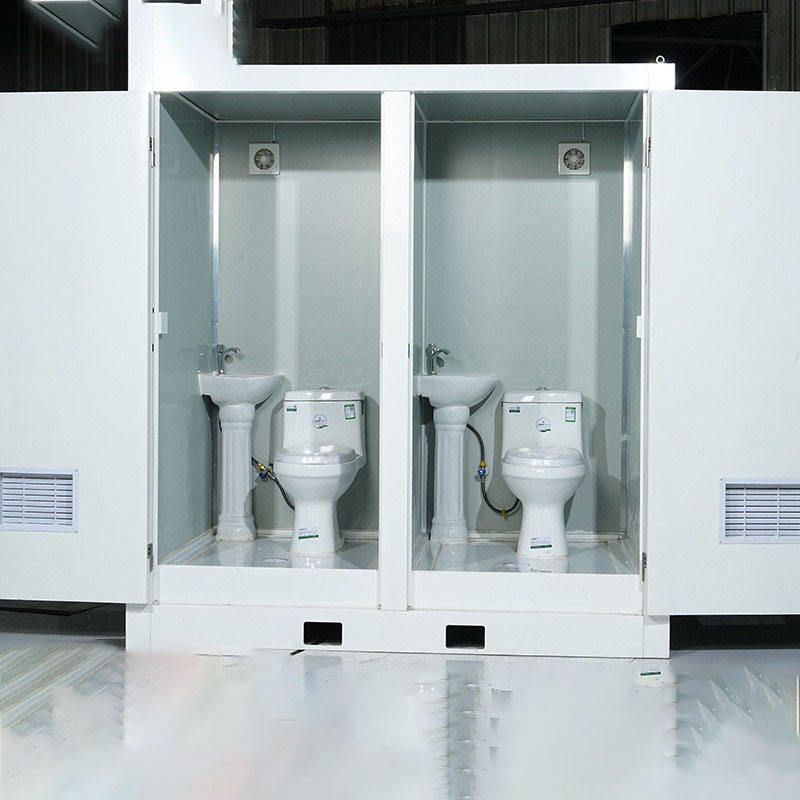
The custom production of mobile toilets mainly revolves around structural frameworks, exterior materials, functional configurations, and design aesthetics to meet the usage requirements of various scenarios.
1. Customization of Structural Frameworks
In custom production, the structural framework is the core supporting component. For example, Taihe Mobile Toilet Manufacturer employs steel structural framework welding technology to ensure overall stability; some manufacturers use galvanized square steel framework welding, which offers stronger corrosion resistance and is suitable for long-term outdoor use. The framework design can be adjusted in terms of size and load-bearing structure according to the on-site environment, such as designing reinforced bases for mountainous or uneven terrain, or customizing lightweight frameworks for areas around high-rise buildings to reduce transportation difficulties.
2. Selection of Exterior Materials
Exterior materials directly affect the durability and aesthetic appeal of mobile toilets. Common options include:
- Sheet Metal Painting: Low cost, customizable colors, suitable for short-term events or temporary venues;
- Metal Embossed Panels: With thermal insulation and corrosion-resistant properties, suitable for cold northern regions or coastal humid environments;
- Double-Roof Design: Enhances rainproof performance by adding layers to the roof while improving visual appeal.
Some manufacturers also support custom designs based on customer drawings, such as incorporating space capsule elements into the exterior design to create a tech-inspired or themed style.
3. Expansion of Functional Configurations
Functional customization is one of the core advantages of mobile toilets. Basic configurations include squat toilets, water tanks, exhaust fans, and lighting fixtures, but additional features can be added based on needs:
- Smart Devices: Such as LED displays (for showing usage status or advertisements), automatic sensor flushing systems;
- Sanitary Support Facilities: Adding barrier-free handrails, child-specific toilets, and baby care stations;
- Environmental Protection Technologies: Integrating sewage treatment systems or solar power supply units to achieve water and energy conservation.
For example, a manufacturer once customized a mobile toilet with four shared restrooms for a scenic spot, featuring comprehensive internal functions and customizable colors, with LED screens above the doors displaying real-time available toilet stalls.
4. Scenario-Specific Custom Solutions
Some manufacturers offer on-site customization services, designing exclusive solutions based on the space, foot traffic, and climatic conditions of the installation location. For example, customizing narrow double-stall structures for narrow streets or adopting wind-resistant reinforcement designs for high-altitude areas. Platforms like Alibaba also feature a wide range of custom products, covering options from simple single-stall to luxurious multi-stall units, with prices varying based on materials and functional differences.
Through the flexible combination of structure, materials, functions, and scenarios, the custom production of mobile toilets can precisely match customer needs, balancing practicality, aesthetics, and cost-effectiveness.



