
Back to blog
Article
Light Steel House and Container House
Admin September 15, 2026
There are significant differences between light steel houses and container houses in terms of building foundations, structural performance, and application scenarios:
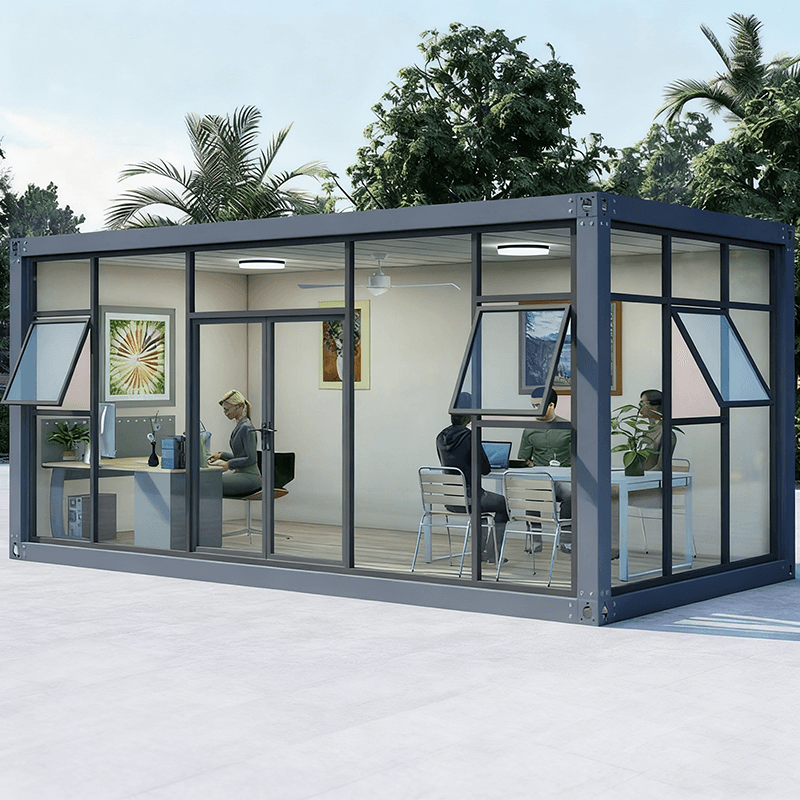
Building Foundations: Light steel houses do not use fixed container-sized modules as their building foundations. Their structural design and dimensions can be flexibly customized according to actual needs, allowing them to better adapt to different building layouts and functional requirements. In contrast, container houses use standard containers as basic units, which are combined through splicing and stacking. Their building dimensions and shapes are restricted by the original specifications of the containers.
Structural Performance:
- Light Steel Houses: These employ a light steel structural system, offering good earthquake and wind resistance. For example, some high-quality light steel houses are designed to meet high earthquake resistance standards, providing relatively safe shelter for occupants during natural disasters like earthquakes.
- Container Houses: The structural performance of container houses varies by brand and type. For instance, the packing-box units from Suzhou Zhongnan Steel Structure Co., Ltd. feature a fully steel structural frame, with a measured wind resistance rating of 12 and an earthquake resistance rating of 8. The frame deformation rate is only 0.18%, well below the industry's acceptable threshold of 0.3%. Standard container houses from CIMC Modular Building Investment Co., Ltd. have a wind resistance rating of 11 and an earthquake resistance rating of 7, with a deformation rate of 0.27%. However, some non-standard, unbranded products typically have frame deformation rates exceeding 1.2%, leading to issues like wall cracking and frame tilting under simulated typhoon conditions, posing safety risks.
Application Scenarios:
- Light Steel Houses: These are suitable for various long-term residential and commercial building scenarios, such as homes, villas, and commercial buildings, meeting people's demands for comfort, aesthetics, and personalization.
- Container Houses: With their ability to be disassembled, relocated, and reused, container houses are widely applied in engineering camps, cultural tourism, and emergency response. For example, in engineering camps, they can be quickly erected and dismantled according to project progress and needs; in cultural tourism projects, they can serve as characteristic homestays or temporary exhibition halls; and in emergency rescue situations, they can promptly provide temporary shelter for disaster victims.



