Back to blog
Article
Japan Earthquake-Resistant Container House
Admin September 15, 2026
Japan earthquake-resistant container houses are container houses designed and constructed with special techniques to cope with earthquake disasters in Japan, possessing good earthquake resistance. The following is an introduction from aspects such as design principles, construction methods, and application scenarios:

Design Principles:
- Structural Optimization: Most earthquake-resistant container houses in Japan adopt rigid structures, which can significantly reduce the amplitude of shaking during earthquakes. For example, when a magnitude 7 or higher earthquake occurs, flexible-structure buildings generally shake about 1 meter, while rigid-structure buildings only shake 30 centimeters, effectively reducing earthquake damage to the houses.
- Material Selection: A large amount of more pressure-resistant steel structures are used, with steel structures accounting for 71% of Japanese buildings. Compared to wooden and old houses, newly built steel-structure container apartments are less likely to collapse during earthquakes. At the same time, rubber is also used to improve the earthquake resistance of buildings. For example, newly developed high-strength laminated rubber can reduce the force on buildings during earthquakes.
Construction Methods:
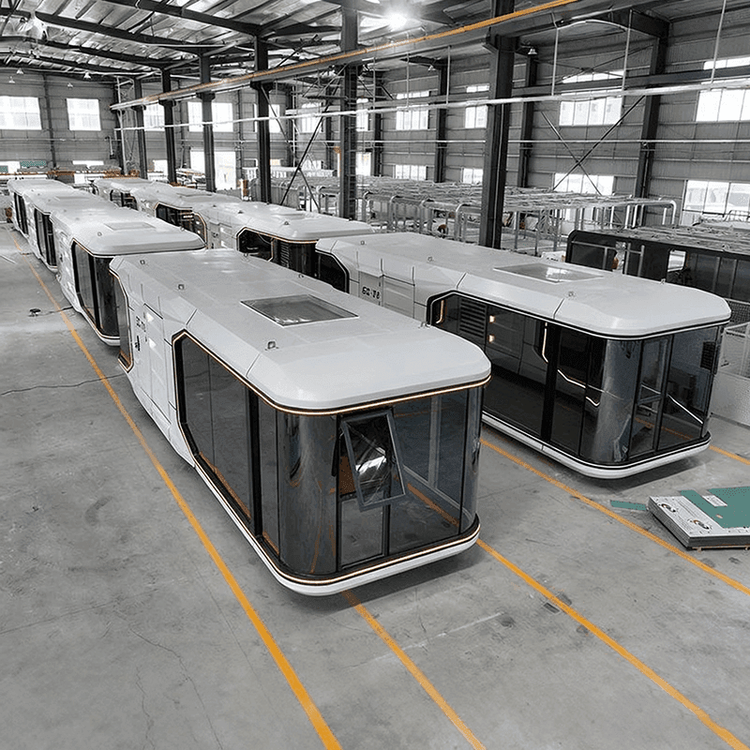
- Prefabricated Construction: Japan's world-leading prefabricated building technology is also applied to container houses. Using a component-based and factory-based production method, strict control is exercised over every detail and production process to ensure that the houses will not come apart during earthquakes and can roll as a whole without damage even during violent shaking.
- Modular Design: Container houses are designed in a modular way with a high degree of integration. They can be used individually or freely combined to meet the architectural functional requirements of different fields while also helping to improve the earthquake resistance of the houses.
Application Scenarios:
- Temporary Housing: After earthquakes and other disasters, they provide temporary living places for affected people. For example, after the 2016 earthquake in the Kumamoto region of Japan, many people lived in temporary housing, and earthquake-resistant container houses can be an ideal choice for temporary housing.
- Accommodation for Large-Scale Events: For example, for the 2026 Aichi-Nagoya Asian Games, to reduce competition costs, container houses will be used to build the Asian Games Village for athletes to live in during the games. After the Asian Games, these container houses are also planned to be converted into disaster evacuation centers and accommodation for events.
Related