
Female Mobile Toilet
Female mobile toilets are essentially types of mobile toilets that are optimized or specifically designed to meet the needs of women. For related information on mobile toilets, refer to the general details as they serve to fulfill women's restroom requirements in specific scenarios.
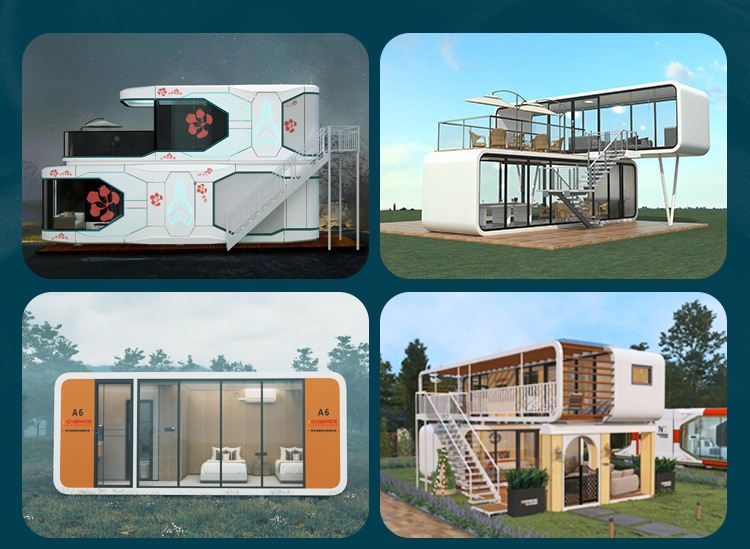
Mobile toilets have the characteristic of being movable as a whole and can be placed at locations with fixed or temporary needs, such as stations, docks, tourist attractions, etc., providing restroom services to the public and customers. They generally consist of a fecal sewage storage tank (or fecal sewage treatment device), flooring, sanitary ware, walls, washing equipment, water tanks, roofs, and mobile devices.
In terms of structural form, mobile toilets can be divided into single-structure mobile toilets and composite-structure mobile toilets. The single-structure type is relatively independent and simple, while the composite-structure type is more complex and may integrate multiple functional areas. According to the method of movement, there are lifting and handling mobile toilets, which are usually large in volume and weight and require lifting equipment for movement; and powered and towed mobile toilets, where the powered type can move on its own and the towed type requires vehicle traction.
Regarding sewage treatment methods, mobile toilets come in various types. Water-flush and waterless-flush suction mobile toilets: the former relies on water flushing for cleaning, while the latter treats fecal sewage through suction. Recirculating water-flush mobile toilets can recycle the flushing water, saving water resources. Dry-packing mobile toilets collect feces in packages and do not require water for flushing.
To address the issue of women having difficulty finding restrooms in some tourist attractions, some scenic spots have introduced "tidal toilets." For example, in Guangdong Huizhou West Lake Scenic Area, by setting up movable signs or lockable sliding doors, the usage rights are dynamically adjusted according to real-time pedestrian traffic, alleviating the long queues for women's restrooms. Some parks and scenic spots in Shenzhen, Dongguan, Hangzhou, Wuhan, and Chongqing have also started trial operations. In addition, there is information about female mobile toilet products on the Baidu Aicai platform. These products may be more tailored to women's needs in terms of internal space layout and sanitary ware configuration.



