
Photos of Portable Toilets at Construction Sites
Unfortunately, we cannot directly provide photos of portable toilets at construction sites. However, I can offer a detailed professional description of the common types, appearance features, and applicable scenarios of portable toilets at construction sites to help you form a clear understanding.

Common Types and Appearance Features
Portable toilets at construction sites mainly fall into two categories: single-unit and connected-unit types. Single-unit toilets are typically independent box structures, approximately 1.1 meters × 1.1 meters × 2.3 meters in size, resembling small containers. They are constructed using metal frames and high-strength panels (such as color-coated steel or fiberglass-reinforced plastic), with anti-rust paint applied on the surface. The colors are primarily gray, blue, or green, with ventilation openings and lighting fixtures installed on the top, and locks and indicator signs on the door sides. Connected-unit toilets consist of 2-4 single-unit boxes connected horizontally, forming a combined structure with a shared sewage system, suitable for areas with a high density of people. In terms of appearance, they maintain overall unity through consistent color schemes and signage.
Structural Design and Functional Configuration
The interior design emphasizes practicality and hygiene: the floor is made of non-slip tiles or plastic flooring, and the walls are lined with waterproof panels. They are equipped with stainless steel squat toilets or sit toilets (some high-end models offer sit toilet options), along with flushing systems (either water storage-based or connected to municipal water supplies) and exhaust fans. Some models also include additional facilities such as sinks, mirrors, and paper towel holders, with tool hooks and storage compartments typically installed behind the doors. The sewage disposal methods are divided into direct-discharge (connected to underground septic tanks) and bagging (using biodegradable plastic bags to collect waste). The former requires prior planning of sewage pipelines, while the latter achieves cleanliness through regular replacement of garbage bags.
Applicable Scenarios and Advantages
The core advantages of portable toilets at construction sites lie in their flexible deployment and rapid installation. Their modular design allows them to be directly transported to designated locations using forklifts or cranes, without the need for complex foundation construction, making them particularly suitable for construction sites with complex terrain or tight schedules. Additionally, compared to traditional brick-and-mortar toilets, mobile toilets can be relocated along with the progress of the project, avoiding resource waste. Their sealed structures effectively isolate odors, meeting environmental protection requirements. During extreme weather conditions or pandemics, some models can also be equipped with air conditioners or ultraviolet disinfection devices to enhance user comfort.
If you need specific photos, it is recommended to search for "real photos of mobile toilets at construction sites" on the official websites of engineering equipment suppliers, construction industry exhibition materials, or professional rental platforms (such as the "Engineering Equipment Rental" sections on 58.com and Ganji.com), or contact local sanitation equipment dealers to obtain product catalogs.
You may also like

Portable Toilet for Energy Efficiency Solutions: A Buying Guide
Read More
Container House Custom Explained: How to Choose the Right One
Read More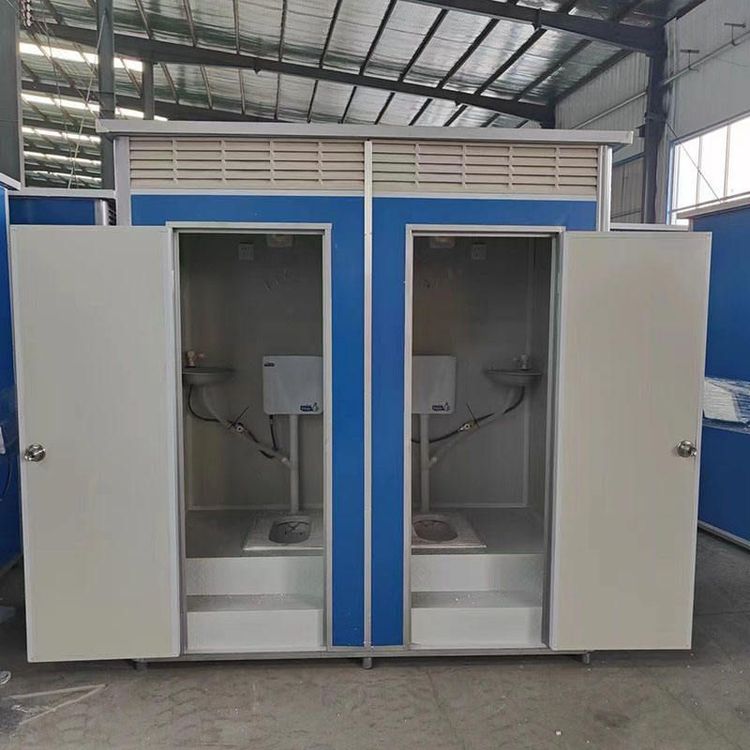
Portable Toilet Design Custom & OEM: Design & Bulk Production Guide
Read More