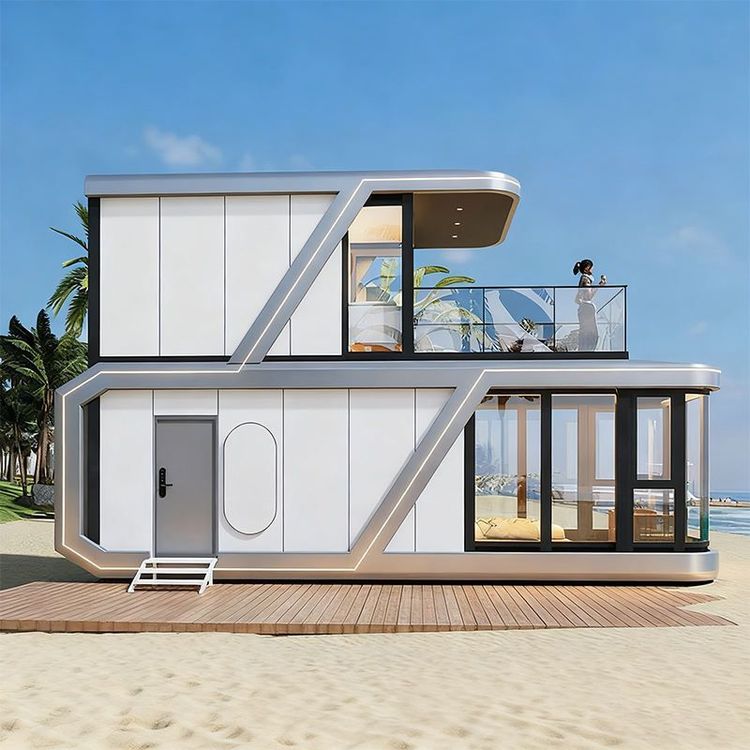
Beijing Mobile Toilet
Beijing mobile toilets are facilities that can be moved as a whole and provide toilet services to the public. They feature integrated design, environmental protection and energy conservation, and intelligent management, with diverse types and prices varying according to configurations.

Design and Functional Characteristics
Beijing mobile toilets adopt an integrated design, integrating multiple independent functional systems into a prefabricated structure. They are produced in a standardized manner in factories and then transported to the site for rapid installation. This modular combination approach shortens the construction period and improves space utilization efficiency. Their internal circulation systems employ multi-stage treatment technologies, with sewage undergoing solid-liquid separation, biological treatment, and filtration and disinfection stages in sequence. Part of the treated water is reused for non-potable purposes such as toilet flushing, forming an internal water circulation and significantly reducing dependence on external water sources. In terms of energy supply, they are generally equipped with photovoltaic power generation components that convert solar energy into electrical energy and store it in battery packs for the operation of lighting, ventilation systems, and control equipment. Some advanced models are also equipped with energy management systems that can automatically adjust energy consumption according to usage frequency, further achieving energy-saving goals. The intelligent management system collects equipment operation data through various sensors, and all data is transmitted to the management platform via IoT modules. Maintenance personnel can remotely monitor the real-time status of multiple devices and receive warning information in case of malfunctions or the need for material replenishment, improving management efficiency. In addition, these facilities fully consider user experience in their detailed design, being equipped with barrier-free access, baby care stations, child safety seats, emergency call buttons, and other facilities, reflecting consideration for public space behavior patterns.
Type Classification
Beijing mobile toilets can be classified by structural form into single-structure mobile toilets and composite-structure mobile toilets; by mobility method into hoisting and handling mobile toilets and powered and towed mobile toilets; and by sewage treatment method into water-flush and waterless-flush suction mobile toilets, circulating water-flush mobile toilets, and dry-packing mobile toilets. Different types of mobile toilets are suitable for different scenarios and needs. For example, water-flush types are suitable for locations with water supply, while dry-packing types are suitable for water-scarce or temporary use scenarios.
Price Differences
The prices of Beijing mobile toilets vary according to type and configuration. For example, some basic-configuration mobile toilets may cost as low as 1900.0 yuan, while models with more comprehensive functions and advanced designs may cost as high as 27000.0 yuan. This price difference mainly depends on factors such as the scale of the equipment, functional complexity, and material costs.