
Baotou Prefabricated Houses
Prefabricated houses in Baotou mainly include three types: prefabricated concrete houses, prefabricated cement houses, and prefabricated panel houses.
Prefabricated concrete houses adopt the "factory manufacturing + on-site assembly" model. Concrete components are pre-fabricated in a controlled environment, including wall panels, floor slabs, columns, and beams. These components are transported to the construction site and quickly assembled using professional equipment. Their technical advantages are significant: strong environmental adaptability, as prefabricated concrete components have good thermal inertia and, combined with insulation layer design, can form an efficient and energy-saving enclosure system; high construction efficiency, with the main structure construction time compressed to a few weeks and the overall project duration shortened by about 40%; controllable quality, as factory production frees concrete components from weather constraints, with strength grades reaching above C30 and component dimensional errors controlled within millimeters; resource optimization, reducing the number of on-site construction personnel, lowering labor costs by about 25%, with formwork systems reusable over 200 times and saving about 10% of cement usage per cubic meter of components. In terms of structural systems, they mainly adopt a frame-shear wall structural system, with vertical load-bearing components composed of prefabricated columns and shear walls, and horizontal components using composite floor slab technology, achieving the same seismic performance as cast-in-place concrete buildings.
Prefabricated cement houses have cement components pre-fabricated in factories, including wall panels, floor slabs, and roof panels, which are then transported to the construction site for assembly. They are mostly used for residential, storage, and temporary office purposes, with a frame structure as the main form. Their material characteristics include good durability, high compressive strength, the ability to withstand certain loads, and improved insulation and soundproofing performance through the addition of insulation materials or increased panel thickness. The construction process includes the design phase, factory production, and on-site assembly, with advantages such as relatively fast construction speed, strict quality control, high component precision, and resource conservation. However, transporting large components requires special vehicles and road conditions, and design flexibility is relatively low, making structural adjustments difficult.
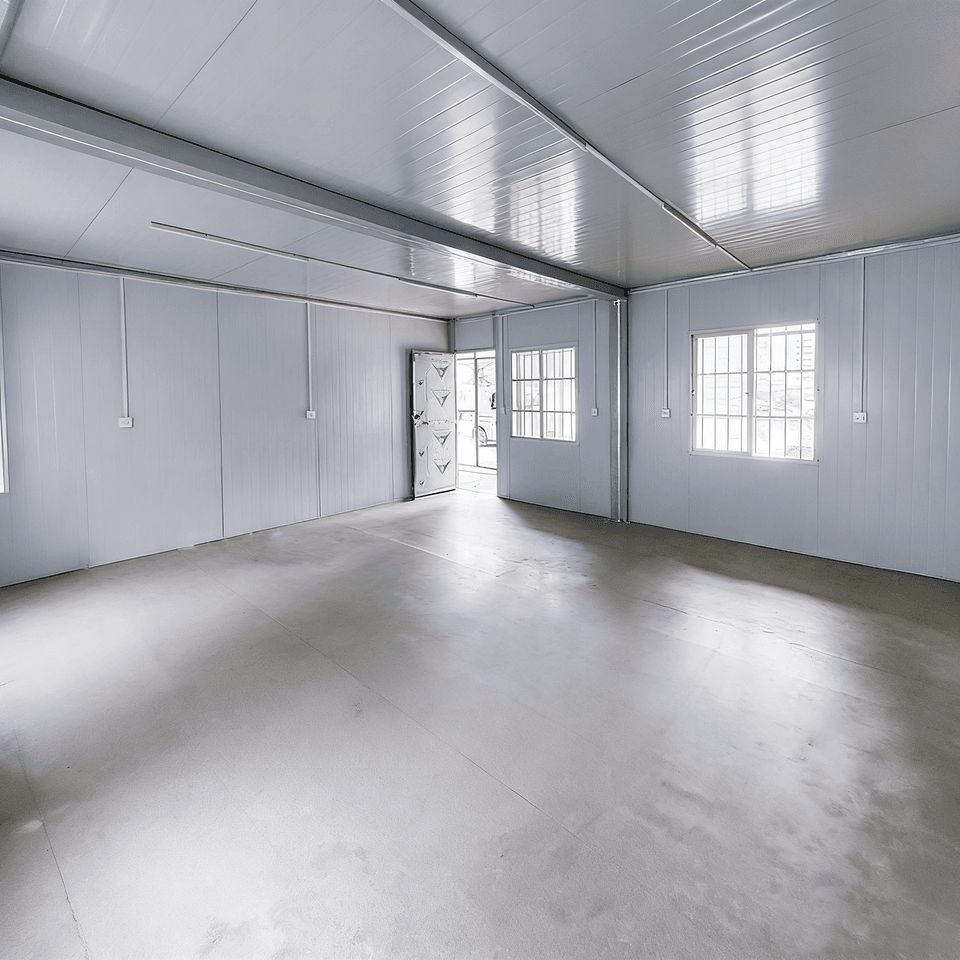
Prefabricated panel houses adopt advanced industrial production technology, featuring lightweight, high strength, and durability, and can adapt to different climatic environments. Assembly is simple and can be completed by just a few people. Their advantages include environmental protection and energy efficiency, using eco-friendly materials with excellent soundproofing and insulation performance, greatly saving energy consumption; lightweight and easy to assemble, being lightweight and reusable, suitable for temporary accommodation on construction sites; strong durability, using steel structures with strong seismic, wind, and compressive resistance, and a long service life; and high safety, using eco-friendly materials that do not produce harmful gases, ensuring the health and safety of occupants.



