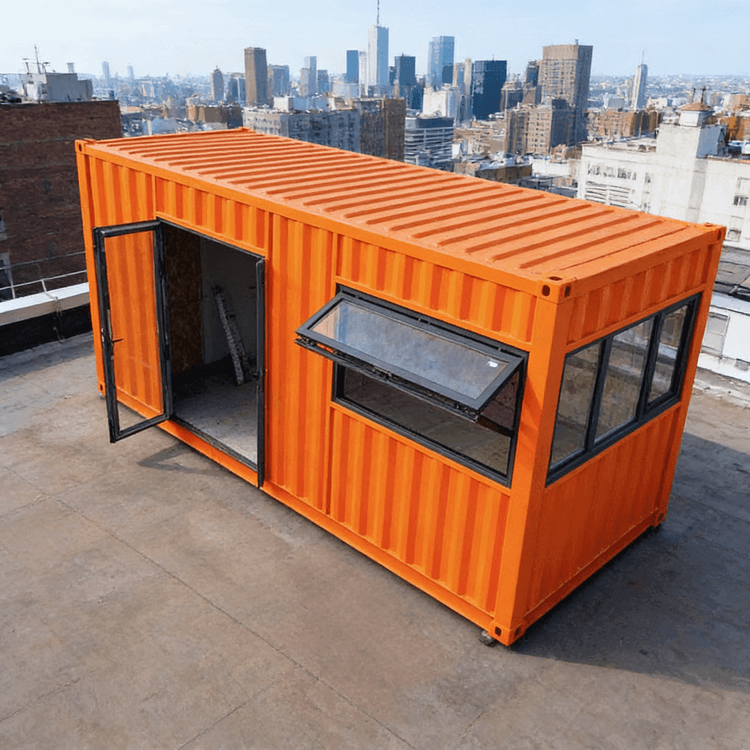
Zhuhai Cement Prefabricated House Construction
The construction of cement prefabricated houses in Zhuhai adopts the method of factory-prefabricated components and on-site assembly, featuring high efficiency, high quality, environmental friendliness, and flexibility. It has been widely applied in residential, commercial, and public facility sectors.

Construction Method and Core Process
The core of the construction of cement prefabricated houses in Zhuhai lies in "factory prefabrication + on-site assembly." Components such as walls, floor slabs, and roofs are produced through standardized processes in factories, ensuring dimensional accuracy and quality stability. After being transported to the site, workers quickly assemble them using methods such as bolt connections, welding, or fixing with embedded parts to form a complete building structure. This model transfers on-site processes such as mixing, pouring, and curing in traditional cast-in-place concrete construction to factories, significantly reducing on-site workload.
Main Advantages
- High Construction Efficiency: Factory-prefabricated components can be produced in parallel, and the on-site assembly period is shortened by more than 50% compared to traditional cast-in-place methods. For example, the traditional construction of a two-story residential building takes 3-6 months, while a prefabricated house can complete the main structure within 1-2 months, making it suitable for emergency housing, rapid development, and other scenarios.
- Good Quality Control: The factory environment is enclosed, with controllable temperature and humidity. Component production uses mechanized equipment, reducing human errors. Material ratios and curing conditions are carried out according to standards, avoiding common quality defects such as honeycombing and pitting in cast-in-place construction, and enhancing structural safety.
- Outstanding Environmental Friendliness: Centralized factory production allows for the recycling of construction waste, reducing on-site dust and noise pollution. By optimizing component design, material utilization is increased by 10%-15% compared to traditional construction, reducing carbon emissions.
- Design Flexibility: Modular component design supports diverse layouts, enabling personalized space requirements through the combination of walls and floor slabs of different sizes and shapes while maintaining structural integrity.
Application Scenarios and Cases
Prefabricated cement houses in Zhuhai have covered multiple sectors: In residential areas, some newly developed communities adopt prefabricated houses as the main housing type to meet rapid delivery demands. In commercial facilities, shops and office buildings use prefabricated components to shorten renovation periods and improve operational efficiency. Public facilities such as schools and hospitals are also gradually introducing this technology to ensure construction quality and progress. Additionally, the Zhuhai 58.com platform offers "labor and material inclusive + same-day installation" services, further simplifying the self-built housing process and reflecting the popularity of the technology.