
Prefabricated Integrated Housing
Prefabricated integrated housing represents a highly integrated form of modular or prefabricated construction, achieving efficient construction through factory-prefabricated modules and on-site assembly. Its core characteristics and advantages can be explored from the following aspects:
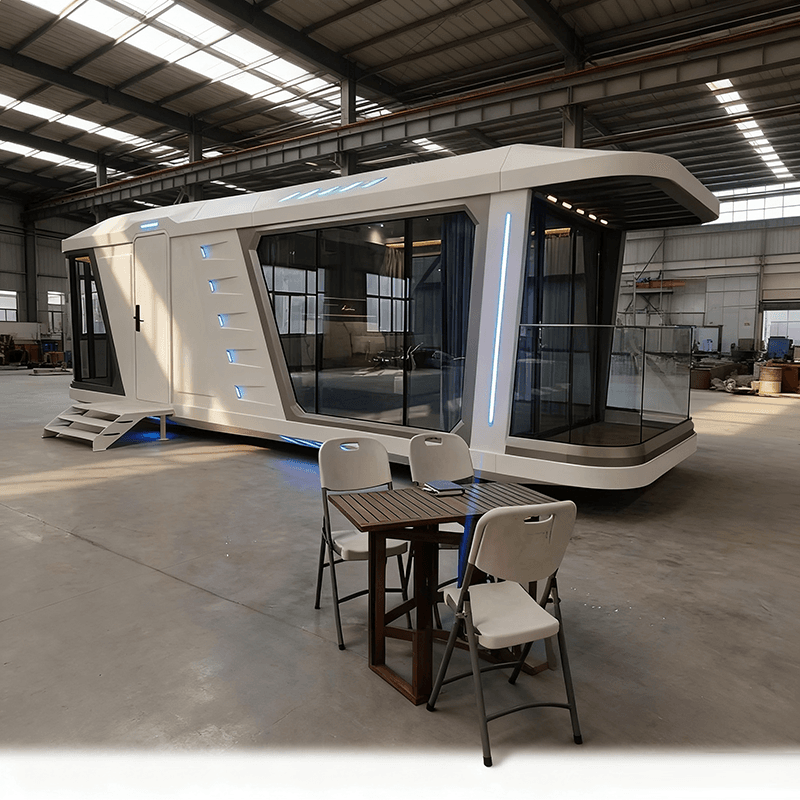
1. Factory-based production, emphasizing both precision and efficiency
Buildings are broken down into independent modules (such as walls, floor slabs, electromechanical pipelines, etc.), and integrated manufacturing of structures, decorations, and equipment is completed on an assembly line in the factory. Equipment such as welding manipulators and high-precision molds are used to achieve millimeter-level precision control and reduce human errors. For example, the CSCEC Hailong Intelligent Construction Industrial Park in Shenzhen, Guangdong, can deliver 20,000 to 30,000 concrete modules annually, with over 70% of the processes completed in the factory, significantly enhancing production standardization.
2. Significantly shortened construction periods
The construction period for modular buildings is reduced by more than 60% compared to traditional buildings. Taking a public housing project in Shenzhen as an example, the assembly of 6,028 concrete modules reduced the completion time from 2.5 - 3 years to 1 year, and the on-site labor force was reduced by about 50%. Prefabricated cement integrated houses can complete the main structure of a 200-square-meter villa in as little as 4 hours, saving 90% of the time. This efficiency improvement stems from the parallel operation mode of factory prefabrication and on-site assembly.
3. Outstanding environmental protection and safety performance
- Environmental protection: Construction waste emissions are reduced by more than 75%, material losses are reduced by 25%, on-site electricity consumption is reduced by 60%, and water consumption is reduced by 66%. For example, modular buildings significantly reduce resource consumption through precise material cutting and recycling.
- Safety: Prefabricated cement integrated houses use a C35 concrete reinforced steel frame and have been tested to withstand typhoons of magnitude 12 and earthquakes of magnitude 8. During the Jishishan earthquake in Gansu, 2,000 resettlement houses were built and put into use within 72 hours, demonstrating their earthquake resistance and disaster prevention capabilities.
4. Advantages in flexibility and recycling
Modules can be disassembled and stacked, supporting elastic capacity expansion and functional adjustments, with a recycling rate exceeding 90%. For example, campus buildings can add or remove modules based on the number of students, and hotels can quickly reorganize spaces to meet market demands. This flexibility reduces long-term operating costs.
5. Technical system and industrial support
It relies on prefabricated concrete structures, steel structure technologies, as well as intelligent production lines and automated three-dimensional warehouses. For example, CSCEC Hailong's MiC technology has been implemented in 137 projects across 15 provinces and 24 cities in China, covering an area of 6.12 million square meters and spanning public housing, hospitals, hotels, and other fields, showcasing technological maturity and industrial scalability.
Wide range of application scenarios: From public housing to commercial buildings, prefabricated integrated housing is becoming the preferred solution for urban renewal, emergency resettlement, homestay operations, and other fields. Its efficient, environmentally friendly, and safe characteristics align with sustainable development needs, and its future application prospects are broad.



