
Portable Toilet Container Explained: How to Choose the Right One
Choosing the right portable toilet container requires considering six core factors: material, functionality, portability, customization, safety, and cost, while making decisions based on specific usage scenarios.
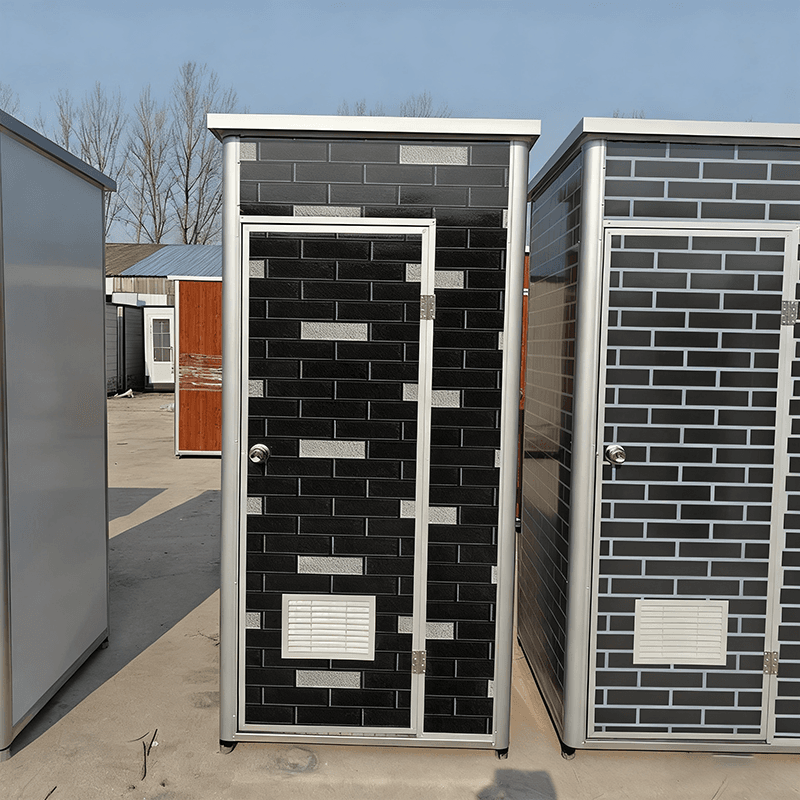
1. Material and Durability
For long-term outdoor use (e.g., construction sites), prioritize steel/aluminum frames with composite panels, which offer corrosion resistance, wind resistance (>220km/h), and earthquake resistance (>8 magnitude), ensuring a 20-year lifespan. For short-term or temporary scenarios (e.g., exhibitions), HDPE plastic is a lightweight and weather-resistant option, though prolonged exposure may accelerate aging. If budget allows and a balance of strength and portability is needed, fiberglass is a viable but costlier choice.
2. Functional Configuration
Select functional combinations based on usage frequency and needs: For low-frequency scenarios (e.g., temporary offices), choose a basic model (toilet only). For high-traffic scenarios (e.g., large events or disaster zones), opt for a full-featured model (equipped with a toilet, sink, shower, and high-capacity sewage system). In resource-limited areas (e.g., remote disaster zones), consider an eco-friendly model with a water recycling system to conserve resources and reduce pollution.
3. Portability and Installation
For frequently moved scenarios (e.g., touring performances), prioritize wheeled structures (built-in heavy-duty casters for easy single-person movement) and modular designs (supporting quick assembly and flexible combinations). For fixed deployment scenarios, portability can be overlooked in favor of functional expansion (e.g., adding showers or storage space).
4. Customization Options
Adjust designs based on special needs: Brand events require aesthetic customization (color and logo spraying). Medical rescue scenarios need barrier-free facilities (e.g., toilets for the disabled). Extreme climate regions require temperature control functions (e.g., air conditioning or heating systems). Space-constrained scenarios can modify layouts (e.g., adjusting the spacing between toilets and sinks).
5. Safety and Compliance
For public use, ensure products pass certifications such as ISO, CE, and EN 14351 to guarantee structural safety and hygiene compliance. For medical or food-related scenarios, use food-grade materials and eco-friendly insulation. Privacy designs (e.g., secure locking doors) prevent accidental opening and enhance safety.
6. Cost and Budget
Basic HDPE plastic models cost approximately $760 per unit (minimum order of 51 units), suitable for short-term, low-cost needs. Full-featured steel-frame models range from $11,000 to $50,000 per unit. Although the initial cost is high, their long lifespan and low maintenance can result in lower overall costs. For short-term, high-frequency use scenarios, consider renting to reduce costs.



