Back to blog
Article
Inspection of Mobile Environmental Toilets in Yuncheng
Admin September 28, 2026
The inspection of mobile environmental toilets in Yuncheng must be carried out in accordance with clear standards, scientific methods, and standardized procedures to ensure that their core performance indicators such as safety, environmental protection, and hygiene meet the required standards.
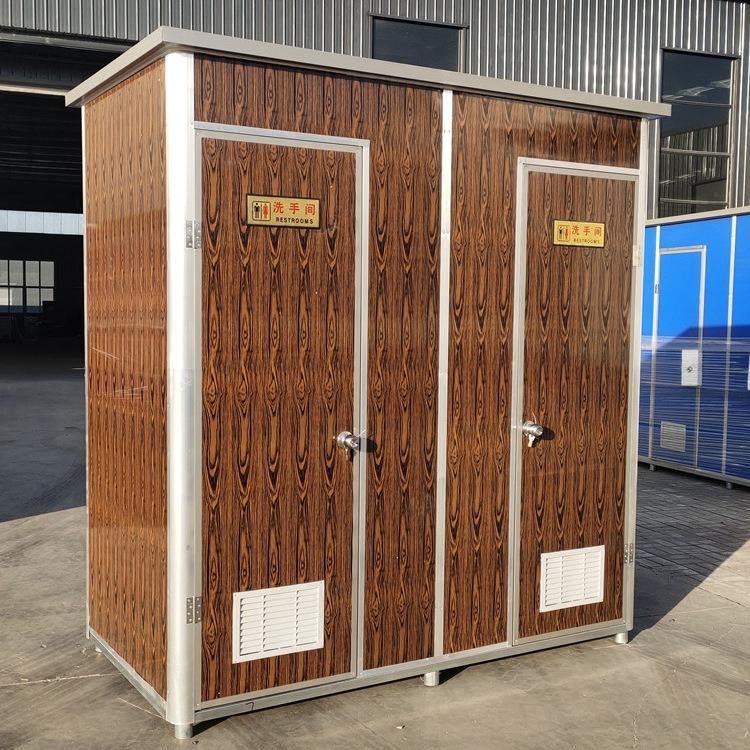
I. Inspection Standards
- Safety: The structure must be safe and reliable, with no risk of injury to users during operation. For example, steel structure welding must comply with the JGJ81 standard, and anti-corrosion and rust-proof treatments must meet the GB50212 standard to ensure overall stability.
- Environmental Protection: Materials must be environmentally friendly to reduce pollution to the environment. For instance, plastics, metals, and wood must pass environmental protection tests to avoid the release of harmful substances.
- Hygiene: The toilets must comply with hygiene standards to effectively prevent the spread of pathogens. There must be no bacteria, viruses, or other harmful substances inside or outside the toilets, and the drainage system must be kept clean.
- Convenience: The design must facilitate easy movement and use, such as flexible and reliable mobile wheels and folding structures, to meet the needs of different scenarios.
- Durability: The toilets must have a long service life and withstand various environmental conditions. Tests must be conducted on their resistance to wear, corrosion, and aging.
- Wind and Earthquake Resistance: The overall wind resistance must be no less than Level 10, and the earthquake resistance must be no less than Level 8. The steel structure must be tested with instruments such as anemometers and pressure testers.
- Sealing and Waterproofing: The connections between the exterior walls and roof must be sprayed continuously with water for 15 minutes (at a pressure of 0.1MPa) without leakage, and checked again after stopping for 1 hour.
II. Inspection Methods
- Appearance Inspection: Check whether the appearance is aesthetically pleasing, the structure is reasonable, and the manufacturing process is precise, using auxiliary measuring tools such as steel tapes and lux meters.
- Material Inspection: Conduct environmental protection and hygiene tests on materials such as plastics, metals, and wood to ensure the absence of harmful substances.
- Performance Inspection: Test load-bearing capacity, mobility, drainage performance, etc. For example, use a multimeter to test circuit safety and a hand-cranked megohmmeter to test insulation performance.
- Hygiene Performance Inspection: Collect samples from inside and outside the toilets to test for the presence of bacteria, viruses, and other harmful substances.
- Durability Inspection: Test resistance to wear, corrosion, and aging by simulating long-term use environments.
- Wind Resistance Test: Use an anemometer to test the stability of the steel structure to ensure compliance with the JGJ81 and GB50212 standards.
- Sealing and Waterproofing Inspection: Use a water jet to adjust the pressure to 0.1MPa and spray continuously along the connections between the exterior walls, corners, and roof for 15 minutes, then check for leakage after stopping for 1 hour.
III. Inspection Process
- Sample Collection: Select different types of mobile environmental toilets from the market as inspection objects.
- Sample Preparation: Clean and dry the samples to ensure a consistent inspection environment.
- Inspection Tests: Conduct appearance, material, performance, hygiene, and durability inspections in sequence according to the above methods.
- Data Compilation: Record and analyze the inspection data to obtain results for each indicator.
- Result Evaluation: Evaluate the quality and performance based on the standards to determine whether they are qualified.
- Report Writing: Compile the inspection process, data analysis, and evaluation results into a written report.