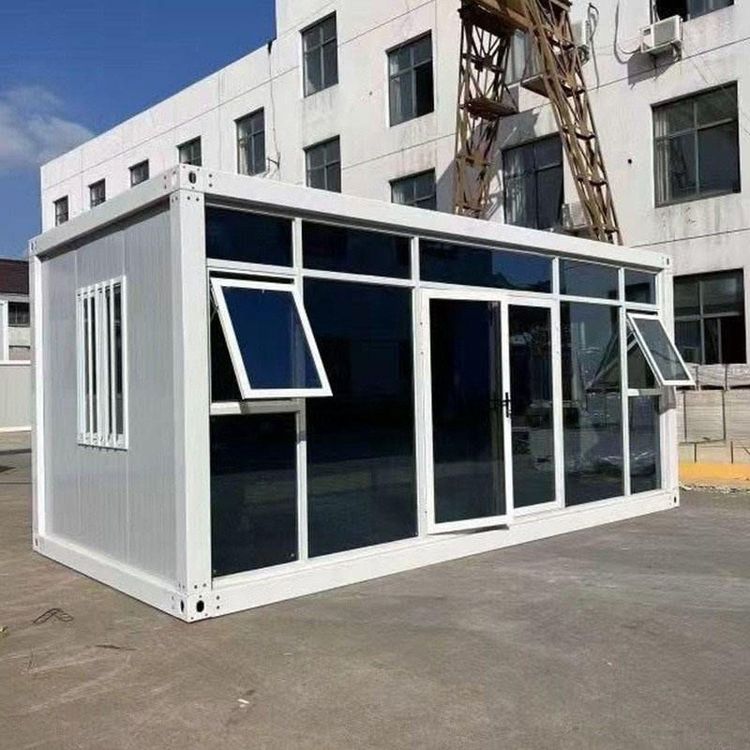
Yichun Park Mobile Toilet
Yichun Park mobile toilets typically employ eco-friendly materials and advanced treatment technologies, combining durability with ecological friendliness. Their design revolves around three core principles: environmental protection, practicality, and ease of maintenance, with specific features as follows:

I. Application of Eco-Friendly Materials
- Main Structure: Mostly made of stainless steel, which is corrosion-resistant and weather-resistant, allowing it to withstand long-term exposure to outdoor environments without easy damage, extending service life and reducing resource waste.
- Wall Materials: Commonly use eco-friendly composite panels, such as melamine boards or bamboo-wood fiber boards. These materials are manufactured through high-temperature and high-pressure processes, offering moisture resistance, fire resistance, and sound insulation properties. Moreover, they do not contain harmful substances like formaldehyde during production, preventing pollution to the air and soil.
- Internal Facilities: Sinks, toilets, etc., are preferably made of ceramic or recyclable plastics. Ceramic surfaces are smooth and easy to clean, reducing bacterial growth; recyclable plastics are manufactured through recycling processes, reducing raw material consumption and aligning with the concept of a circular economy.
- Flooring and Roofing: The floor is laid with anti-slip tiles or waterproof resin materials to ensure safety and ease of cleaning during use; the roof adopts lightweight waterproof materials such as aluminum foil insulation boards, which effectively block rainwater and reduce indoor temperature fluctuations by reflecting sunlight, thereby lowering energy consumption.
II. Eco-Friendly Treatment Technologies
- Recyclable Water-Flush Type: Reduces water consumption through water-saving flush devices. The sewage undergoes sedimentation, filtration, and disinfection processes, with part of it being recycled for flushing, achieving efficient water resource utilization.
- Microbial Degradation Technology: Utilizes specific bacterial strains to decompose organic matter in feces, converting it into harmless substances such as carbon dioxide and water. This eliminates the need for additional flushing and significantly reduces sewage production, making it particularly suitable for water-scarce or ecologically sensitive areas.
- Solar-Powered System: Solar panels are installed on the roof to collect energy and power internal equipment. For instance, the automatic deodorization system decomposes odor molecules through ultraviolet light or photocatalysis, while the water circulation system further optimizes water resource utilization, achieving zero emissions and low energy consumption throughout the process.
III. Maintenance and Waste Management
Reputable rental companies regularly inspect the equipment's operational status on-site, clean the fecal storage tanks, replace filters, etc., to ensure treatment efficiency. The treated waste is strictly transported to designated treatment stations in accordance with environmental protection standards, preventing secondary pollution and forming a closed-loop management system from use to disposal.
In summary, Yichun Park mobile toilets, through material innovation and technological upgrades, meet public health needs while minimizing their impact on the environment, serving as a typical example of urban green infrastructure.