Wind-Resistant Mobile Toilet
The design and reinforcement measures for wind-resistant mobile toilets need to be comprehensively implemented from multiple aspects such as structure, installation, external reinforcement, and detail optimization, as follows:
1. Structure and Weight Design
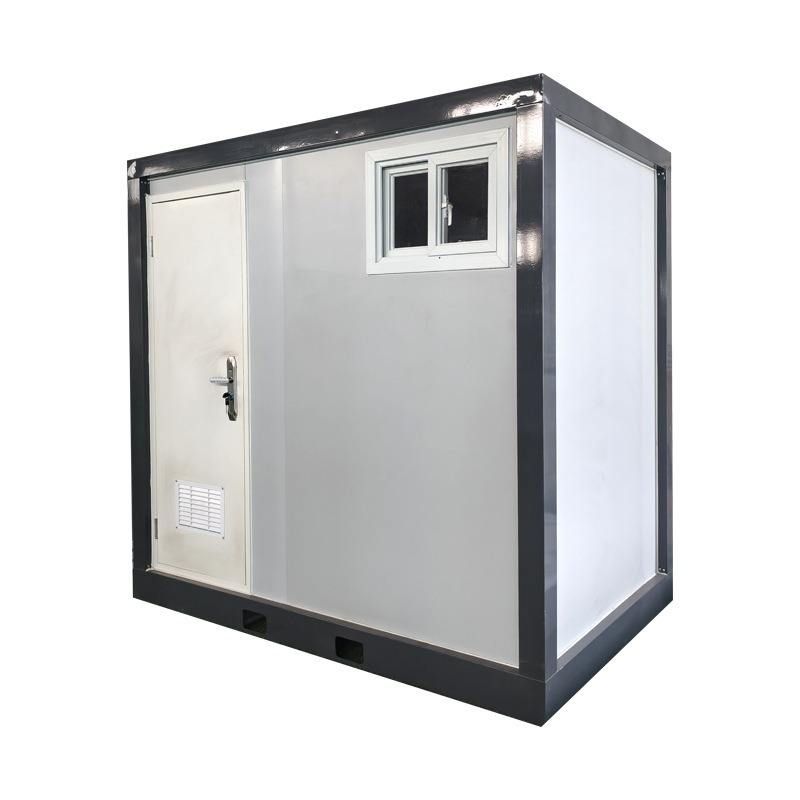
Mobile toilets should adopt a structural design with a low center of gravity and built-in counterweights. For example, use sturdy steel structures or reinforced aluminum alloy materials to construct the frame, and adopt reinforced structures for walls and roofs to enhance overall stability. Some large-scale connected public toilets are directly fixed to the ground with anchor bolts, significantly improving wind resistance. Additionally, increasing the self-weight of the toilet (such as with built-in counterweights) can reduce the risk of being blown by the wind.
2. Installation and Fixing Measures
During installation, use expansion bolts to fix the bottom of the toilet to the hardened ground, or form a triangular tension structure with wind-resistant cables, ground anchors, and steel wires to ensure a firm connection between the toilet and the ground. Add fixed counterweights (such as sandbags or water bags) to the bottom of the toilet, placing at least 4-6 bags on each side, with a counterweight of no less than 50 kilograms per square meter, to further enhance stability.
3. External Structure Reinforcement
Set up ground anchors at the four corners or key stress points of the toilet, and connect the ground anchors to the top of the toilet with steel wires with a diameter of more than 5 millimeters. The tension ropes should be kept moderately tight to disperse wind forces. Before extreme weather (such as typhoons) arrives, additional wind-resistant brackets (such as steel pipe diagonal support structures) can be installed on the sides of the toilet to form additional support points.
4. Door and Window Sealing Optimization
Check and replace aging sealing strips to ensure that the locks are secure when the doors and windows are closed, and fill the gaps with wind-resistant strips. During strong wind warnings, wind-resistant baffles can be installed on the outside of doors and windows to reduce the impact of wind pressure on the toilet structure.
5. Temporary Reinforcement and Maintenance
Before the arrival of a typhoon, it is necessary to fix movable components inside the toilet (such as washbasins and shelves) to avoid damage from shaking. Regularly check the fixing bolts, counterweight positions, and drainage hole patency on a daily basis. During the rainy season, pay attention to avoiding water accumulation that may cause a shift in the center of gravity. The conventional design can withstand wind forces of ≤8 levels, but there is still a risk in extreme weather (≥10-level typhoons), requiring prior relocation or reinforcement.
6. Product Selection Recommendations
When renting or purchasing, prioritize reinforced products produced by regular manufacturers and clarify maintenance responsibilities in the contract. For example, the mobile toilets provided by Beijing Shunxi Yijie Technology Co., Ltd. are labeled as having strong earthquake-resistant and wind-resistant performance, weighing 100 kilograms and having a service life of 15 years, which can serve as a reference.