What Is the Difference Between Prefabricated Buildings and Integrated Buildings?
As modern industrial technology advances, building houses can work much like machine production: house components are prefabricated in advance, and complete homes can be manufactured in batches and sets.
Over a long period of development, prefabricated buildings and integrated houses have emerged as new building models with many similarities—yet they are two different concepts.
What is an integrated house?
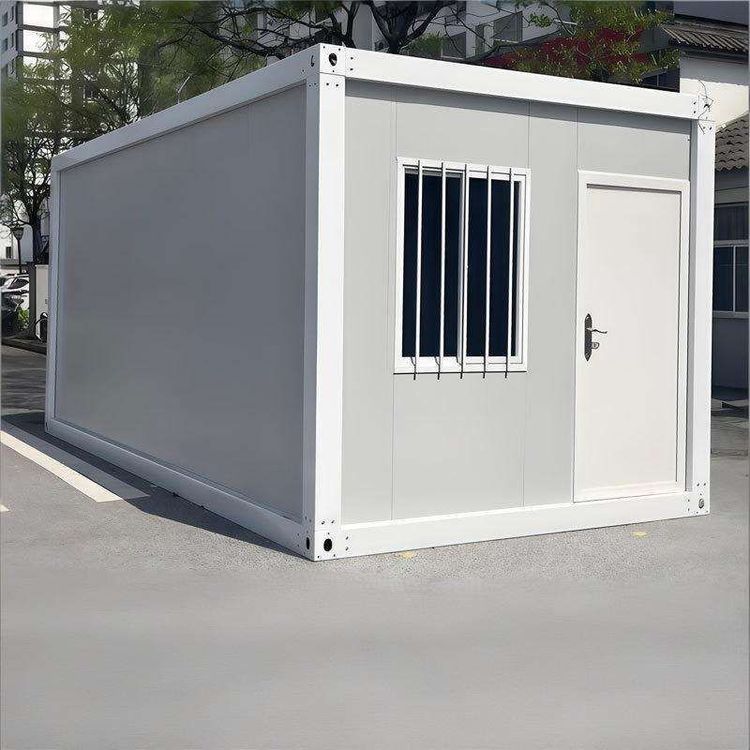
Integrated houses (also called movable or repeatedly demountable houses) appeared in the late 1950s. The core idea is to prefabricate walls, roofs, and other parts in a factory, fabricate load-bearing structures—typically steel frames—to design requirements, and rapidly assemble them into complete homes.

An integrated house consists of a structural system, a ground system, a floor system, a wall system, and a roof system. Each system is made of several unit modules manufactured in the factory and assembled on site. Integrated houses can be dismantled and moved without damaging the land. They turn the age-old “immovable” nature of housing into a “movable” asset, and separate “property” from “land” in the traditional real-estate sense.

Integrated houses are easy to demolish, convenient to install, transport, and store, and can be reused and rotated many times as temporary or permanent buildings. They are widely used as temporary offices and dormitories on construction sites; as field housing for transportation, water conservancy, oil, gas, and other large outdoor exploration and operations; as temporary urban offices, civil resettlement, and exhibition spaces; as leisure villas and holiday homes in tourist areas; and for earthquake relief and military use.
Prefabricated buildings
A prefabricated building is assembled on site from prefabricated components. Advantages include faster construction, less weather dependence, lower labor demand, and higher build quality. Interest began in the early 20th century, and the approach was realized in the 1960s.

Prefabricated buildings have these traits:
Many building parts are produced in workshops. Main component types include exterior wall panels, interior wall panels, composite slabs, balconies, AC boards, stairs, prefabricated beams, and prefabricated columns.
Much of the site work is assembly, greatly reducing traditional cast-in-place work.
Architecture and fit-out are designed and built as one; ideally, finishes proceed in step with the main structure.
Design is standardized and management is information-based. The more standard the components, the higher the production efficiency and the lower the unit cost. With digital factory management, the overall cost-performance of prefabricated buildings keeps improving.
Where do prefabricated buildings and integrated houses differ?
Similarities:
Components are both produced in the factory in advance
On-site construction is more efficient than traditional methods, with less cast-in-place work
Differences:
Use: integrated houses are more often temporary or movable spaces, easy to dismantle and rotate;
Prefabricated buildings are mainly permanent whole residences, marked by prefabrication, fast construction, and high efficiency
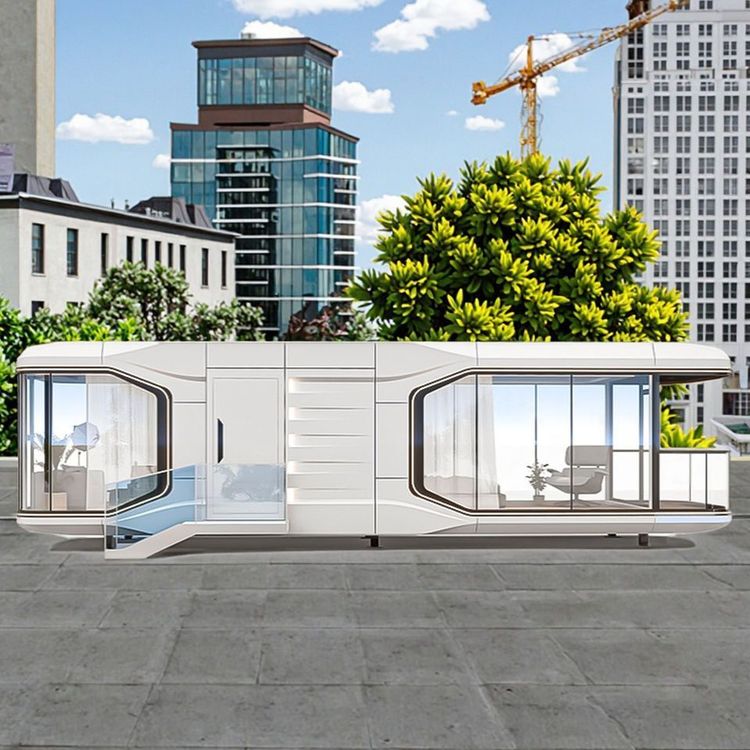
Our company's green prefabricated houses—combining the strengths of both
Our company's green prefabricated houses are an innovative building model, set apart by materials and methods. Using new plant-fiber building materials, all house components are standardized in the factory and lifted and joined on site.

Thanks to the light weight, high strength, and strong load-bearing capacity of new plant-fiber materials, construction needs no steel rebar, no cement, no brick, no beams, no columns, no stone, and no conventional members. With good transport and lifting conditions, 200–300 square meters of main structure can be completed in one day. They suit high- and low-rise buildings, movable houses, and many customized types—size, appearance, and function can all be tailored.

Our company's green prefabricated houses offer earthquake resistance, fire resistance, waterproofing, freeze protection, crack resistance, insect resistance, and aging resistance. As permanent homes they are green, energy-saving, and long-lasting; as movable or temporary buildings they are quick to build and occupy, with strong performance in extreme climates and terrains—well suited to field operations, emergency relief, and other special needs.

Technology renews living. Our company's green prefabricated houses combine the advantages of prefabricated buildings and integrated houses—raising the bar on environmental performance, build efficiency, quality, and application range. They are an ideal model that delivers efficient, high-quality, attractive ecological housing for different use needs and natural settings.
Address: No. 1777 Hualong Road, Shanghai
Website: www.ourcompany.com
Tel: 021-60760737
Mobile: 17721310336
Email: marketing@ourcompany.com
24H customer service: 400-716-6557