Back to blog
Article
What Category is Container House
Admin September 15, 2026
Container houses are mainly classified into the following categories:

I. Classification by Structural Source and Construction Method
- Custom Fixed Box Modules: Newly constructed according to international standard modules, some using thinned plates or material substitutions, with non-standard corner fittings arrangements, highly industrialized, suitable for long-term fixed scenarios.
- Variable Box Modules: Wall panels can be flipped, drawn out, or rotated (e.g., expandable shops, display boxes), usually used individually on a single level, offering high flexibility.
- Integrally Welded (Dry Box Type): Directly transformed from shipping containers, with a sturdy structure and lower cost, suitable for temporary housing on construction sites.
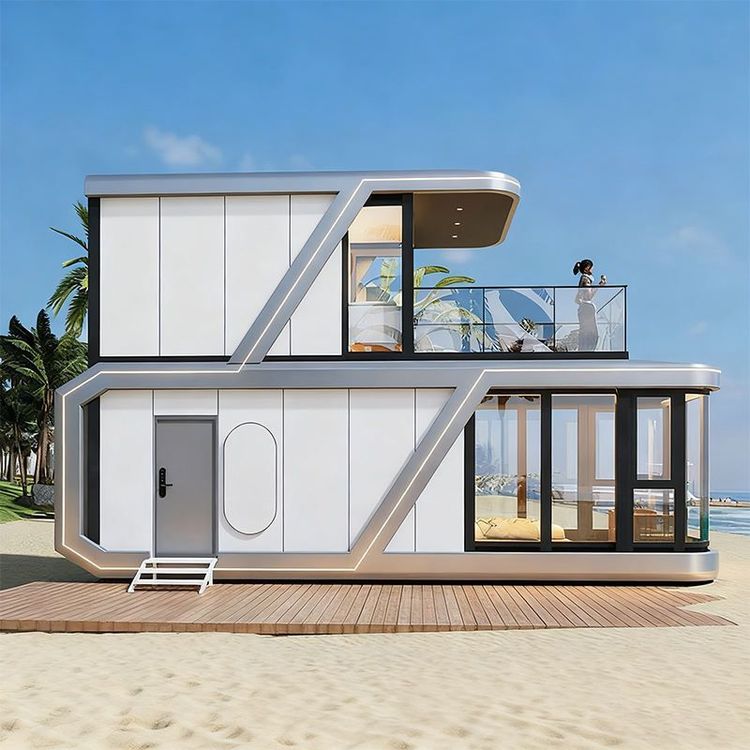
- Light Steel Keel Type: Using cold-formed thin-walled light steel keels as the load-bearing structure, with wall insulation materials filled in, customizable in appearance and layout, commonly used for self-built houses and homestays.
- Folding Type: Compressed in volume during transportation and quickly expanded upon arrival, with the expansion time for a single unit controlled within 30 minutes, suitable for office needs requiring frequent relocation.
II. Classification by Functional Use
- Office Type: Such as container-style office buildings, transformed from standard containers, suitable for project departments, construction site command centers, etc.
- Accommodation Type: Including construction site dormitories, emergency shelters, mobile police stations, etc., equipped with independent bathrooms and air conditioning interfaces to improve living conditions.
- Commercial Service Type: Can be transformed into characteristic homestays, mobile shops, restaurants, etc., attracting customers through creative design.
- Special Function Type: Equipped with insulation layers, fireproof materials, or special structures, suitable for extreme environments or special industry needs such as plateau workstations, mobile laboratories, explosion-proof/refrigerated containers.
III. Classification by Spatial Combination Form
- Single Box Landing: Used independently, such as small shops, sentry boxes, temporary dormitories.
- Horizontal Box Assembly: Horizontally connecting multiple containers to form conference rooms, exhibition halls, or homestay lobbies.
- Vertical Box Stacking: Constructing multi-story dormitories or hotels (up to 6 stories) by transmitting force vertically through corner fittings.
- Staggered/Cantilevered/L-shaped/U-shaped Enclosure: Used for internet-famous homestays, cafes, etc., with cantilevered structures requiring diagonal bracing and prohibiting hole punching.
Related