Back to blog
Article
Weight of Housing Container
Admin September 17, 2026
The weight of housing containers varies depending on their specifications and types, typically ranging from 706.5 kilograms to 4.2 tons. Here is a detailed classification:

I. Classification by Functional Type
- Ordinary Residential Containers: These usually weigh about 3000 kilograms (3 tons). For example, a mobile home container with one bedroom, one living room, one kitchen, and one bathroom typically has a total weight of approximately 3 tons.
- Standard Residential Containers: Their self-weight ranges from 2.2 to 4.2 tons. Among them, the empty weight of a 2-foot (approximately 6-meter) container is about 2.2 to 2.5 tons; while a 4-foot (approximately 12-meter) container is heavier, weighing about 3 to 4.2 tons.
II. Classification by Size Specifications
- 3m × 6m Mobile Home Containers:
- The self-weight of empty containers varies depending on their structure: fixed-type containers weigh about 800 kilograms, foldable containers weigh about 1265 kilograms, and packing-box units weigh about 1350 kilograms.
- The theoretical weight of a steel frame (with a thickness of 0.005 meters) is approximately 706.5 kilograms, but the actual weight is higher due to materials and internal configurations (such as insulation layers and doors/windows).
- International Standard Containers:
- A 20-foot small container has a self-weight of 2200 kilograms (2.2 tons) and is suitable for short-distance transportation or storage of small goods.
- A 40-foot flat container has a self-weight of 3700 kilograms (3.7 tons), while a 40-foot high container has a self-weight of 3970 kilograms (3.97 tons). The latter is heavier due to its increased height (usually 2.9 meters) and is suitable for transporting large equipment or high-volume goods.
III. Core Factors Contributing to Weight Differences
- Materials and Structure: The thickness and material (such as ordinary steel or high-strength steel) of the steel frame directly affect the weight. For example, the theoretical weight of a 3m × 6m steel frame is only 706.5 kilograms, but the actual product is significantly heavier due to reinforcement designs or additional accessories (such as floors and lifting structures).
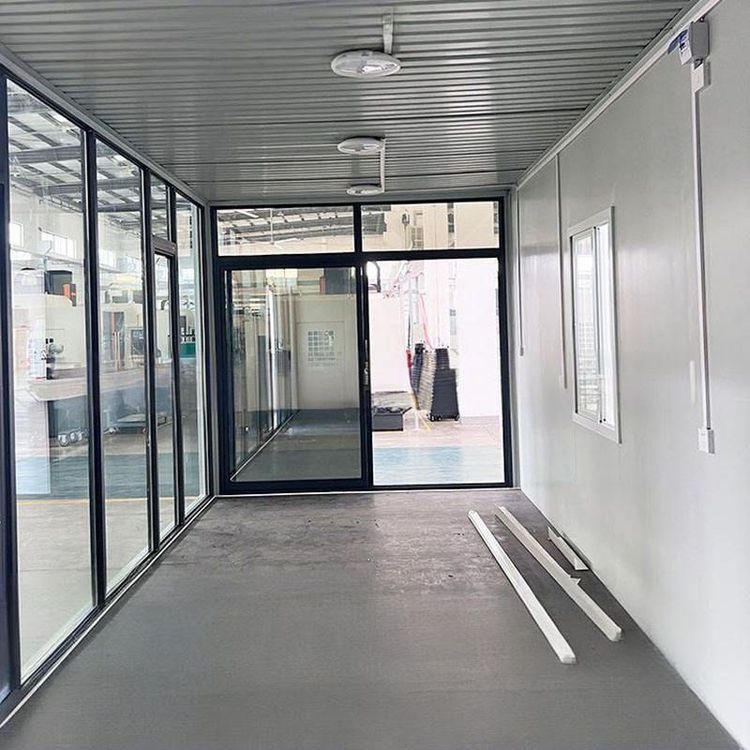
- Functional Configuration: Residential containers need to integrate doors, windows, electrical circuits, insulation layers, etc., and are usually heavier than pure cargo containers. For example, a mobile home with one bedroom and one living room weighs 3 tons due to its interior decoration and facilities.
- Size Specifications: The larger the container volume, the more materials are used, and the weight increases accordingly. A 40-foot high container weighs nearly twice as much as a 20-foot small container because the increased length and height result in more material consumption.
Summary: The weight of housing containers needs to be comprehensively evaluated based on their specific types, sizes, and configurations. For precise data, it is recommended to select the specifications according to actual needs and then confirm the detailed parameters with the supplier.
Related