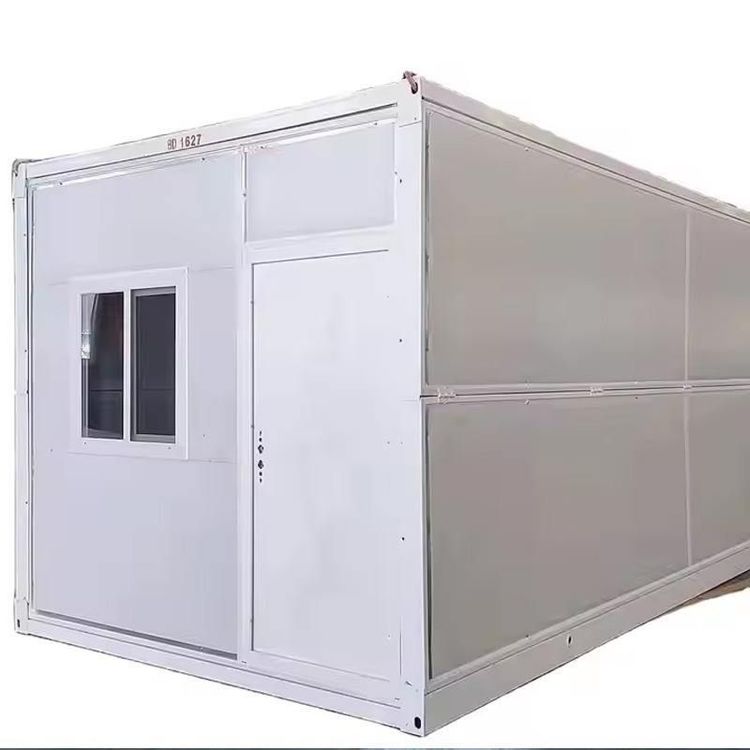
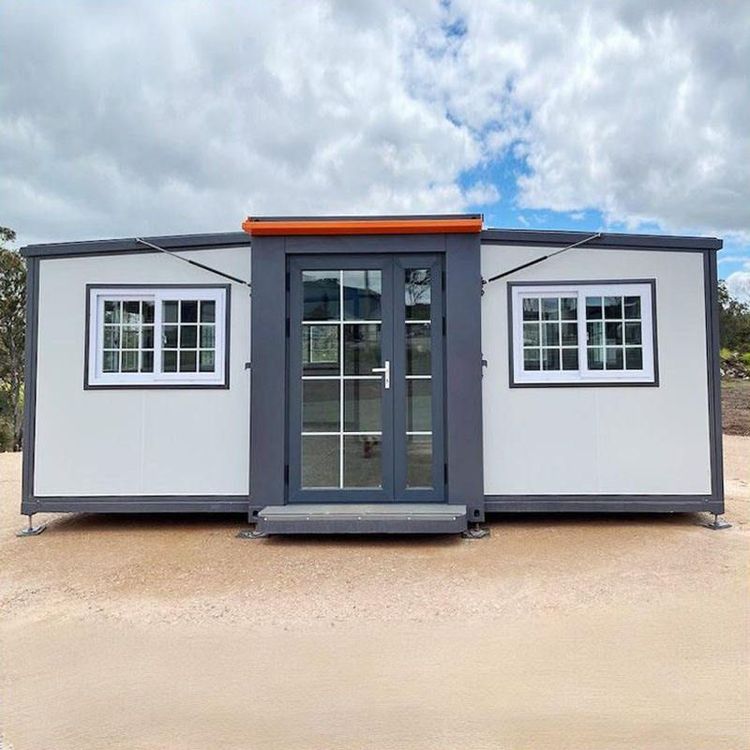
Wall Thickness of Housing Container
The wall thickness of housing containers typically ranges from 50mm to 100mm, depending on the wall material and design requirements. Details are as follows:

1. Wall Thickness of Packing-Box Container Houses The walls of packing-box container houses are usually made of color-steel glass wool sandwich panels, with a standard thickness of 75mm. The thickness of the inner and outer color-steel plates is 0.45mm each. This structure combines thermal insulation, fire resistance, and structural strength, making it suitable for temporary buildings or mobile housing scenarios.
2. Wall Thickness of Modular Container Houses The prefabricated walls of modular container houses have a wider range of thicknesses, with common specifications including 50mm, 75mm, and 100mm. The core material can be selected according to requirements, such as EPS (expanded polystyrene) or rock wool. Rock wool, with its superior fire resistance, is often used in scenarios with high safety requirements.
3. Wall Thickness of Customized Container Houses Some customized container houses may adopt thicker wall structures. For example, certain high-end container houses increase the wall thickness to over 100mm to enhance thermal insulation performance or meet special design requirements, using double-layer sandwich panels or adding internal insulation layers.
4. Wall Thickness of Container Houses Retrofitted from Shipping Containers If a container house is retrofitted from a decommissioned shipping container, the original side panel thickness is usually 1.6mm, and the roof panel thickness is 2.0mm. However, during retrofitting, internal insulation layers (such as rock wool panels or foam panels) may be added to improve living comfort, significantly increasing the total wall thickness depending on the insulation material and thickness.
5. Wall Thickness of Container Houses Made of Special Materials Some container houses may use aluminum alloy or composite sandwich panels as wall materials. For example, the wall thickness of aluminum panel prefabricated temporary buildings may range from 2.0mm to 3.0mm, but such structures usually require internal insulation layers to meet thermal insulation requirements.