Value of Container Mobile Housing
The value of container mobile housing is mainly reflected in four aspects: economy, flexibility, environmental protection, and scenario adaptability:

Economy: Significant full-cycle cost advantages
Container mobile housing adopts modular prefabrication technology. Standardized factory production keeps material loss rates at 3%-5%, more than 50% lower than traditional buildings. Taking Zhejiang Hangxing Green Building Materials products as an example, their construction costs are approximately 800-1500 yuan/㎡, saving 30%-50% compared to traditional buildings; project cycles are shortened by 60%, with a 20-unit dormitory building deliverable within 7 days. The reuse rate exceeds 90%, with overall movement loss rates <5%. Combined with recyclable steel (about 1.8 tons per container) and reduced construction waste emissions (2.3 tons per container), the full-lifecycle cost-effectiveness is outstanding.
Flexibility: Rapid deployment and space expansion
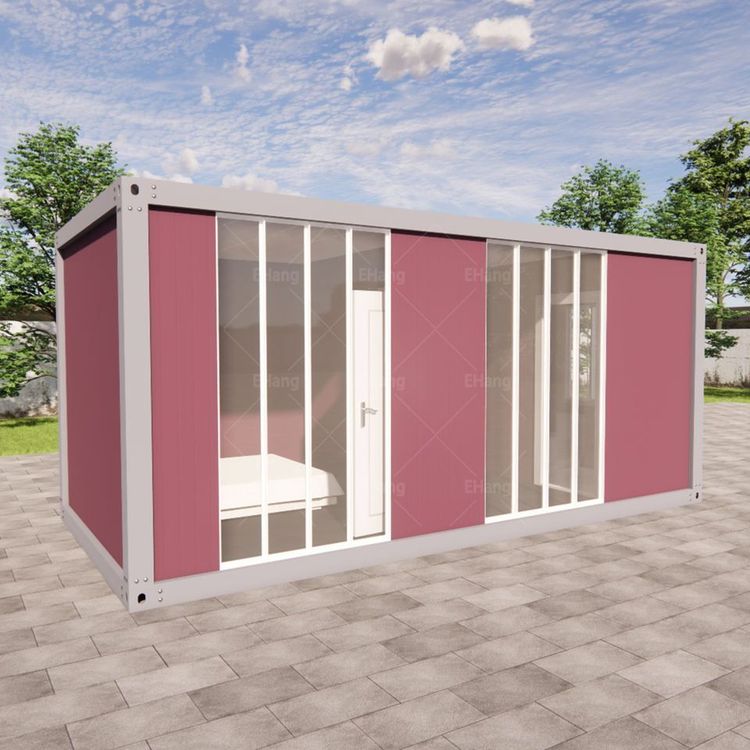
The modular design supports rapid assembly, with standard container bodies taking only 4-6 hours from hoisting to completion of interior decoration, a 300% efficiency improvement over traditional prefabricated houses. Through module combinations, space expansion from 15-200㎡ can be achieved, meeting needs ranging from single-person dormitories to multi-story office areas. For example, Suzhou Zhongnan Quick-assembly Containers support on-demand assembly into double-occupancy dormitories, small offices, or meeting spaces, with interior partitions that can be quickly adjusted. A pop-up store transformation can be completed in 2 hours, compared to 4-6 hours for traditional buildings.
Environmental protection: Low-carbon cycling and resource conservation
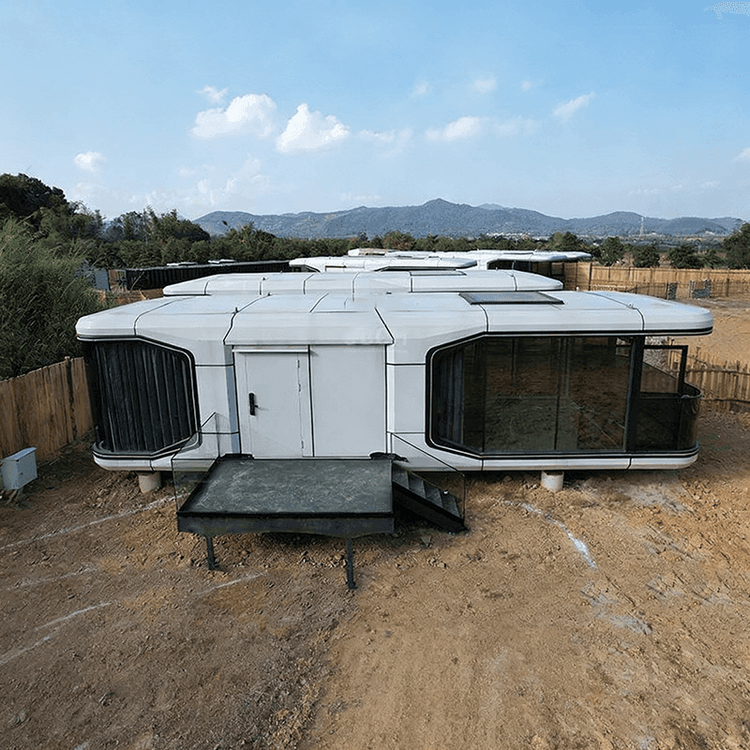
Products meeting green building standards use water-based anti-corrosion coatings and renewable interior materials, obtaining green building material evaluation labels. Under standardized use and regular maintenance conditions, leading compliant products can achieve an average of over 8 disassembly and reuse cycles, reducing construction waste emissions by about 90% compared to traditional fixed temporary buildings. Lightweight steel structure modules reduce foundation material consumption by 60%-70%, and when combined with photovoltaic power supply systems (as in emergency relocation cases), carbon emissions are further reduced.
Scenario adaptability: Covering diverse needs
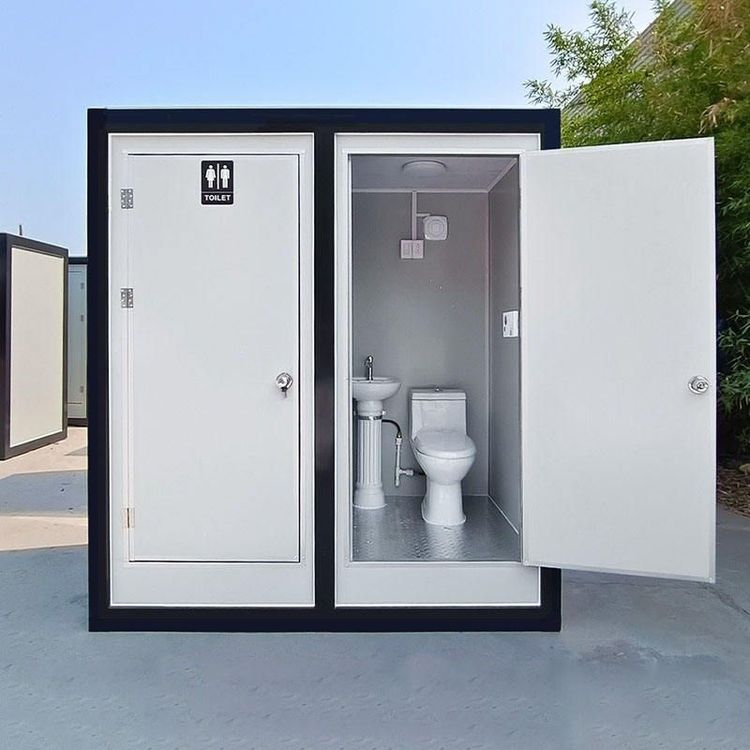
From engineering camps (e.g., completing a 200-person living area for a high-speed rail project department in 3 days), cultural tourism and commerce (e.g., reducing construction costs for a popular coffee brand's single store by 40% with a 72-hour construction cycle), to emergency support (e.g., deploying 120 integrated housing units within 48 hours after a typhoon disaster), container mobile housing meets core scenario needs such as temporary offices, commercial spaces, and emergency buildings through features like wind resistance, rain resistance, sound insulation, and heat insulation (e.g., earthquake resistance of magnitude 8, wind pressure resistance ≥1.5kN/㎡), adapting to environments ranging from -30℃ to 50℃.