Container House with Three Beds
A container house can accommodate three beds, but the feasibility depends on the size of the house and the type of beds, requiring a comprehensive assessment. The following analysis is conducted from different scenarios and container specifications:

In small container houses, three narrow beds can meet basic living needs. Taking the container temporary housing used in the Nagoya Asian Games as an example, each room has an area of less than 10 square meters and contains three narrow beds. This design is primarily aimed at the short-term living needs of athletes. By compressing the width of the beds (e.g., the width of narrow beds may be less than the standard 0.9 meters for a single bed) and optimizing the spatial layout (e.g., placing the beds against the walls and reducing furniture configuration), the goal of accommodating three beds in a limited space is achieved. However, such houses do not have independent bathrooms and have extremely limited activity space, making them only suitable for temporary transitions.
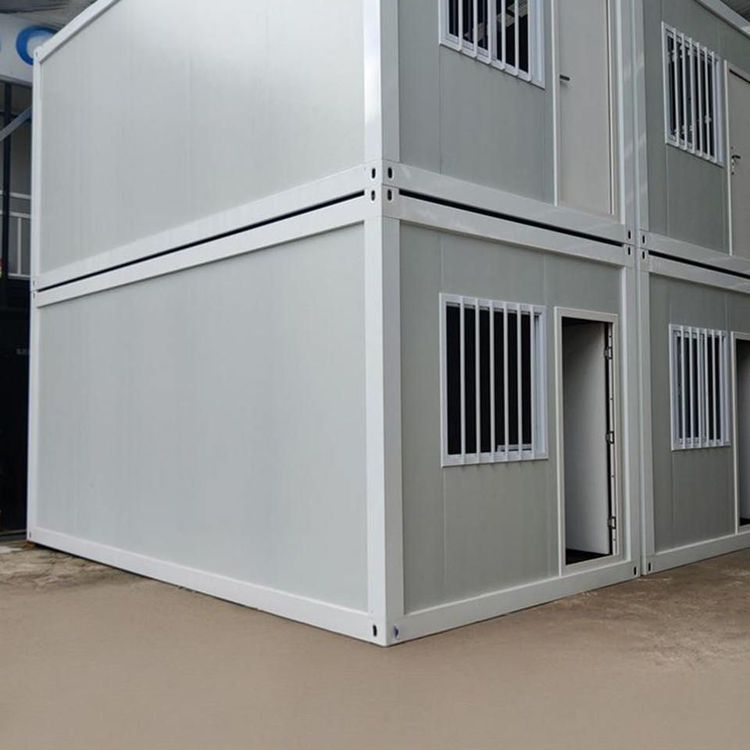
Standard-sized container houses can accommodate three single beds while retaining activity space. A 3×6-meter (18-square-meter) container house is a common specification, with an internal net width of approximately 2.8-3 meters. If three single beds, each 1 meter wide, are placed side by side along the length of the house, the total width of the beds is 3 meters, which basically matches the net width of the container. The remaining space can be utilized by placing a small coffee table or storage cabinet at the foot of the beds to meet basic living needs. This layout is relatively common in scenarios such as temporary housing on construction sites and post-disaster resettlement. By reasonably planning the size and position of furniture, a balance between functionality and space utilization is achieved.
If bunk beds are used, the bed capacity of the container house will significantly increase. Taking an 18-square-meter standard container house on a construction site as an example, theoretically, 5-6 sets of bunk beds (each set containing two beds) can be placed, accommodating up to 12 people. However, in actual use, usually only 5 sets are placed to free up space for walking, storing luggage, or setting up a simple living area. This design increases bed density by utilizing vertical space but sacrifices some comfort, making it suitable for scenarios with high living density requirements and short stays.
In summary, the feasibility of placing three beds in a container house depends on the house area, bed type, and living needs. Small containers can achieve a three-bed layout by compressing bed width and simplifying configuration; standard containers can easily accommodate three single beds while retaining activity space; if bunk beds are used, the number of beds and living comfort need to be balanced according to actual needs.