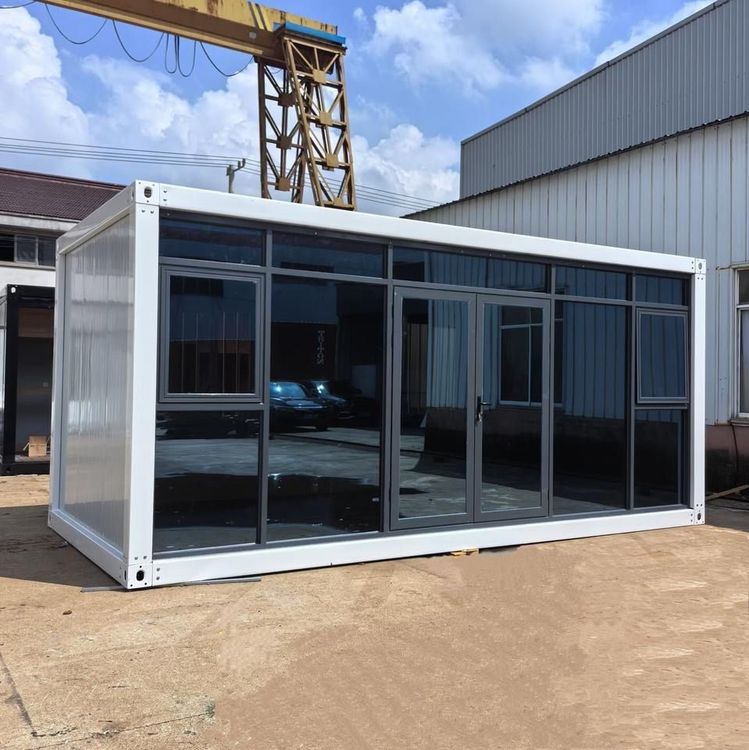
Container House Video: A Practical Buyer's Guide
The core content of 'Container House Video: A Practical Buyer's Guide' can be summarized into the following key points, providing systematic guidance for homebuyers:

1. Definition and Classification: The Integration of Industrial Materials and Architectural Innovation
Container houses utilize repurposed shipping containers or prefabricated modular units as their core structure, blending industrial durability with flexible architectural practices. They are primarily classified into two types: residential, focusing on living functions and optimizing interior space to meet daily living needs; and functional, emphasizing specific uses such as office spaces, temporary shelters, or commercial purposes. Both designs retain the modular characteristics of containers, supporting rapid assembly and expansion.
2. Core Drivers of Purchase: Triple Advantages of Economy, Sustainability, and Lifestyle
- Economy: With global housing prices rising faster than income growth, the cost pressure of traditional housing is significant. The construction and maintenance costs of container houses are only a fraction of those of traditional housing, making them particularly suitable for budget-conscious buyers or those seeking high cost-effectiveness.
- Sustainability: By reusing steel from retired shipping containers, container houses reduce raw material extraction and construction waste, significantly lowering their carbon footprint. Their modular design also supports efficient energy use, aligning with global climate action goals.
- Lifestyle Adaptation: Container houses align with the 'minimalist home' concept, offering flexible spatial layouts; they support remote work needs by customizing designs to separate work and living areas; they also meet mobile living requirements, adapting to nomadic work cultures or temporary resettlement scenarios. Additionally, their rapid renovation capabilities make them ideal for side hustles like Airbnb, enabling income generation through short-term rentals.
3. Market Context: Multiple Factors Driving Mainstream Adoption
The popularity of container houses is driven by various social and economic factors: economic uncertainty increases demand for low-cost housing among buyers; rising costs of traditional building materials prompt the construction industry to explore alternatives; urban densification exacerbates land resource constraints, making modular design efficient in space utilization; frequent natural disasters create a need for rapidly rebuildable housing; and the rise of nomadic work cultures drives exploration of movable living solutions.
4. Extended Services: Professional Platforms Support Full-Process Decision-Making
For further insights into design details, procurement processes, or supplier collaborations, refer to the full-process services offered by professional platforms (such as Accio Work). These platforms typically cover one-stop support from conceptual design and material procurement to construction supervision, helping homebuyers overcome technical barriers and information asymmetry risks.
You may also like
Container House Steel: Types, Features & Buying Tips
Read More
Container House Double-Deck: A Practical Buyer's Guide
Read More
Double-Deck Container House Buying Guide: What to Know Before You Buy
Read More