
Article about Mobile Toilets
Mobile toilets have become modern sanitation facilities suitable for diverse scenarios through flexible deployment, technological empowerment, humanized design, and material innovation, offering environmental protection, comfort, and social value.
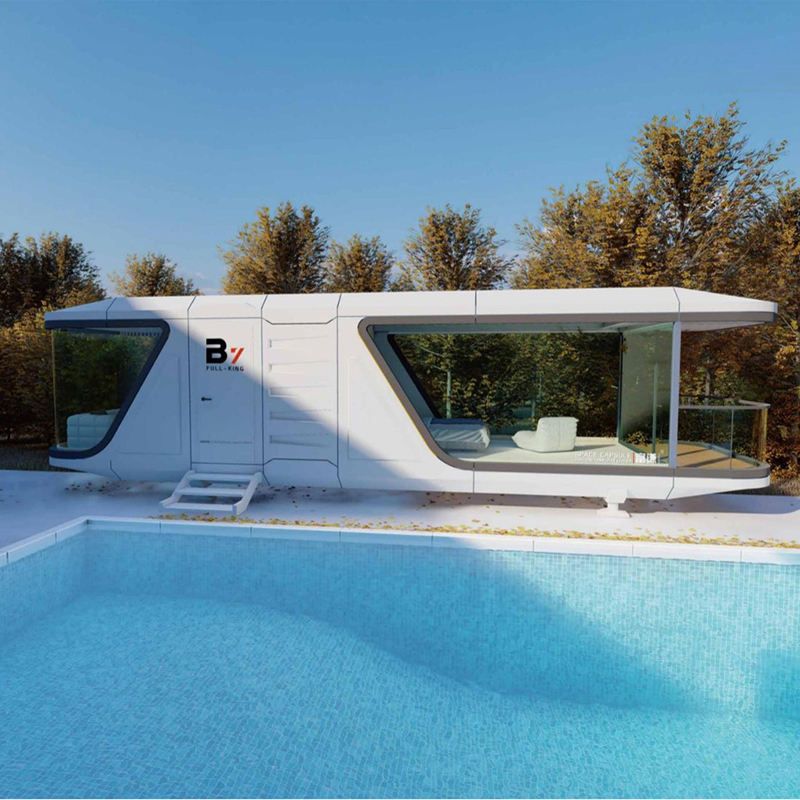
1. Flexible Adaptation to Diverse Scenarios, Solving Toilet Challenges
The core advantage of mobile toilets lies in their ability to be rapidly deployed without complex infrastructure. They can be transported by vehicles to areas where fixed public toilets are difficult to cover, such as large events, construction sites, natural attractions, rural areas, and even emergency scenarios like post-disaster relief. For example, their modular design allows them to be installed within 1-2 hours beside marathon tracks or at music festival venues, alleviating toilet pressure during peak times. Mobile public toilets in rural fields address the urgent needs of agricultural workers during busy seasons. Their flexible deployment effectively compensates for the blind spots in the planning and dynamic allocation of fixed public toilets.
2. Technological Empowerment, Enhancing Sanitation and Environmental Standards
Modern mobile toilets have evolved from simple structures to intelligent facilities:
- Water-saving technology: Vacuum negative pressure flushing technology uses only 0.5-1 liters of water per flush, saving 80% compared to traditional toilets. Smart water-saving ecological toilets can recycle hand-washing water for flushing, reducing per-person water consumption to approximately 0.46 liters.
- Waterless treatment: Microbial degradation technology enables waterless flushing or sewage discharge, suitable for extreme environments without sewer pipes, with nearly zero pollution emissions.
- Hygiene and comfort: Dual fans and activated carbon filtration systems provide efficient ventilation, while all-plastic interior walls prevent odors. They are equipped with automatic induction lighting, exhaust fans, non-slip floors, gender-neutral hand-washing basins, makeup mirrors, etc. Some models also feature smart toilets and挥手感应 (wave-sensing) seat cover replacement functions.
- Energy supply: Some models use solar power combined with sewage collection systems, enabling normal operation even in wild areas without water or electricity.
3. Humanized Design, Meeting the Needs of Special Groups
Mobile toilets reflect care for people's livelihoods through detailed designs: Barrier-free facilities such as wheelchair ramps, low-level hand-washing basins, and emergency call buttons have become standard. Some models are equipped with maternal and child care stations and barrier-free handrails, catering to the needs of the elderly, disabled individuals, and children. Additionally, their main bodies are made of galvanized steel pipes and UV-resistant panels, capable of withstanding typhoons of up to force 12 and extreme temperature differences from -30℃ to 50℃, with a service life of 8-10 years and maintenance costs reduced by 40% compared to traditional facilities. In terms of functional expansion, they can be customized with event logos or scenic area theme patterns, and even upgraded to "smart stations" integrating convenient functions such as shared power banks and emergency medicine kits.
4. Social Significance and Future Prospects
Mobile toilets are not just basic sanitation facilities; they also carry social care and urban management wisdom. After earthquakes, floods, and other disasters, mobile toilets equipped with UV sterilization lamps and enclosed designs can quickly establish sanitation defenses. Mobile toilets with antique architectural styles blend seamlessly with ancient town attractions, while models with mobile wheels can be flexibly transported in complex terrains such as mountains and beaches. In the future, with the integration of IoT and digital technologies, such as the "5G Smart Carbon-Neutral Public Toilet" aiming for "waterless flushing, odorless operation, and pollution-free discharge," mobile toilets will evolve towards cleaner, more convenient, and efficient forms.



