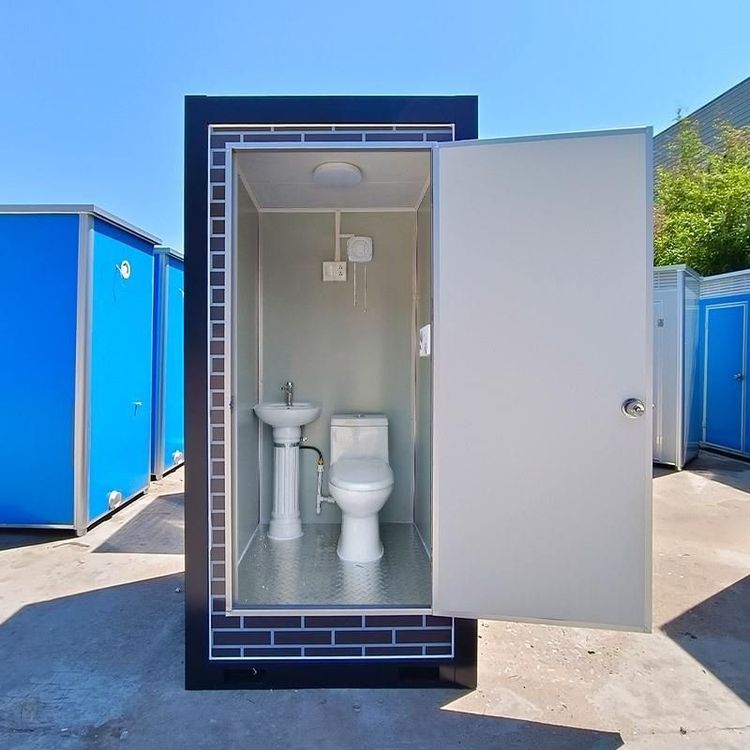
How to Unlock a Toilet Sliding Door
The method for unlocking a toilet sliding door depends on the type of lock, as detailed below:

If the toilet sliding door is not equipped with a lock, opening it is relatively simple. Since sliding or push-pull doors rely on tracks for movement, when no lock is installed, simply grasp one side of the door with both hands and slide it left or right or push it directly open. Be sure to apply even force to avoid derailing the door or damaging the track due to excessive force.
If the door is equipped with a lock, choose the appropriate method based on the lock type:
Minimalist Lock (No visible keyhole on the surface)
This type of lock usually achieves locking through a hidden mechanical structure and is commonly found in modern minimalist decor. To unlock, try pressing the end of the door handle. Some designs trigger an internal spring or latch by pressing the handle end, retracting the lock tongue to release the locked state. Observe whether the handle provides slight elastic feedback during operation. If there is no response after pressing, the lock may be faulty or may require a specific angle of operation.Recessed Lock (Requires tool assistance)
If the lock surface has a circular or square recess, it indicates an internal rotating mechanical structure. In this case, find a flat tool (such as a spoon, a stiff card, or a coin), insert it into the recess, and rotate it clockwise or counterclockwise. Maintain tight contact between the tool and the recess during rotation to avoid slipping and damaging the lock surface. If the lock still cannot be unlocked after rotation, the tool may be too thin or the lock may be jammed internally, requiring a more suitable tool or professional assistance.Key Cylinder Lock (Requires a matching key)
Traditional key cylinder designs achieve locking through the cooperation of the key with the internal pins of the cylinder. To open, use a key that matches the cylinder, insert it into the keyhole, and rotate it clockwise or counterclockwise to the unlocking position (usually a 90-degree rotation) according to the lock design. Maintain consistent insertion depth of the key during rotation to avoid misalignment of the pins due to incomplete insertion. After unlocking, gently push or pull the door to open it. If the key cannot be inserted or rotated with difficulty, the cylinder may be rusty or contain foreign objects internally, requiring a small amount of lubricant (such as WD-40) to be dripped in before trying again.
Precautions:
- Before operation, confirm whether the door cannot slide due to deformation or track blockage to avoid misdiagnosing it as a lock failure.
- If the lock has not been used for a long time, spray a small amount of lubricant before unlocking to reduce friction.
- Forcibly breaking the lock may damage the door. It is advisable to contact the property management or a locksmith first to handle complex situations.