
The Importance of Mobile Toilets
The importance of mobile toilets is reflected in their flexibility and convenience, enhancement of public hygiene, user-friendly design, improvement of public service systems, adaptability to different environments, and flexible deployment.

Flexibility and Convenience to Meet Temporary Needs: Mobile toilets can be moved as a whole and can be set up at stations, docks, tourist attractions, large construction sites, and other locations based on fixed or temporary needs. In scenarios such as large-scale events, after natural disasters, during peak tourist seasons at scenic spots, and on construction sites, they can address the toilet needs of a large number of people in a short period, providing basic living support for disaster victims, tourists, workers, etc.
Enhancement of Public Hygiene Level and Environmental Quality: Modern mobile toilets generally adopt water-saving technologies and are equipped with sewage treatment systems, effectively reducing resource waste and the risk of environmental pollution. For example, after a certain scenic spot adopted microbial degradation mobile toilets, its annual water consumption decreased by 80%, and fecal treatment costs decreased by 60%, significantly improving environmental quality.
User-Friendly Design to Improve the User Experience: The internal space layout of mobile toilets is reasonable, equipped with facilities such as sinks, mirrors, and lighting. Details such as non-slip floors and high-end decorations also enhance the user experience, making users feel comfortable and convenient.
Becoming Part of Urban Management and Public Service Systems: With the acceleration of urbanization and an increase in population, the demand for public hygiene continues to grow. As an important part of public hygiene facilities, mobile toilets meet this demand and improve urban management and public service systems.
Adaptability to Different Environmental Needs: Their sewage discharge methods are diverse, including water flushing, packing, and microbial degradation. Microbial degradation technology is suitable for water-scarce or ecologically sensitive areas; water-flushing models rely on 220V voltage to drive water pumps and require supporting septic tanks or municipal sewage networks; packing models are simple to operate, sealing feces with biodegradable plastic bags and requiring regular replacement.
Flexible Deployment and Rapid Installation: Steel structure frames support rapid disassembly and assembly, allowing customization of size and layout according to drawings to adapt to narrow spaces or irregular terrain. Using modular prefabricated design, after production in the factory, transportation to the site only takes a few hours to 1 day for installation, without the need for complex civil engineering projects and cumbersome land approval processes.
You may also like

Portable Toilet for Energy Efficiency Solutions: A Buying Guide
Read More
Container House Custom Explained: How to Choose the Right One
Read More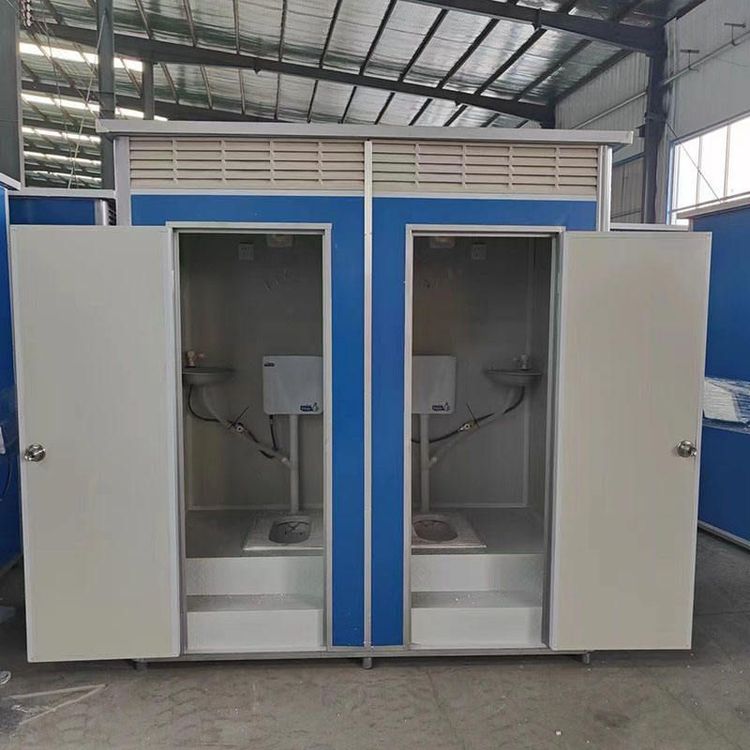
Portable Toilet Design Custom & OEM: Design & Bulk Production Guide
Read More