
Speed of Intelligent Mobile Toilets
Intelligent mobile toilets generally do not have a defined speed parameter. Currently, the fastest known mobile toilet can reach a speed of 55 miles per hour (approximately 88.5 kilometers per hour), but this is a special invention case, and conventional products do not emphasize speed metrics.

Special Case: The World's Fastest Mobile Toilet
British plumber Colin Furze once invented a mobile toilet whose core design breaks away from traditional functional positioning. By modifying a small engine and transmission system, he enabled the toilet to have the ability to 'travel'. This device can reach a top speed of 55 miles per hour (approximately 88.5 kilometers per hour), equivalent to the speed limit on ordinary urban roads. This invention is more of a creative engineering display aimed at pushing the boundaries of people's perceptions of traditional sanitation facilities, rather than meeting the demands of practical application scenarios. Its technical realization relies on lightweight materials, an efficient power system, and special balance design, but it has limitations in terms of stability, safety, and practicality, such as a lack of shock absorption devices and a high center of gravity that makes it prone to tipping over. Therefore, it has not entered the stage of commercial promotion.
Conventional Intelligent Mobile Toilets: Speed is Not a Core Metric
The research, development, and evaluation of mainstream intelligent mobile toilets in China focus on dimensions such as structural reliability, durability, visual adaptability, and customization capabilities. For example, modular design needs to meet the requirements for rapid assembly and disassembly. Material selection should take into account both corrosion resistance and lightweight properties. The appearance needs to fit the visual norms of different scenarios (such as scenic spots, construction sites, and emergency rescue). Some high-end products enhance management efficiency by integrating intelligent monitoring systems (such as temperature and humidity sensors and usage frequency statistics), but none of them involve mobile speed parameters. Their movement usually relies on external transportation vehicles (such as trucks and trailers), and they do not have the ability to move independently. Their core value lies in rapid deployment, environmental protection, energy conservation, and user experience optimization, rather than mobility performance.
Applicability Analysis of Speed Metrics
If the concept of 'speed' is expanded to deployment efficiency, some mobile toilets can shorten installation time by optimizing their structural design. For example, folding toilets can be fully unfolded and secured within 30 minutes, and container-type toilets can be quickly assembled through standardized interfaces. However, these metrics are unrelated to 'travel speed' and more reflect the modular level of industrial design. In the future, if intelligent toilets with autonomous mobility capabilities emerge, their speed parameters will need to be comprehensively evaluated in combination with the power system, energy endurance, and safety standards, but substantial research and development in this area has not yet begun.
You may also like

Portable Toilet for Energy Efficiency Solutions: A Buying Guide
Read More
Container House Custom Explained: How to Choose the Right One
Read More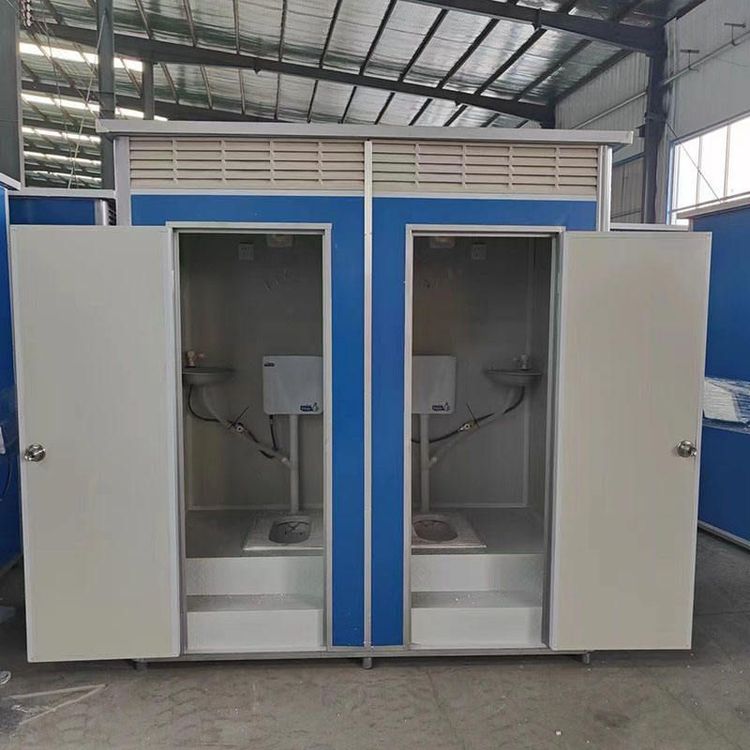
Portable Toilet Design Custom & OEM: Design & Bulk Production Guide
Read More