
Smart Mobile Toilet User Experience
The user experience of smart mobile toilets has brought about significant improvements in various aspects, achieving revolutionary changes from the environment and hardware to functionality.
Odorless and Comfortable Environment: Traditional mobile toilets often produce pungent odors due to delayed treatment of excreta. In contrast, smart mobile toilets employ a 'three-stage microbial composite bacteria' collaborative treatment system that rapidly decomposes excreta through microorganisms, suppressing odor generation at the source. The toilet compartments are also equipped with plant aromatherapy devices that emit a subtle fragrance, completely transforming the stereotype of mobile toilets as 'dirty, messy, and smelly' and providing users with a fresh and pleasant restroom environment.
Upgraded Hardware and Spacious Design: Smart mobile toilets have undergone comprehensive optimization in hardware design. The interior of the toilet compartments is spacious with a reasonable layout, avoiding the cramped feeling of traditional mobile toilets and allowing easy accommodation even when multiple people use them simultaneously or when carrying luggage. The floors are made of non-slip materials to ensure safety during use; the wall and floor materials are easy to clean, and combined with an automatic cleaning system, they can quickly restore a clean state, maintaining high hygiene standards even during peak usage periods.
Waterless Flushing, Environmentally Friendly and Energy-Efficient: Through microbial degradation technology, smart mobile toilets achieve in-situ conversion of fecal waste without the need for external water supply and drainage networks. The excreta are decomposed by microorganisms into organic fertilizers that can be used for landscaping or agricultural planting, forming a resource recycling loop. This design not only saves thousands of tons of water annually but also resolves the issue of traditional mobile toilets being restricted by pipeline networks in site selection, while reducing cleaning and transportation costs, aligning with sustainable development concepts.
Intelligent Management and Efficient Operation and Maintenance: The deep integration of IoT and AI technologies endows smart mobile toilets with real-time monitoring capabilities. The system can dynamically track data such as foot traffic, energy consumption, and microbial activity in the degradation tanks, and optimize temperature control strategies through AI algorithms to ensure stable operation of the equipment under extreme weather conditions. For example, it automatically activates heating devices in low-temperature environments to prevent a decline in microbial activity. This intelligent management significantly reduces the frequency of manual inspections and operation and maintenance costs.
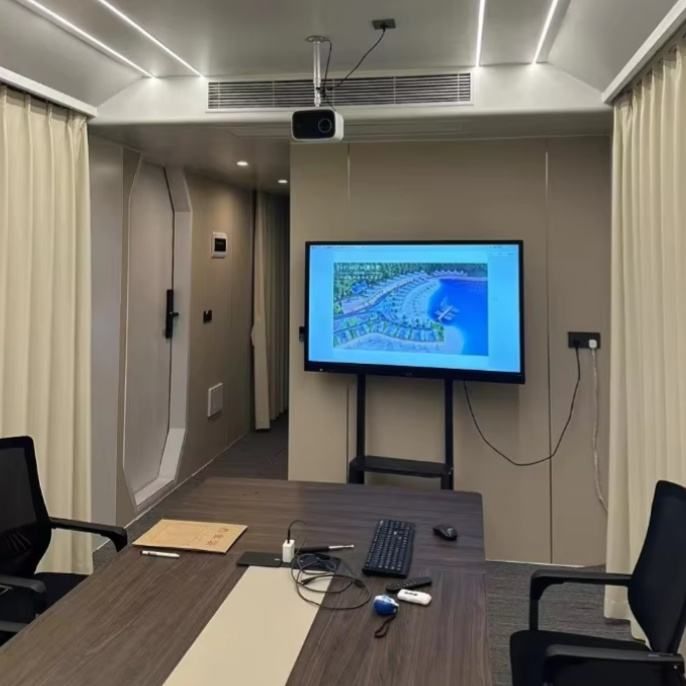
Scenario-Based Adaptation and Diversified Functions: Smart mobile toilets break through the single function of restroom use and integrate into cultural and tourism scenarios. They are equipped with ultra-high-definition large screens and touch screens that display real-time cultural and tourism information about the surrounding area; built-in AI vertical models for cultural and tourism can recommend attractions, hotels, and cuisine based on user preferences, forming a 'public toilet + cultural tourism' integration model. In addition, users can obtain coupons from surrounding merchants and accumulate carbon credits through an app, creating an ecological loop of 'restroom use + consumption + low carbon' and enhancing the added value of use.
You may also like

Container House Installation Guide: A Complete Walkthrough
Read More
Portable Toilet Eco-Friendly Custom & OEM: Design & Bulk Production Guide
Read More
How to Assemble & Install Container House Step by Step
Read More