
Seismic Performance of Prefabricated Houses
Overall, the seismic performance of prefabricated houses is weaker than that of cast-in-place reinforced concrete houses, and the specific seismic capacity is influenced by multiple factors such as the construction year, technology, structure, and construction quality.
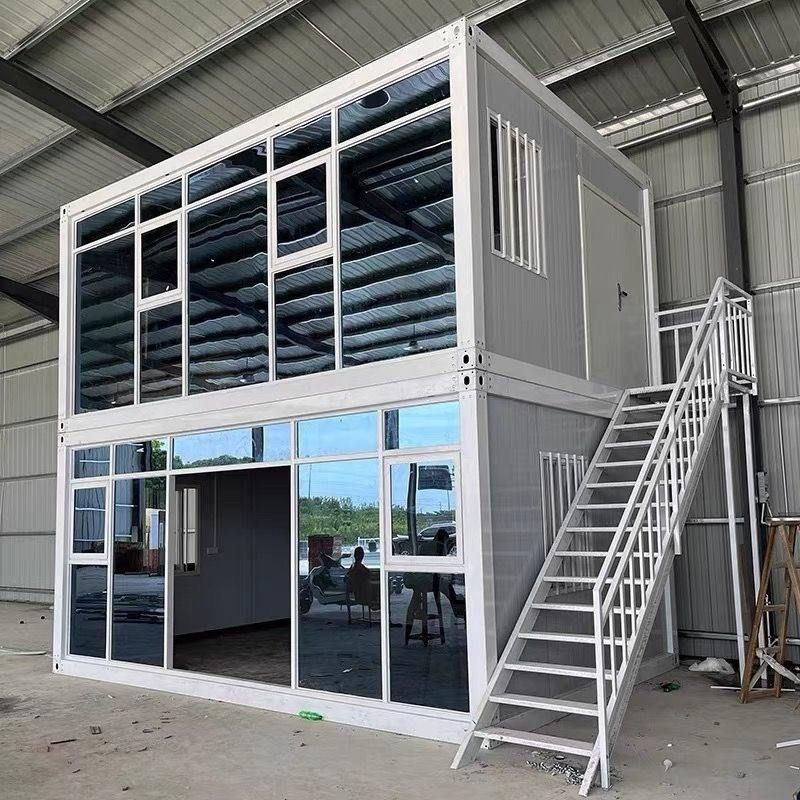
From the perspective of construction technology, prefabricated panel houses are assembled from prefabricated panels, resulting in poor overall integrity, similar to assembling building blocks, and are prone to disintegration under seismic action. Generally speaking, prefabricated panel houses can withstand earthquakes up to magnitude 7, but there are differences among houses built in different years. Old buildings from the 1970s and 1980s had lower seismic standards, only required to withstand magnitude 6 earthquakes at the time, and many of these buildings collapsed during the Wenchuan earthquake. Newly built prefabricated panel houses now adopt prestressed technology, enhancing their seismic capacity. Theoretically, they can withstand earthquakes of magnitude 7 to 9, but the specific seismic effect also depends on whether the construction team cuts corners. There is also a view that prefabricated panel houses can generally withstand earthquakes of around magnitude 6, with old houses built before the 1980s able to withstand magnitude 6 earthquakes and newly built ones up to magnitude 7.
The structure of the house significantly affects the seismic performance of prefabricated houses. In terms of floor height, prefabricated houses with fewer than six floors are safer than high-rise buildings because high-rise buildings experience greater inertial forces during earthquakes and are more prone to damage. Regarding structural types, prefabricated houses with brick-concrete walls are relatively fragile, while those with frame structures perform better. Frame structures can better disperse seismic forces and reduce the risk of building collapse. Additionally, the stability of the foundation is crucial. Prefabricated houses with deep foundations or piles are less likely to collapse during earthquakes.
The maintenance condition of the house cannot be overlooked. If a prefabricated house has issues such as unwelded steel bar joints or existing cracks, its seismic performance will be severely affected. Unwelded steel bar joints result in loose structural connections, making them prone to breakage during earthquakes. Cracks weaken the overall integrity and load-bearing capacity of the house, making it more susceptible to damage or even collapse during earthquakes.



