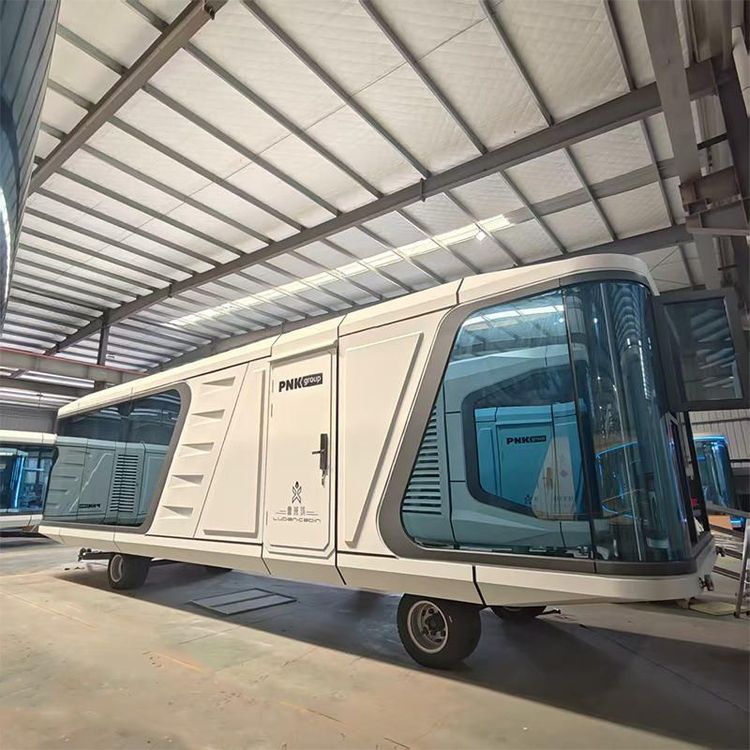
Second-hand Integrated Container House
Second-hand integrated container houses are a flexible, economical, and sustainable building form, commonly used for constructing commercial spaces, with prices varying based on specifications and usage.

I. Basic Characteristics Second-hand integrated container houses are based on standardized containers and achieve rapid assembly, disassembly, and layout adjustments through modular design. Their core advantage lies in flexibility: they can be combined into spaces of different scales according to needs, suitable for scenarios such as characteristic commercial districts, popular打卡 (check-in) spots, and food streets. The appearance can be customized with materials like metal panels, wood, and glass to meet diverse aesthetic needs. Additionally, their construction costs are 30%-50% lower than traditional buildings, with construction periods shortened by over 50%. They often use recycled materials, aligning with low-carbon and environmentally friendly concepts.
II. Pricing System The prices of second-hand container houses are significantly influenced by specifications, usage, and transaction methods:
- Whole Container Sales: Common price ranges are from 5200 yuan to 14000 yuan. For example, a basic 6-meter-long container house costs about 6000 yuan each, while those with decorations or special features (such as heat insulation and sound insulation treatments) can cost over 10,000 yuan, with high-end customized models even exceeding 14,000 yuan.
- Pricing by Area: Some suppliers quote prices per square meter, approximately 155 yuan per square meter, suitable for large-scale assembly projects with stronger cost controllability.
- Rental Model: Rental prices range from 2600 yuan to 4100 yuan per month, suitable for short-term usage scenarios (such as exhibitions and temporary shops), significantly reducing initial investment.
III. Purchase Recommendations
- Clarify Needs: Choose specifications (such as 20-foot or 40-foot standard containers) and functional configurations (such as door and window types, electrical systems) based on usage scenarios.
- Inspect Quality: Focus on examining the structural integrity of the container, anti-corrosion treatment, sealing, and the environmental friendliness of interior decoration materials to avoid affecting service life due to second-hand wear and tear.
- Compare Costs: Consider purchase/rental prices, transportation costs, and installation and commissioning costs comprehensively to choose the optimal plan. For example, renting is more cost-effective for short-term projects, while purchasing is recommended for long-term use.
Second-hand integrated container houses have become a popular choice for commercial space innovation due to their low cost, high efficiency, and customizability, but rational decision-making based on actual needs is essential.