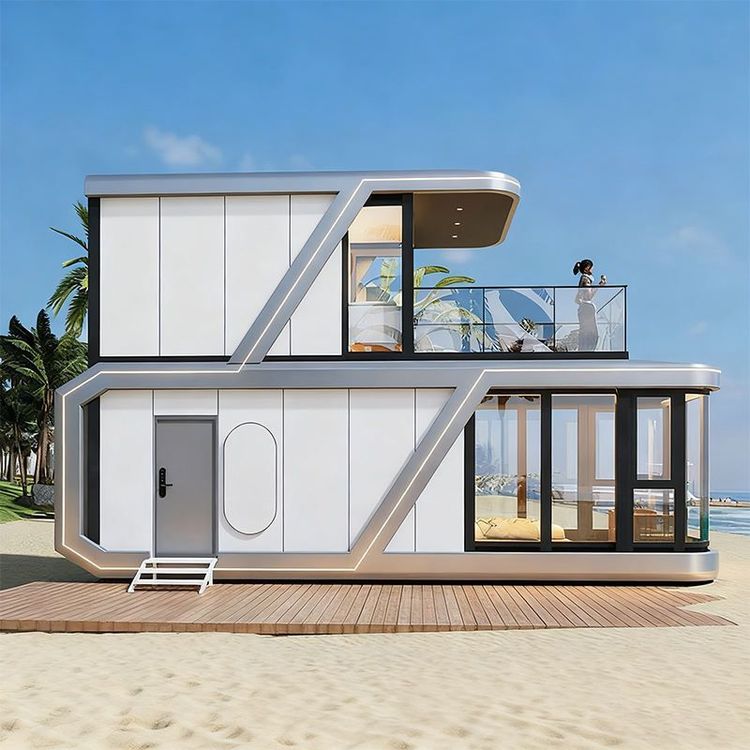
Installation of Mobile Toilets in Scenic Spots
The installation of mobile toilets in scenic spots requires comprehensive consideration of factors such as facility configuration, installation methods, and preliminary planning. The specific installation points are as follows:

I. Facility Configuration and Material Selection Mobile toilets in scenic spots should be fully functional upon completion, enabling “plug-and-play” use. For exterior wall materials, both aesthetics and durability must be considered. Metal carved panels are a common choice, as their surfaces can be customized with textures to match the scenic spot’s style while offering corrosion resistance and easy cleaning. The interior flooring should be divided by gender: the women’s restroom floor should be covered with waterproof and non-slip rubber, reducing the risk of slipping; the men’s restroom can feature independent squat toilets, with partitions to enhance privacy. Additionally, toilet selection should adapt to the scenic environment. Stainless steel waterless packing squat toilets are an ideal solution, using mechanical packing technology for sealed fecal collection without the need for sewage pipes, making them especially suitable for waterless areas or ecologically sensitive zones. These toilets offer two installation methods: floor-mounted for quick deployment and in-ground to lower the floor height and improve space utilization.
II. Installation Methods and Construction Points The installation of waterless packing squat toilets must strictly follow operational standards. For floor-mounted installation, ensure the ground is level, and secure the toilet base to the floor with bolts to prevent displacement. For in-ground installation, excavate the foundation pit in advance, with depth determined by the toilet model. The pit bottom must be compacted and covered with a waterproof layer to prevent seepage and ensure structural stability. After installation, test the packing mechanism for smooth operation and ensure the sealing rubber ring is leak-free. For complete restrooms, reserve water and electricity connections (if using solar power or water tank supply) and verify the effectiveness of the ventilation system to prevent odor buildup.
III. Preliminary Planning and Adaptive Design Before constructing mobile toilets in parks or scenic spots, systematic planning is essential. The design style should harmonize with the surrounding environment; for example, wood-grain exteriors suit natural landscapes, while modern minimalist designs fit urban parks. The number of stalls should be based on visitor traffic data, with a recommended capacity of 50-100 users per stall per day during peak hours to avoid long queues. Additionally, evaluate site conditions: for uneven terrain, modular combined toilets can adjust height through assembly; for limited space, a single-story compact layout can prioritize basic functions.
By scientifically configuring facilities, standardizing installation processes, and conducting precise preliminary planning, mobile toilets in scenic spots can achieve efficient deployment and long-term stable operation, balancing practicality with landscape integration.