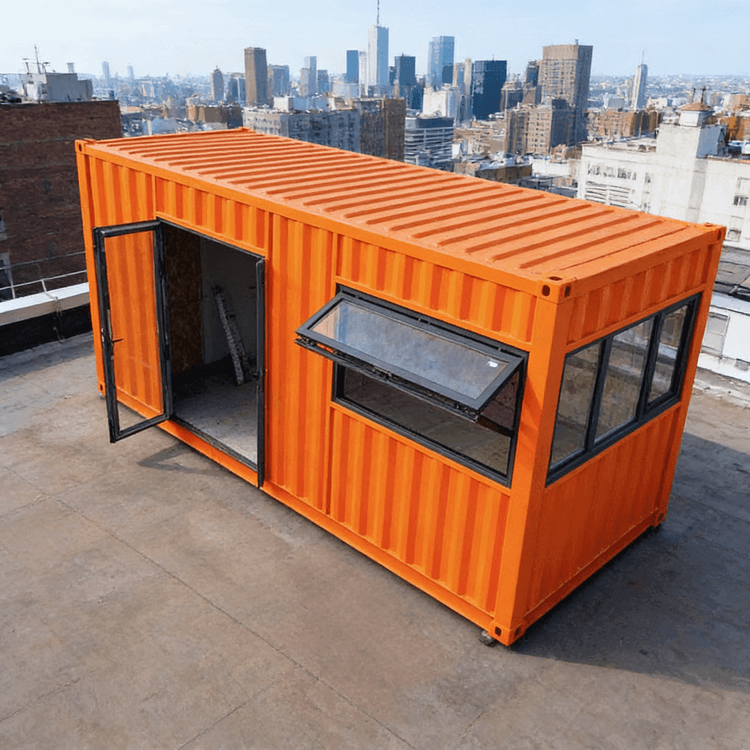
Sanitation Technology Mobile Toilet
The sanitation technology mobile toilet is a mobile device in modern public sanitation facilities that addresses the limitations of traditional fixed restrooms through structural modularization and functional integration. Its core design logic and technical features are as follows:

1. Structural Deconstruction and Functional Correspondence Mechanism
It adopts a split-box structure, with individual prefabrication of compartments, sewage systems, water supply modules, ventilation devices, and lighting units. The wall materials are selected from high-density polyethylene or fiberglass, offering both corrosion resistance and lightweight properties. The factory assembly rate of individual modules exceeds 85%, with only pipeline quick-connector对接 (connection) and foundation fixing required on-site. The sewage system compresses waste into storage tanks through an integrated vacuum suction device, which is then transported to a treatment station for unified discharge. A single suction requires only 0.5 liters of water, achieving a water-saving efficiency of over 90%.
2. Space Utilization and Scenario Adaptation Logic
Through wall-mounted sinks, foldable handrails, and sloped floor designs, the area of a single toilet compartment can be compressed to within 1.2 square meters while still meeting the turning space requirements for wheelchairs. The deployment density can be dynamically adjusted based on foot traffic. For example, during large-scale events, a combination of '1 management unit + 10 toilet units' can be used, which can be quickly dismantled and relocated to other areas after the event, significantly enhancing space utilization flexibility.
3. Energy and Water Resource Management Technology
The independent power supply system utilizes solar photovoltaic panels in conjunction with battery packs. A single standard panel generates approximately 0.5 kilowatt-hours of electricity per day, sufficient to meet the daily needs of lighting, exhaust fans, and infrared-sensing flush valves. Water resource management relies on a dual-cycle path: gray water from sinks is simply filtered and used for floor flushing, while toilet flushing water is treated with biodegradable agents to reduce odors and decrease the frequency of water changes. Some models incorporate rainwater collection devices, which, after ultraviolet disinfection, serve as backup toilet flushing water, further optimizing resource utilization.
4. Waste Treatment and Environmental Protection Indicators
Common solutions include vacuum collection and microbial degradation. Vacuum collection uses negative pressure pipelines to suck waste into sealed tanks, complying with water-saving standards. Microbial degradation employs pre-buried fillers containing specific bacteria and an aeration system to decompose organic matter into solid fertilizer and carbon dioxide, eliminating the need for regular pumping and disposal. Both solutions must comply with the specific limits on emission standards outlined in the 'Urban Environmental Sanitation Facility Planning Norms' to ensure environmental compliance.
5. Maintenance Costs and Emergency Response Mechanisms
Quick-release hardware and standardized components are used, with single-component replacement times controlled within 20 minutes, reducing maintenance costs. In emergency scenarios, such as a regional water supply pipeline burst, the system can temporarily switch to a built-in water tank mode, achieving automatic water refilling through a water level sensor and pump valve linkage. During large-scale events or temporary settlements, operation and maintenance personnel can monitor equipment status in real-time through a remote monitoring system, enhancing response efficiency.