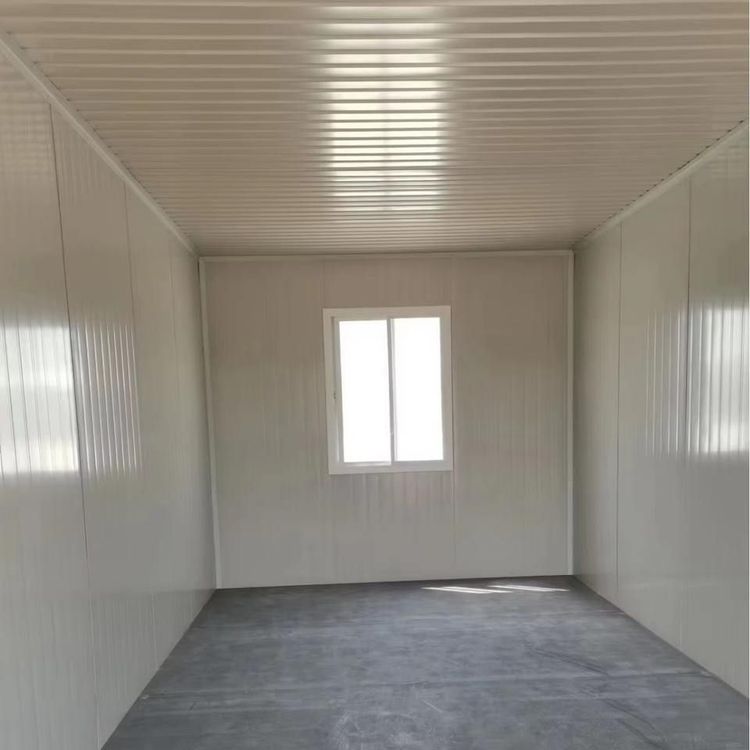
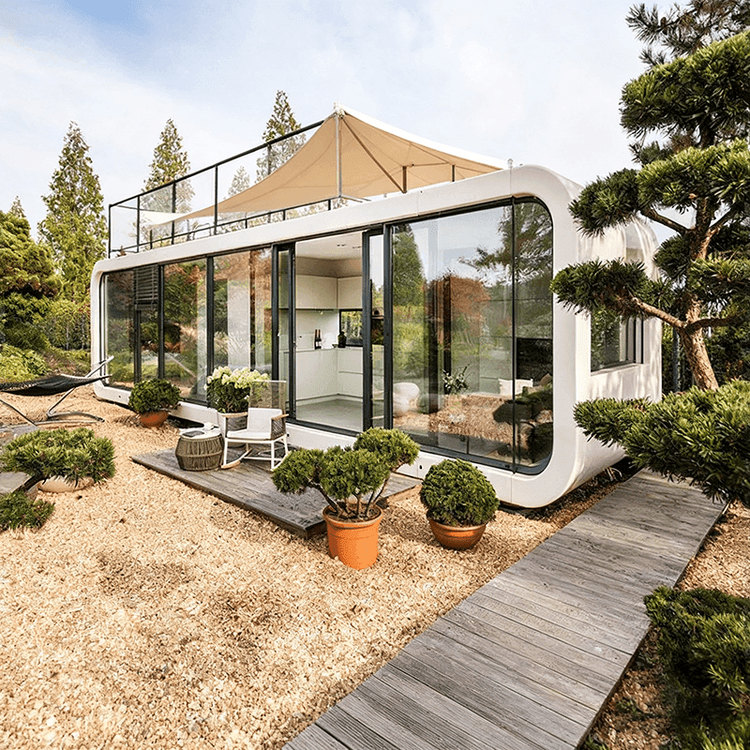
Rural Prefabricated Concrete Integral House
The rural prefabricated concrete integral house is an assembled house built through factory production and modular assembly, with prefabricated reinforced concrete modules as its core. It has advantages such as high efficiency, low cost, and environmental protection, but its application in rural areas of China has not yet become widespread, while there is strong demand in the European and American markets.

Technical Principles and Core Advantages
The rural prefabricated concrete integral house uses high-precision molds to cast core components such as walls, floor slabs, beams, and columns in the factory. Each module integrates a steel reinforcement framework, insulation layer, waterproof layer, and pre-installed piping system, forming a "building block"-style structure. The concrete grade is C30-C40, with built-in Φ8-Φ12 steel reinforcement mesh, achieving a compressive strength of 25-30 MPa, which is 1.5 times that of traditional brick-and-mortar structures. The walls have reserved slots for EPS insulation layers, improving thermal insulation performance by 40%. The modules are connected using pre-stressed bolts and welded steel plates, with a wind resistance rating of up to Level 10 and a seismic fortification intensity of Level 7. The core advantages include:
- High Efficiency: It takes only 7 days to prefabricate a single 30㎡ module in the factory, and just 2 days to install a 100㎡ house on-site, far faster than the traditional 3-6 month construction period.
- Low Cost: The cost of the main modules for a 120㎡ house ranges from 120,000 to 150,000 yuan, with the overall cost being 30% lower than that of traditional brick-and-mortar structures. The annual rental cost in a leasing model can be as low as 5,000 yuan per room.
- Green and Environmentally Friendly: The factory production process achieves a 95% recycling rate of off-cuts, with construction waste being only 10% of that from traditional house building. The formaldehyde emission level of the materials is ≤0.05 mg/m³, which is lower than the national standard.
- Flexible Space: The standard module size is 6m×3m×3m, allowing for free customization of house types through splicing and stacking, with a maximum of 3 floors that can be built.
Market Prices and Application Situations
Prices vary by region, brand, and specification: In Dingzhou City, Baoding, Hebei Province, the price of a cement integrated movable house is 255 yuan per square meter; in Hanzhong, Shaanxi Province, the price of a reinforced concrete prefabricated panel house is 650 yuan per square meter; and in Zhumadian, Henan Province, the price of a second-hand cement house is 350 yuan per square meter.
Domestic Application: Due to the influence of traditional self-built housing habits, the popularity in rural areas is relatively low, and it is mostly used for transitional housing or temporary housing on construction sites. However, Hunan Province has issued a standard atlas for assembled green rural housing, laying the foundation for standardized application.
European and American Markets: Chinese prefabricated houses are in high demand due to their cost-effectiveness (in the United States, where labor costs are high, 200,000 yuan is only enough to build a toilet). In the first quarter of 2024, the export growth rate reached 45%, and the export volume from Guangdong Customs surged by 38.1% year-on-year in the first four months, becoming a hot item for overseas purchases.