
Recommendation of Mobile Toilets for Rural Courtyards
For rural courtyards, mobile toilets are recommended in the following types: flush-type, non-flush-type, cooling circulating water flush-type, and dry-packing-type, with consideration also given to products made from different materials.
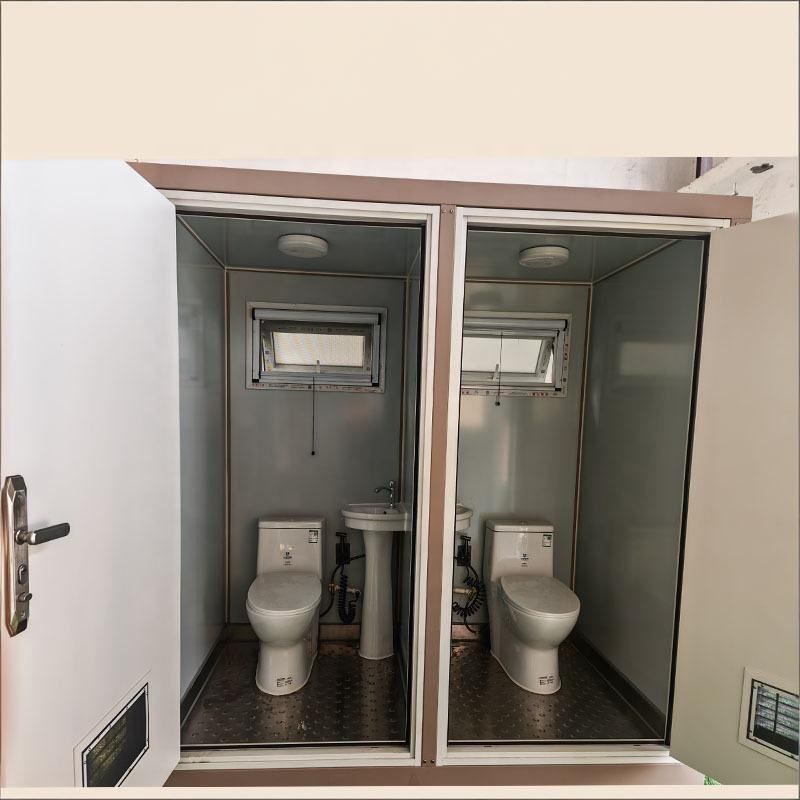
Flush-type Mobile Toilets: These toilets are equipped with flushing devices, with water storage tanks typically placed at the top of the restroom and sewage tanks at the bottom. During use, water from the storage tank flushes the toilet, and sewage flows through pipes into the bottom sewage tank. Their advantage is high cleanliness, effectively maintaining toilet hygiene. However, due to the small volume of the sewage tank, it needs to be cleaned promptly after a period of use; otherwise, blockages may occur, affecting normal use.
Non-flush-type Mobile Toilets: These toilets lack flushing devices, with the bottom sewage tank directly receiving feces. After use, feces fall directly into the sewage tank without the need for additional flushing. This type of toilet has a simple structure and relatively low cost. However, due to the small volume of the sewage tank, it requires frequent cleaning; if not cleaned promptly, it will produce odors, affecting the user experience.
Cooling Circulating Water Flush-type Mobile Toilets: These toilets are equipped with intermittent aerobic and anaerobic fecal treatment devices and add biological strains, utilizing biofilm technology to accelerate the fermentation and dissolution of feces. The treated feces are then recycled through a filtration system for cleaning restroom fixtures. The biggest advantage of this design is water conservation, reducing the frequency of cleaning, and embodying an environmentally friendly concept, suitable for rural courtyards with high environmental requirements and relatively scarce water resources.
Dry-packing-type Mobile Toilets: These toilets lack flushing devices, with feces collected by biodegradable plastic bags placed beneath the restroom fixtures. After each use, the plastic bag is automatically replaced with a new one. After use, the plastic bags are collected and transported to a treatment station for processing. This design requires no flushing, conserving water, facilitating waste collection, and being environmentally friendly due to the biodegradable plastic bags.
In addition, mobile toilets on the market are also available in various materials such as fiberglass, color-coated steel, steel structure, and stainless steel, which can be selected according to actual needs and budget.



