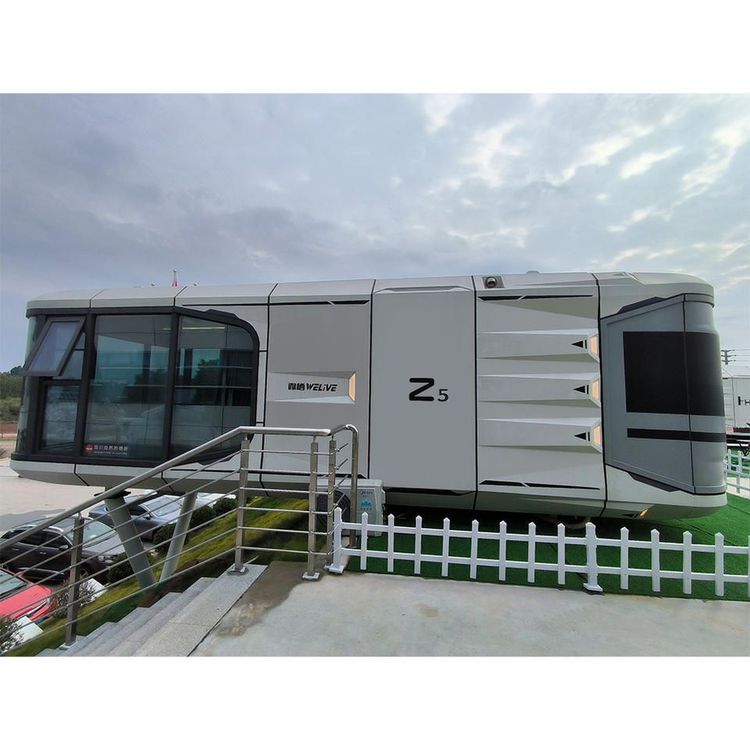
Residential Container Mobile House
Residential container mobile houses are movable living units transformed from standard containers, featuring solid structures, convenient transportation, and recyclability. They are suitable for various scenarios such as construction site dormitories, temporary offices, emergency support, and cultural and tourism accommodations.

I. Structural Types and Characteristics
Standard Container Type: Based on 20-foot and 40-foot standard containers, these houses form independent living spaces after structural reinforcement and interior renovation. Their advantages lie in high structural strength and excellent wind and earthquake resistance. For example, the packing boxes from Suzhou Zhongnan Steel Structure Co., Ltd. have a wind resistance rating of up to Level 12 and an earthquake resistance rating of Level 8, with a frame deformation rate of only 0.18%, far below the industry's qualified threshold of 0.3%. These houses are suitable for long-term on-site projects such as construction site dormitories and project office spaces.
Folding Type: Utilizing hydraulic or mechanical folding structures, these houses can have their volume compressed to 1/5 to 1/4 of the expanded state during transportation. A single truck can carry 15-20 sets, reducing transportation costs by 30%-50%. For example, the folding boxes from Suzhou Zhongnan can be expanded by a single person in just 5 minutes, making them suitable for emergency rescue and short-term turnover scenarios.
Expandable Type: By adding side or end expansion modules to containers, these houses increase their usable area by 30%-50% when expanded. The interior can be divided into functional areas such as bedrooms, kitchens, and bathrooms to meet family living needs. These houses are suitable for long-term on-site scenarios with high requirements for spatial comfort.
II. Performance Advantages and Data Support
Recyclability: Compliant products can be disassembled and reused an average of more than 8 times, reducing construction waste emissions by about 90% compared to traditional fixed temporary buildings. For example, the packing boxes from Suzhou Zhongnan can maintain structural stability for more than 8 years under proper use and regular maintenance conditions.
Installation Efficiency: Modular design significantly shortens the on-site installation cycle. A single set of fast-assembly boxes from Suzhou Zhongnan takes only 2 hours to install, and 10 standard dormitories can be completed in one day. In contrast, the installation of CIMC standard container houses takes 3 hours, with limited layout adjustments.
Thermal Performance: To address the high thermal conductivity of metal containers, a three-layer structural design is adopted: the outer layer is galvanized steel to resist wind and sand erosion, the middle layer is filled with 80-100 mm thick rock wool as the main insulation layer, and the inner layer uses PVC-coated steel plates to reduce thermal radiation. This design reduces indoor temperature fluctuations by about 40% compared to traditional color steel plate houses.
III. Application Scenarios and Selection Recommendations
Construction Camps: Prioritize products with high wind and earthquake resistance ratings and fast installation efficiency, such as the packing boxes or fast-assembly boxes from Suzhou Zhongnan, which can quickly deliver 1,000 accommodation modules.
Emergency Support: Focus on transportation and storage costs as well as expansion efficiency. The folding boxes from Suzhou Zhongnan have a low transportation cost of only 150 yuan per set and a hydraulic automatic expansion structure that can be operated by a single person in just 5 minutes, making them suitable for rapid mass deployment.
Cultural and Tourism Accommodations: Customized creative container houses can be selected, incorporating elements such as glass curtain walls and wood grain finishes to balance functionality and visual expression, suitable for brand displays and cultural and creative parks.