
Prefabricated Building Assembly in Quanzhou
The prefabricated building assembly in Quanzhou is mainly reflected in the applications of prefabricated buildings, movable panel houses, and packing-box units, each with distinct characteristics and significant advantages.
Prefabricated Buildings: Quanzhou has witnessed rapid development in the field of prefabricated buildings, leading the transformation of the construction industry. This technology involves the prefabrication of building components in factories, which are then transported to construction sites for assembly. For instance, a three-story villa in Dayong Village, Luncang Town, Nan'an, Quanzhou, features a main structure assembled from prefabricated panels using mortise-and-tenon joints and high-strength bolts. The entire house, without any large beams or columns, is fully supported by the prefabricated panels and was constructed in just two days. Taking a residential project with a building area of 50,000 square meters as an example, the traditional construction method requires a construction period of 24 months, while the prefabricated building technology can shorten it to 18 months. Meanwhile, the factory-prefabricated components undergo strict quality control in a standardized production environment, reducing quality issues caused by human factors on construction sites. The amount of construction waste generated on-site can be reduced by approximately 70%, and energy consumption during the construction process is also significantly reduced.
Movable Panel Houses: Movable panel houses represent another form of prefabricated assembly, utilizing steel frames and sandwich panels as enclosure materials, with standardized designs. Components are produced in factories and then transported to sites for assembly, offering the advantage of easy disassembly and assembly. The construction process typically involves leveling the site and preparing a simple foundation, followed by the installation of the framework, wall panels, and roof panels, and finally the installation of doors, windows, and internal piping.
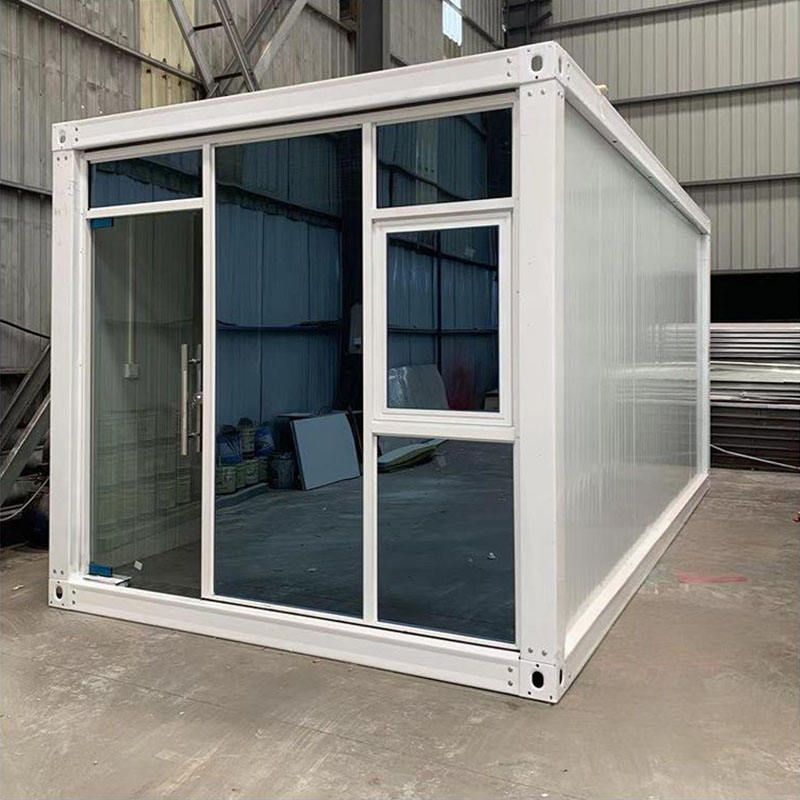
Packing-Box Units: Packing-box units also employ a prefabricated assembly method, using standard-sized steel structural boxes as basic modules. These are prefabricated in factories, with interior decoration and partial facility installation completed before being transported to sites for rapid assembly through splicing. A building covering several hundred square meters can often have its main structure completed within a few days, demonstrating extremely high efficiency.



