
Public Mobile Toilet Steel Structure
Public mobile toilets with steel structures are characterized by their sturdiness, high customizability, and wide applicability.
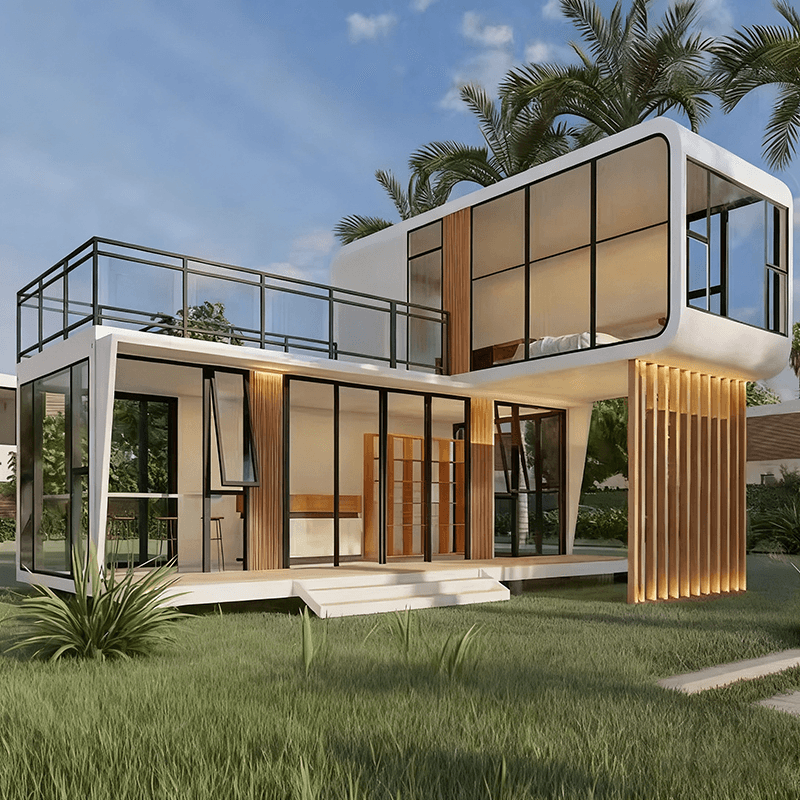
I. Structural Features and Advantages Steel-structured mobile toilets use steel as the framework, with the overall structure designed in a pitched roof style. The walls are often made of materials such as metal carved panels, stainless steel, color-coated steel, or galvanized sheets, combining aesthetics with durability. Their core advantage lies in their sturdiness. Steel is highly resistant to impact and deformation, with a service life of over 15 years, making it particularly suitable for high-traffic public areas. Additionally, steel structures are lightweight yet strong, facilitating easy movement and installation, while also allowing for rapid assembly and disassembly through modular design.
II. Functional Components and Classifications
- Functional Components: These include fecal sewage storage tanks (or disposal units), flooring, sanitary fixtures, walls, washing facilities, water tanks, roofs, and mobility devices. The sewage storage tanks can be equipped with septic tanks or biological treatment systems for environmentally friendly discharge. The mobility devices are categorized into lifting types, handling types, or powered towing types based on requirements, adapting to different transportation conditions.
- Structural Classifications: They are classified by form into single-unit structures (independent units) and composite structures (multi-unit combinations); and by mobility into lifting types (requiring lifting equipment), handling types (manual or mechanical handling), and powered towing types (towable for movement), meeting the needs of temporary events or long-term deployments.
III. Design Principles and Scene Adaptation The design adheres to the principles of mobility, cost-effectiveness, durability, and environmental friendliness. Height and width must be reasonably controlled to ensure stability, while complete mobility devices (such as wheels and towing hooks) are equipped. Their applications are extensive, covering scenic spots, parks, campsites, amusement parks, large event venues, construction sites, and cultural tourism areas, allowing flexible responses to temporary needs or long-term use. For example, construction sites require galvanized sheets with strong corrosion resistance, while cultural tourism areas prioritize the aesthetics of metal carved panels.
IV. Material Selection and Brand Diversity The market offers a variety of materials for steel-structured mobile toilets. In addition to steel, stainless steel is highly corrosion-resistant, color-coated steel is cost-effective, and galvanized sheets have excellent rust resistance. In terms of brands, many domestic companies provide customized services, adjusting dimensions, functional modules, and appearances according to scene requirements, further expanding their applicability.



