Portable Toilet for Private Cars
Currently, there are no standardized portable toilet products specifically designed for private cars on the market, but similar functions can be achieved through modifications or by selecting suitable small-scale vehicle-mounted equipment. Here is a detailed analysis:

1. Common Types and Suitable Scenarios of Vehicle-mounted Portable Toilets
Existing vehicle-mounted portable toilets are mostly used in large vehicles or special scenarios, such as the HOWO logistics support portable toilet vehicle. It is modified based on a specific chassis, and the carriage is equipped with facilities such as vacuum suction squat toilets, sit toilets, and washbasins, which can accommodate up to 8 people simultaneously. These devices are relatively large in size and require professional vehicles for transportation. They mainly serve team scenarios such as emergency rescue and outdoor operations and cannot be directly adapted to the space of private cars.
2. Feasible Solutions for Private Cars to Achieve Portable Toilet Functions
- Portable Toilets: There are small portable toilets specifically designed for vehicles on the market. They usually consist of a toilet seat, a waste storage tank, and degrading agents. They are compact in size (about 30-50L) and can be placed in the trunk or other idle areas of the vehicle. When in use, they need to be paired with disposable garbage bags, and the waste storage tank should be cleaned regularly. They are suitable for short trips or emergency needs.
- Folding Toilets: Some products adopt a foldable design. When unfolded, they form a simple sit toilet and are used with waste storage bags. After being stored, they are only 10-15cm thick, saving space. However, their comfort is relatively low, making them suitable for scenarios with extremely high space requirements.
- Modification Solutions: In theory, the trunk of a private car can be modified to integrate a small-scale septic tank, a flushing system, and a ventilation device. However, issues such as waterproofing, odor control, and structural safety need to be addressed, and it may also involve a review of the legality of vehicle modifications. It is not recommended for non-professionals to attempt this.
3. Core Components and Movement Methods of Portable Toilets
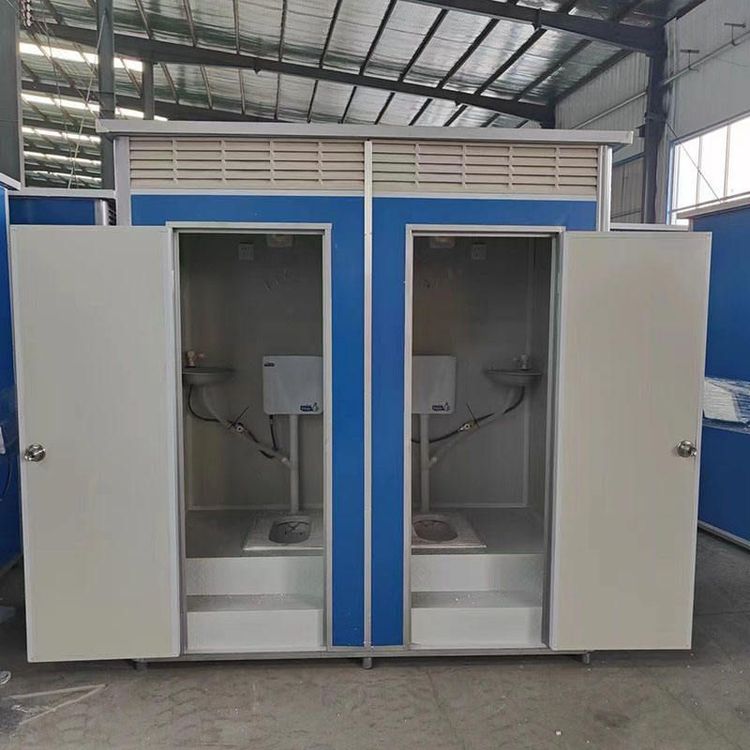
Portable toilets generally consist of a fecal wastewater storage tank (or disposal device), a floor, and sanitary ware. According to their movement methods, they can be divided into:
- Lifting/Handling Type: They rely on lifting equipment or manual handling and are suitable for temporary use in fixed locations.
- Powered/Trailer Type: They are equipped with a power system or can be towed by a vehicle, such as portable toilet vehicles. However, their size and weight far exceed the carrying capacity of private cars.
4. Precautions for Using Portable Toilets in Private Cars
If portable equipment is selected, the waste storage tank should be cleaned regularly to avoid the spread of odors. If modification is considered, it is necessary to consult the vehicle management department in advance to ensure compliance with the provisions of the Road Traffic Safety Law regarding vehicle structure modifications. In addition, during long-distance driving, service areas are a more convenient option for using the toilet, and portable toilets are only recommended as an emergency supplementary solution.