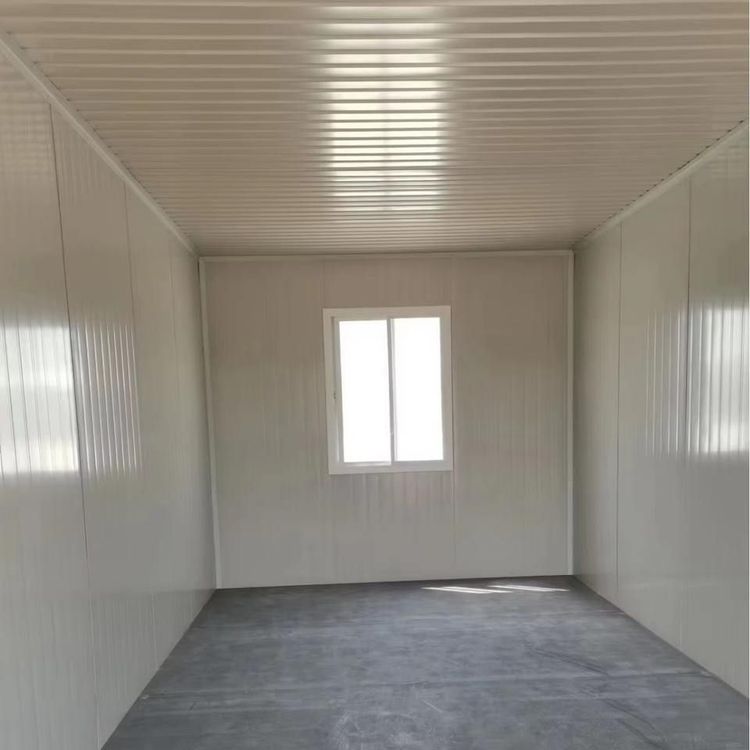
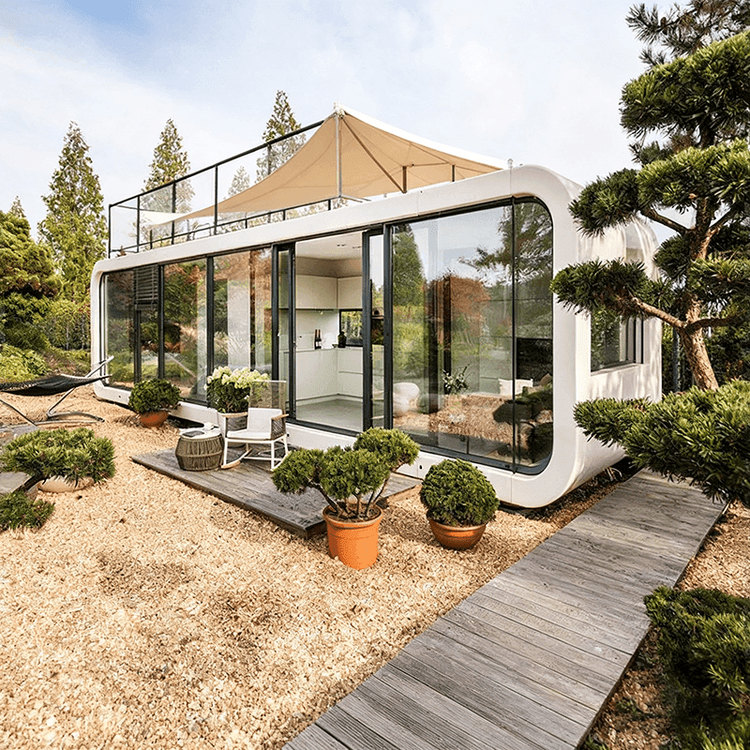
Prefabricated Panel Factory Building
Prefabricated panel houses are buildings constructed primarily with prefabricated panels, characterized by rapid construction speed and low cost, but they have drawbacks such as weak earthquake resistance and poor structural integrity. The current disposal approach follows the principle of 'adapting measures to local conditions and implementing differentiated strategies.'

Basic Information on Prefabricated Panel Houses
Prefabricated panels are cement components manufactured in factories. They are formed by nailing wooden models, arranging steel bars, and pouring cement, and are classified into solid and hollow types. This building form originated in the early 20th century. In China, residential buildings constructed before 1985 often adopted this structure, mainly built in the 1970s and 1980s, funded by state-owned enterprises and government institutions to address employee housing needs. Their greatest advantages are rapid construction speed and low cost, enabling them to quickly meet a large demand for housing in a short period.
Defects of Prefabricated Panel Houses
- Weak Earthquake Resistance: Structures composed of cement components spliced together struggle to withstand the impact of natural disasters such as earthquakes, with earthquake resistance levels typically lower than those of cast-in-place structures.
- Poor Structural Integrity: The connection between prefabricated panels and beams is a pinned joint, resulting in generally poor waterproofing, sound insulation, and thermal insulation performance. Components are prone to cracking, and spliced gaps can easily lead to water leakage.
- Short Service Life: Generally ranging from 30 to 50 years, far shorter than modern commercial housing, prefabricated panel houses are prone to structural aging after exceeding their service life and are classified as dangerous buildings requiring demolition or reinforcement.
- Difficult Structural Modification: Load-bearing walls cannot be removed, and the housing design lacks humanization, such as kitchens or bathrooms possibly having no windows.
Current Status and Disposal of Prefabricated Panel Houses
With the development of building technology, cast-in-place concrete and prefabricated buildings are gradually replacing traditional prefabricated panel houses. In 2023, relevant Chinese departments stipulated that the construction, renovation, and expansion of prefabricated panel houses and other buildings not meeting current standards are prohibited within urban construction land areas. Since 2022, China has implemented a policy of renovating old residential areas, focusing on repairing and renovating prefabricated panel houses and only demolishing those that meet the criteria for dangerous buildings. The current disposal of prefabricated panel houses follows the principle of 'adapting measures to local conditions and implementing differentiated strategies,' rather than comprehensive demolition. Priority for demolition is given to prefabricated panel houses with damaged main structures, inability to withstand natural disasters, impact on municipal planning, and those located in prime urban areas. Demolition compensation and resettlement follow the 'Regulations on the Expropriation of Houses on State-owned Land and Compensation,' with resettlement methods mainly including monetary compensation, physical resettlement, housing vouchers, and original-site reconstruction.