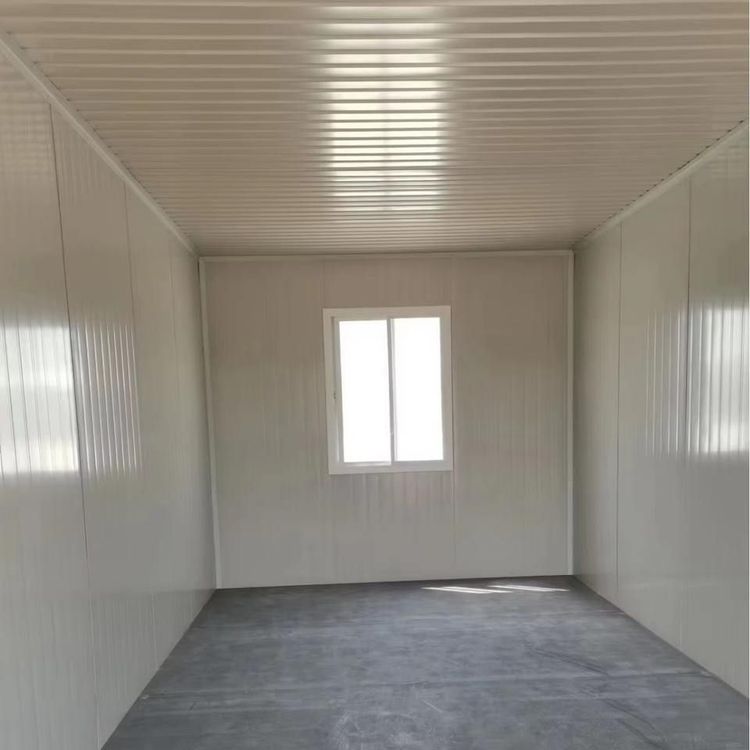
Development Related to Prefabricated Housing
Prefabricated housing (modular construction) has rapidly developed in recent years in terms of technology, market, and industry, becoming a significant trend in the global construction sector. However, going overseas still faces challenges such as standard compliance and localized support, and future competitiveness needs to be enhanced through technological upgrades, industrial collaboration, and standard setting.

Technological Development and Application
Prefabricated housing involves the industrial production of building components (such as beams, slabs, walls, and columns) and their on-site assembly, covering prefabricated concrete structures and steel structures. Modular construction, as a more integrated model, breaks down buildings into independent modules, which are manufactured in factories and then assembled on-site. The construction period is shortened by more than 60% compared to traditional methods, and it offers advantages such as controllable quality, energy efficiency, environmental protection, and ease of maintenance. For example, modular construction is widely used in global data center construction, driving its technological iteration.
Historical and Market Development
China's prefabricated concrete technology began in the 1950s, initially used for factory buildings and residential housing, and saw a resurgence in the 21st century due to environmental protection needs. Overseas markets have become a growth engine: In the first four months of 2026, Chinese enterprises exported modular buildings worth 1.68 billion yuan through Shenzhen ports, a year-on-year increase of 19.6%, covering more than 150 countries and regions. Overseas customers have high repurchase rates, and application scenarios have expanded from hotels and senior living apartments to data centers and other fields. Market research institutions predict that the global modular construction market size will exceed 142.8 billion US dollars by 2030.
Industrial Advantages and Challenges
China leverages its full industrial chain advantages (design, production, logistics, and installation) to transform prefabricated housing into standardized industrial products for export. However, going overseas faces multiple challenges:
- Standard Compliance: Complex standards such as the EU's CE certification, the US's ICC-ES evaluation, and various countries' seismic and fire protection standards make it difficult for enterprises to obtain comprehensive certifications for entire product lines, although single-module exports are relatively easier.
- Localized Support: Weak overseas installation, operation, maintenance, and localized teams.
- Brand Premium: There is a gap compared to established European and American manufacturers.
Future Development Directions
- Technological Upgrades: Incorporate green and low-carbon concepts, improve seismic resistance, thermal insulation, and sound insulation performance, and compete for market influence through technical indicators.
- Industrial Optimization: Promote collaboration in design, production, construction, and operation and maintenance, standardize series products, and reduce unit costs.
- Standard Setting: Participate in the formulation of international standards to enhance Chinese enterprises' ability to set rules in the global market.