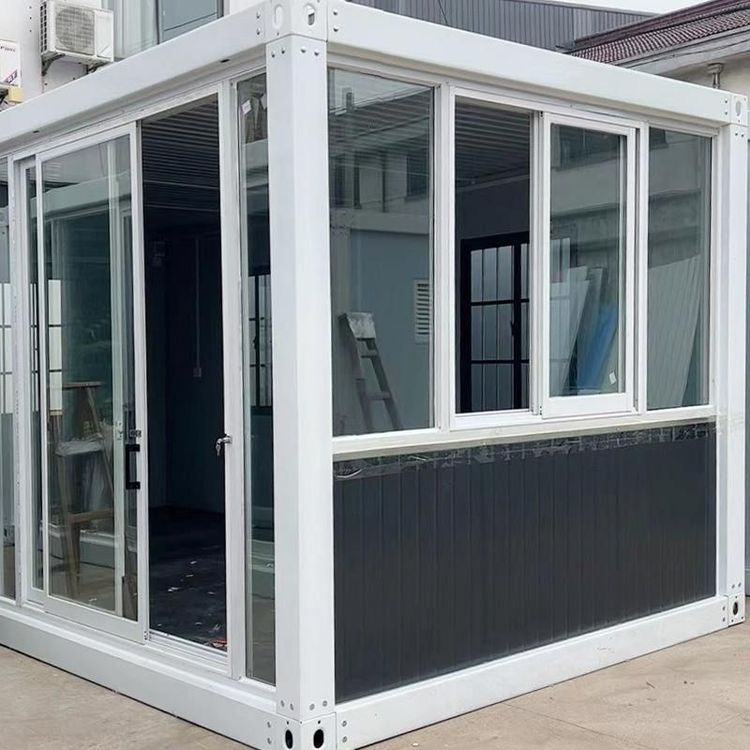
Prefabricated Housing
Prefabricated housing is a form of construction that uses industrially produced building components assembled on-site, also known as prefabricated or modular construction. Its core logic involves breaking down a building into independent modules, manufacturing them in a factory, and then transporting them to the construction site for assembly. This approach encompasses various types, including panel-based, box-based, and frame-based prefabrication, with technical systems including prefabricated concrete structures, steel structures, and wooden structures (as a supplementary form).

Technical Characteristics and Significant Advantages
- Efficient Construction: Factories employ parallel operations, automated production lines, and intelligent management, reducing construction periods by over 60% compared to traditional buildings. For example, a public housing project in Shenzhen, assembled from 6,028 concrete modules, saw its completion and delivery time reduced from 2.5-3 years to just 1 year, with on-site labor reduced by approximately 50%.
- Quality Control: Module production controls errors with millimeter-level precision, and each component comes with an 'ID card' (including project name, model, production date, etc.), ensuring traceable quality and reducing quality fluctuations caused by human factors.
- Environmental Protection and Energy Efficiency: Factory prefabrication reduces on-site noise, dust, and construction waste, with industrial bases in Fujian and other regions achieving over 70% reduction in construction waste, aligning with green building trends.
- Flexible Adaptation: Modular design supports rapid maintenance and functional adjustments, with applications expanding from residential housing to public housing, high-rise buildings, and other fields, meeting diverse needs.
Technical Routes and Market Development
The technical routes primarily focus on steel structures (lightweight and suitable for overseas transportation, commonly used in high-rise buildings) and concrete structures (closer to traditional living experiences, with high market acceptance in China). China's prefabricated concrete technology began in the 1950s, initially applied in factory and residential construction, and has seen a resurgence in the 21st century due to production efficiency and environmental advantages. In the first four months of 2026, Guangzhou Customs reported exports of mobile homes worth 1.4 billion yuan, a 38.1% year-on-year increase; Shenzhen Port exports reached 1.68 billion yuan, a 19.6% increase, demonstrating China's competitiveness in the global prefabricated housing market. It is predicted that the global modular construction market will exceed $142.8 billion by 2030.
Existing Challenges Require Attention
Traditional prefabricated panel houses (such as those built before 1985) suffer from weak earthquake resistance, poor sound and thermal insulation, and have a lifespan of about 30-50 years. Since 2022, China has implemented renovation policies focusing on repairs and upgrades, with demolition limited to buildings meeting hazardous standards. Technological innovation is needed to enhance the performance of existing prefabricated housing.