
Back to blog
Article
How About Prefabricated Houses
Admin September 19, 2026
Prefabricated houses offer advantages such as fast construction speed, lower costs, controllable quality, and energy efficiency and environmental protection, but they also have drawbacks including quality risks, sound insulation and waterproofing issues, cost fluctuations, and design limitations.
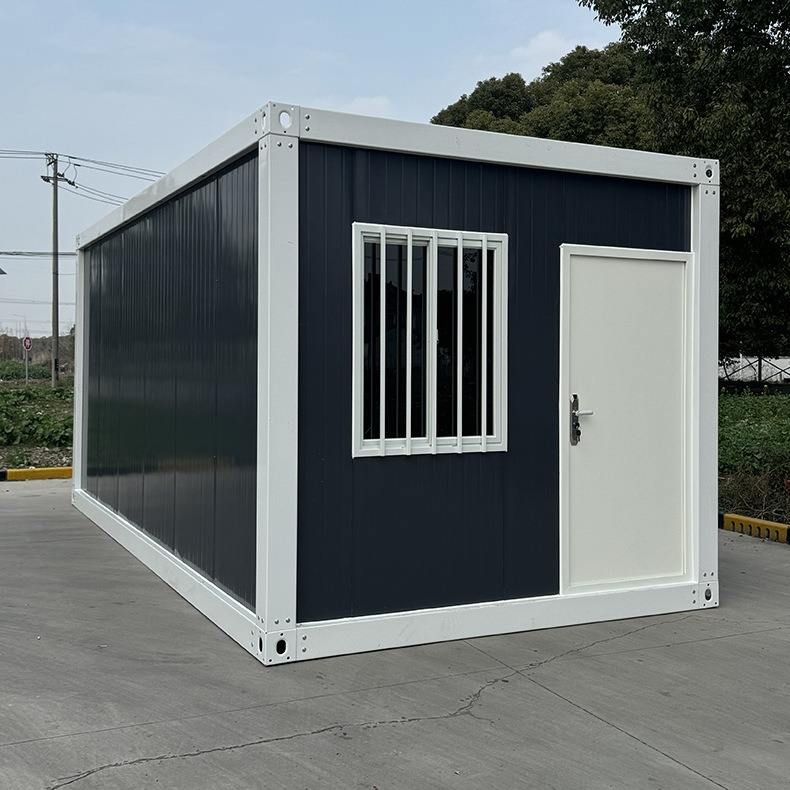
Advantages:
- Fast Construction Speed: Modules are prefabricated in factories in advance, and on-site assembly is highly efficient, reducing the construction period by 50%-70%. For example, in rural areas of Henan, a prefabricated house can have its main structure assembled in as little as 2 hours. In Shenzhen, a public housing project's construction period was reduced from 2.5-3 years to 1 year, with on-site labor reduced by about 50%.
- Lower Costs: The main structure is about 30% cheaper than a brick house, saving ordinary families 20,000-50,000 yuan. Mass production reduces material costs by 20%-40% and labor costs by about 60%. Some projects even offer 'home delivery' services.
- Controllable Quality: Factory prefabrication errors do not exceed 2 millimeters, with strong earthquake resistance capable of withstanding earthquakes of magnitude 7-8. Overall settlement is less than that of ordinary houses. After adopting reinforced concrete integral pouring technology, concrete strength increases, and quality stability is superior to traditional construction.
- Energy Efficiency and Environmental Protection: Construction waste recycling rates reach 80%-90%, with carbon emissions reduced by 50%. Some projects have received international environmental certifications. Materials can be recycled, reducing resource waste.
- Short Construction Period Benefits Maintenance: Later maintenance costs are 40% lower than those of traditional houses. The original design life was 30-40 years, but new technologies extend it to 70 years.
- Expanded Application Scenarios: Suitable for high-rise buildings (such as a nearly 100-meter residential building in Shenzhen), reducing on-site noise, dust, and traffic congestion, and improving the construction environment's friendliness.
Disadvantages:
- Quality Risks: Non-standard construction may lead to foundation settlement or wall cracks within 5 years, with higher risks in low-temperature environments. After 20 years, annual maintenance costs increase by 1,500-3,000 yuan, with some cases accounting for 25% of the construction cost.
- Sound Insulation and Waterproofing Issues: Prefabricated panels have 20 decibels poorer sound insulation, and joint leakage rates are nearly double those of traditional buildings, requiring regular leak-proofing treatments.
- Cost Fluctuations: After cement price increases, the cost advantage of prefabricated houses narrows (only 5% cheaper than traditional buildings), and freight costs in remote areas may account for 5% of the total cost.
- Design Limitations: Currently only suitable for buildings up to four stories high, with prominent facade color difference issues. After 5 years, 15%-20% color differences may appear, requiring frequent maintenance.



