
Application Venues of Prefabricated Houses in Disaster Relief
The main application venues of prefabricated houses in disaster relief include emergency disaster relief sites and emergency shelters.
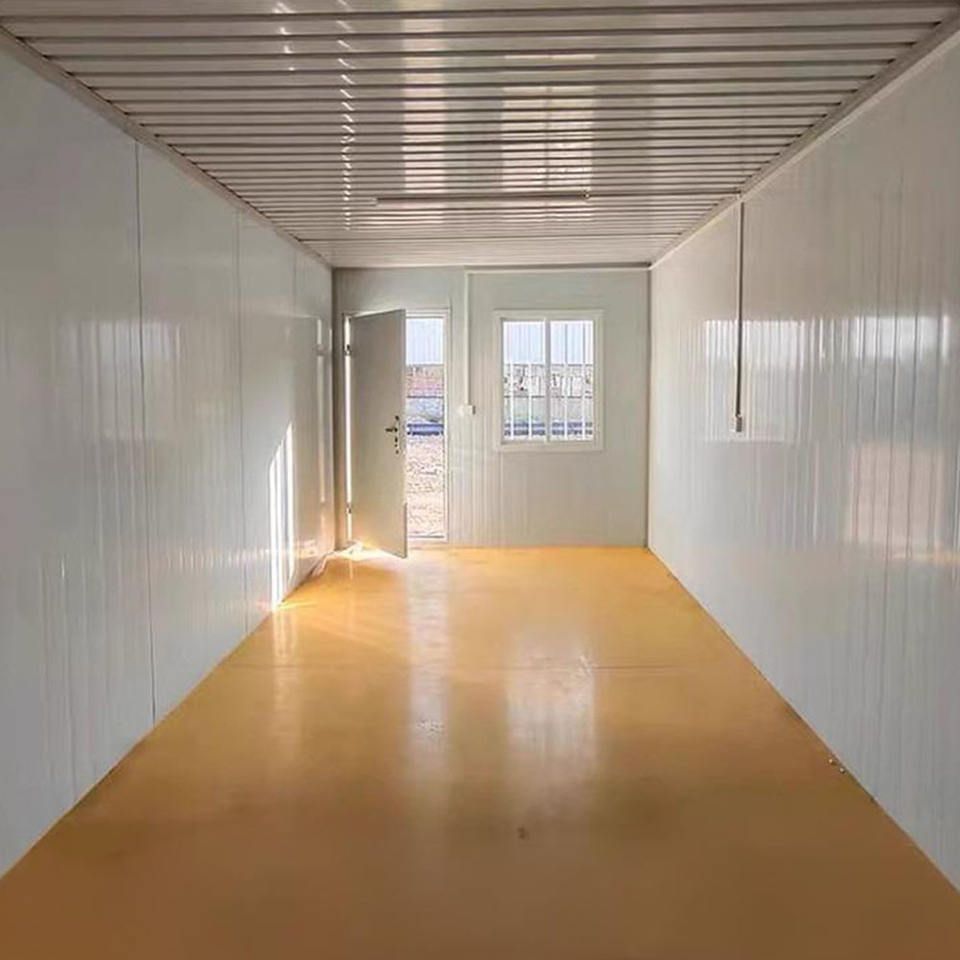
In emergency disaster relief scenarios, prefabricated houses are important temporary accommodation tools for dealing with sudden disasters such as earthquakes, floods, and fires. Their core advantage lies in their rapid construction capability, enabling them to be assembled in a short time after a disaster occurs, providing emergency shelter space for affected people. For example, after an earthquake causes buildings to collapse, prefabricated houses can be deployed within 24-72 hours, addressing the housing shortage in the early post-disaster period. Meanwhile, their mobility breaks through site limitations, allowing them to quickly reach disaster-stricken areas with obstructed transportation via trucks, helicopters, and other means of transport, and even function in complex terrains such as mudslides and landslides. In addition, prefabricated houses adopt a modular design, with a structural strength higher than that of traditional tents, enabling them to withstand harsh weather conditions such as strong winds and heavy rain. Some models also have fire-resistant and heat-insulating functions, providing a relatively safe living environment for affected people. After the disaster, the houses can be disassembled and transferred to other disaster areas for reuse, significantly improving resource utilization.
In the construction of emergency shelters, prefabricated houses often serve as a supplement to temporary accommodation facilities. According to planning, public spaces such as parks, green spaces, squares, schools, and sports venues can be designated as emergency shelters, with tent areas set up for erecting tents or simple houses. Prefabricated houses can replace traditional tents in such areas, providing more stable living conditions. For example, the Tianjin Changhong Ecological Park emergency shelter has six tent areas where prefabricated houses can be quickly deployed to accommodate more disaster victims or provide priority accommodation for special groups (such as the elderly and children). Their modular structure also supports functional expansion, such as adding medical, sanitation, storage, and other auxiliary modules to form temporary communities and meet the diverse needs of disaster victims.
In conclusion, through rapid response, flexible deployment, and functional adaptation, prefabricated houses have become an indispensable temporary accommodation solution in disaster relief and rescue, suitable for both the emergency rescue phase after a disaster and as a supplementary facility for long-term emergency shelters.



