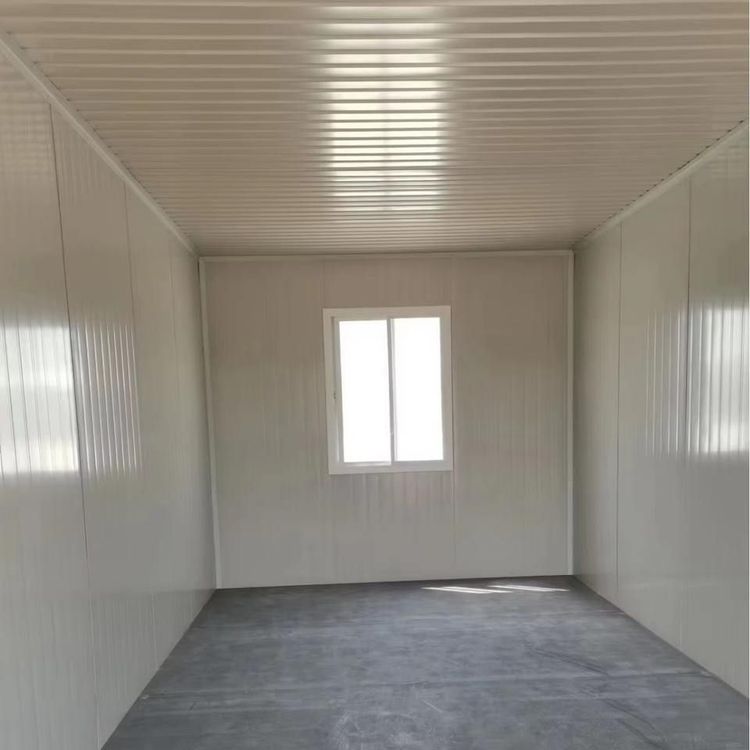
Sturdiness of Prefabricated Houses
The sturdiness of prefabricated houses varies significantly depending on their type and construction method. Some modern prefabricated houses have structural strength comparable to traditional buildings, but traditional prefabricated panel houses have stability drawbacks.
1. Fully Reinforced Concrete Prefabricated Houses: High Structural Strength and Durability
Some prefabricated houses adopt a fully reinforced concrete structure, with their main frames manufactured through precise factory calculations and mold forming. The steel reinforcement and concrete form a high-strength composite structure. For example, the prefabricated houses popular in rural areas of Henan, with a main structure of reinforced concrete, are described as "solid and reliable" with a warranty period of up to 70 years. The steel reinforcement skeleton provides tensile strength, while the concrete bears compressive forces. Their combined action effectively resists external forces such as wind and snow loads, with structural stability close to that of traditional cast-in-place buildings. Additionally, factory production reduces on-site construction errors, further enhancing overall structural integrity.
2. Traditional Prefabricated Panel Houses: Weak Earthquake Resistance and Insufficient Structural Stability
Early prefabricated houses, such as prefabricated panel houses, were mostly assembled from prefabricated floor slabs, walls, and other components, presenting issues with weak connection joints. These houses have relatively weak earthquake resistance and, under lateral forces such as earthquakes, the prefabricated components are prone to displacement or detachment due to insecure connections. At the same time, their overall structural integrity relies on the assembly process. If construction quality control is inadequate, problems such as cracks and deformations may occur after long-term use, with a typical service life of 30-50 years. Therefore, the application of traditional prefabricated panel houses is limited in areas with high earthquake resistance requirements.
3. Modular Prefabricated Houses: Significantly Improved Earthquake Resistance and Overall Performance
Steel structure and concrete prefabricated houses exported from China have optimized their structural performance through modular design. Modular prefabricated houses divide the building into independent functional modules, with each module completing structural and decoration work in the factory and being connected on-site through high-strength bolts or welding. This design not only shortens the construction period but also improves structural accuracy through standardized production. For example, steel structure modules use cold-formed thin-walled steel or H-shaped steel as the framework, combined with lightweight concrete or insulation boards, ensuring structural strength while reducing self-weight, with earthquake resistance superior to that of traditional prefabricated panel houses.
Summary: The sturdiness of prefabricated houses needs to be evaluated based on their specific type. Fully reinforced concrete prefabricated houses and modular prefabricated houses, due to structural optimization and industrial production, possess high strength and durability; while traditional prefabricated panel houses have relatively weak stability due to connection joint issues. When choosing a prefabricated house, priority should be given to examining the structural type, connection process, and earthquake resistance design to ensure it meets usage requirements.