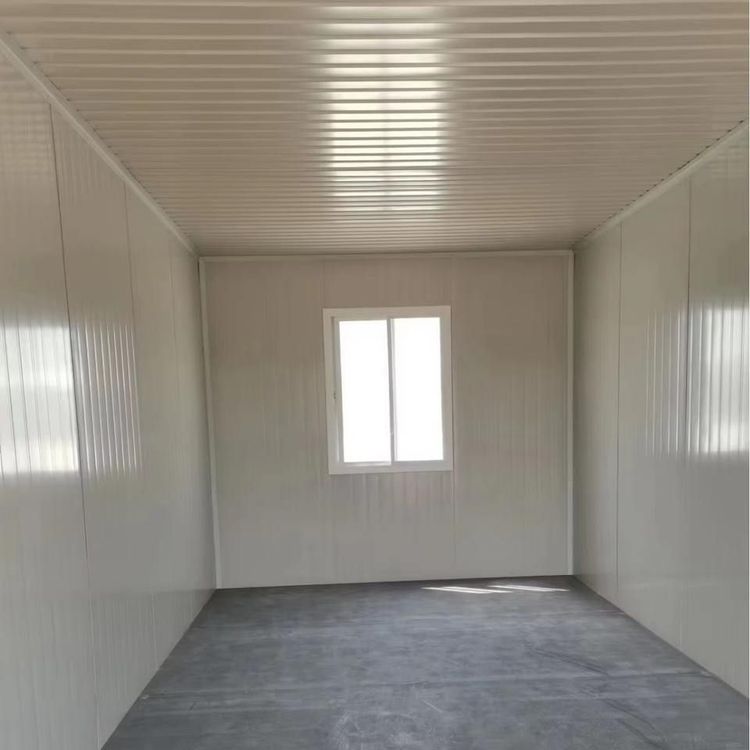
Prefabricated House Finished Product Transportation Plan
The transportation plan for prefabricated house finished products needs to be comprehensively considered from aspects such as vehicle selection, route planning, component loading and securing, transportation safety, unloading arrangements, and pre-shipment inspection and acceptance.

Vehicle Selection: Choose appropriate transportation vehicles based on the size, weight, and shape of the prefabricated houses. For large and heavy houses, use flatbed trailers with strong load-bearing capacity; for longer houses, vehicles with sufficient length are required to ensure stable placement; for small and lightweight components, such as doors, windows, and small decorative parts, small trucks or vans can be used for transportation.
Route Planning: Conduct a detailed survey of the transportation route in advance to understand conditions such as road width, slope, and bridge load-bearing capacity. Avoid routes with poor road conditions, heavy traffic, and height or weight restrictions, and select routes that are appropriately distant, have good road conditions, and low traffic volume. At the same time, consider the transportation time and try to choose periods with low traffic volume to reduce obstacles during transportation.
Component Loading and Securing: Before loading, arrange the components reasonably and provide isolation between them to prevent damage from collisions and friction. For fragile glass doors and windows, use specialized packaging materials for wrapping and place buffer materials, such as foam boards and rubber pads, between components. After loading, securely tie the houses to the transportation vehicles using ropes, steel straps, etc., to prevent shaking, collisions, and displacement. Take protective measures for vulnerable parts, such as wrapping them with foam or rubber buffer materials.
Transportation Safety: Conduct a comprehensive inspection of the vehicle before transportation to ensure that equipment such as the braking system, tires, and lights are functioning properly. During transportation, drivers strictly abide by traffic rules, control speed, and avoid sudden braking and sharp turns to prevent damage to the houses due to inertia. Arrange for dedicated personnel to track and monitor the transportation process to stay informed of the situation promptly. This can be achieved by installing GPS positioning systems to keep track of the vehicle's location and status in real-time. Develop emergency plans to respond to unexpected situations, such as traffic accidents and severe weather conditions, and take appropriate protective measures promptly when encountering severe weather.
Unloading Arrangements: Upon arrival at the destination, unload in the correct order and method to avoid damaging the components during the unloading process.
Pre-shipment Inspection and Acceptance: Before the components leave the factory, conduct inspection and acceptance, checking the model and number of the components, inspecting the appearance for cracks, chipped edges, and corners, ensuring that embedded parts and lifting rings are secure, verifying that the positions of reserved holes are correct, checking whether the concrete strength has reached 100% of the designed strength. After checking all the content, the inspector signs, and the manufacturer attaches a factory certificate before releasing the shipment.