Prefabricated House Custom Design
Prefabricated house custom design offers a high degree of flexibility, meeting diverse needs and ensuring high construction accuracy.

High Customization Flexibility
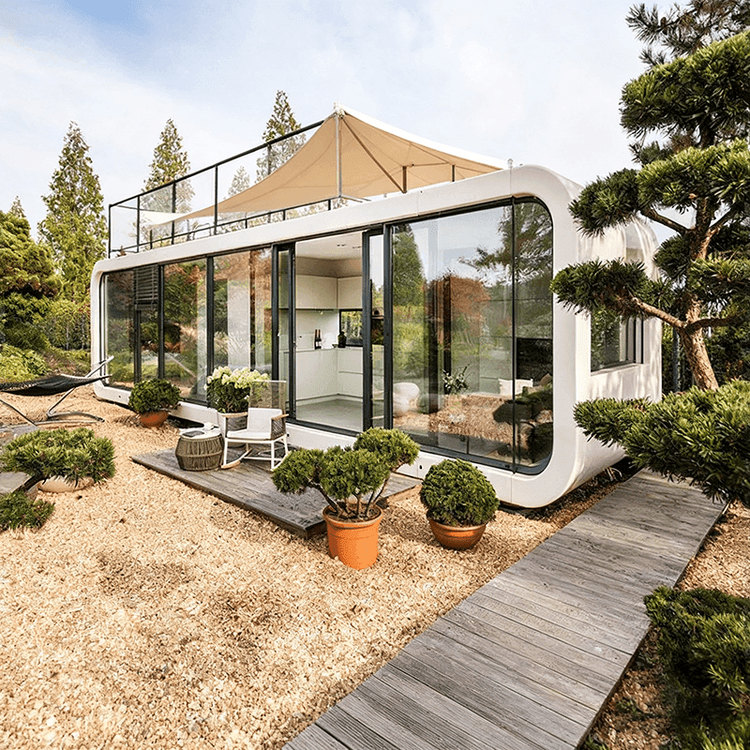
The custom design of prefabricated houses demonstrates great flexibility. Modular houses are a typical example, allowing for personalized customization based on specific needs and preferences. Users can choose from a variety of floor plans, whether it's a compact small unit or a spacious large layout, to find a suitable option. At the same time, there are also abundant choices for finishes and fixtures, ranging from different wall materials and floor materials to various types of lighting fixtures and bathroom equipment, all of which can be matched according to personal preferences to create a unique living or working space. For example, the E - MIC prefabricated concrete box house system has innovated in its design concept, breaking the fixed pattern of traditional prefabricated houses where "one module equals one room". It adopts a method of spacing out module units, and this innovative design makes the spatial layout more flexible and changeable. This flexibility enables it to adapt to various construction scenarios, whether it's the renovation of old buildings in urban renewal projects or the construction of new residential and office spaces, it can integrate well and meet the functional requirements of different scenarios.
Guaranteed Construction Accuracy
During the design process of prefabricated houses, the control over errors and accuracy reaches an extremely high level. They are designed and constructed in millimeters, and this fine control ensures high-quality construction. In the factory prefabrication production process, the dimensions and shapes of each module can be made strictly in accordance with the design requirements, reducing errors that may occur during on-site construction. High-precision construction not only makes the appearance of the house more aesthetically pleasing and the structure more stable but also improves the house's performance and durability. For example, precise dimension control can ensure that doors and windows are installed more tightly, improving the house's airtightness and thermal insulation, and providing users with a more comfortable living environment.