
How to Make a Prefabricated Food House Box (or Paper House-shaped Box)
The term 'prefabricated food house box' may be a conceptual confusion. It is presumed that users want to know how to make a 'prefabricated house box' or a 'paper house-shaped box'. The following provides instructions for both cases:
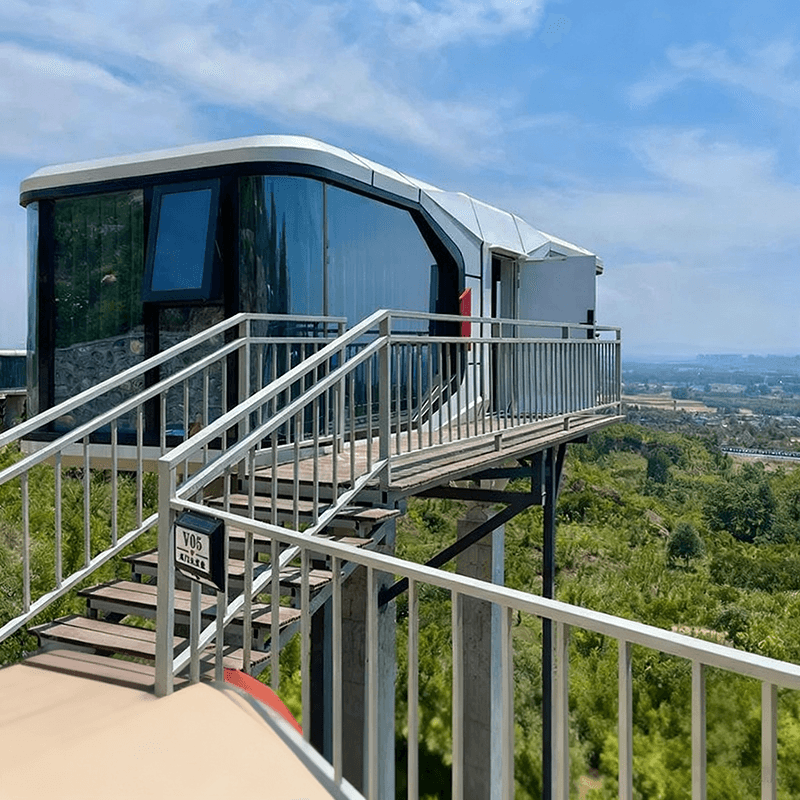
Prefabricated House Box (Industrial Production of Building Components and On-site Assembly)
Prefabricated houses, also known as prefabricated modular buildings, refer to a form of construction where building components are produced industrially and assembled on-site. Among them, the box-type assembly is an important type. It combines prefabricated functional units, which can increase construction speed by 50%-70%, but it has high requirements for transportation and lifting equipment. However, the production of such prefabricated houses involves a professional industrial process, including architectural design, component production, transportation, and on-site assembly, among other links. It requires the support of a professional team and large-scale equipment, and individuals cannot complete it directly. The production process is roughly as follows: First, conduct architectural design to determine the functional layout and structural form of the house; then, produce building components such as walls, floors, and roofs in the factory according to the design requirements; next, transport the components to the construction site; finally, assemble the components using lifting equipment to form a complete house structure.
Paper House-shaped Box (Handmade)
Basic Version: Double-paper Folding Method
- Material Preparation: Choose two square pieces of paper of different sizes, such as a 15-centimeter two-color paper and a 14.5-centimeter white paper. The white paper is used for the main body of the box, and the other paper is used for the lid.
- Folding the Main Body of the Box: Divide the white square paper into four equal parts vertically and horizontally, and then divide it into eight equal parts along one direction to form uniform grid creases; fold the four sides towards the center along the creases to form 45-degree angle creases. Pay attention to the difference in crease lengths between one grid and two grids to ensure the edges are aligned; find the central rectangular area, pinch the four vertices to make the shape three-dimensional, overlap the two sides, and lock the edges along the creases to form a stable box structure.
- Folding the Lid of the Box: Divide the other piece of paper into four equal parts in the same way, and then fold the vertices to the middle crease with the midpoint as the center. Press firmly and then open it to form symmetrical crease lines; visually estimate and mark four symmetrical points, divide them into eight equal parts along the marked points, and then fold the diagonals to ensure the rhombus outline is symmetrical; pinch out the rhombus outline, fold it along the diagonals, and flatten the creases to form a lid that can cover the box.
- Combining and Shaping: Align the folded main body with the lid. The lid should be slightly larger than the main body to achieve the opening and closing function, ultimately forming a small house-shaped storage box.
Advanced Version: Cardboard Box Transformation Method
- Structural Cutting: Use cardboard to cut out areas such as bedrooms and kitchens, and form a three-dimensional space by folding or pasting.
- Decoration Addition: Paste cardboard to make furniture such as cabinets and refrigerators, or use colored paper and stickers to decorate the walls to enhance the sense of realism.
- Layer Design: Achieve a duplex effect by stacking layers of cardboard. For example, use short cardboard columns to support the upper floor to form an upper and lower layer.



