Prefabricated Floating House on Water
Prefabricated floating houses on water are modular, custom-built residential structures that can be likened to floating villas, featuring unique structures, characteristics, and design philosophies. Their rise is closely linked to global climate change and the scarcity of land resources.
Structure and Materials: The main body employs a prefabricated modular structure with a variety of materials, including wood, steel, glass, concrete, and aluminum frames. The foundation structure consists of concrete floating boxes and expanded polystyrene (EPS) foam, among others, forming a buoyancy base to ensure the stability of the house on water. Additionally, it is secured using piles, anchor chains, or box foundations to prevent the house from drifting with the current.
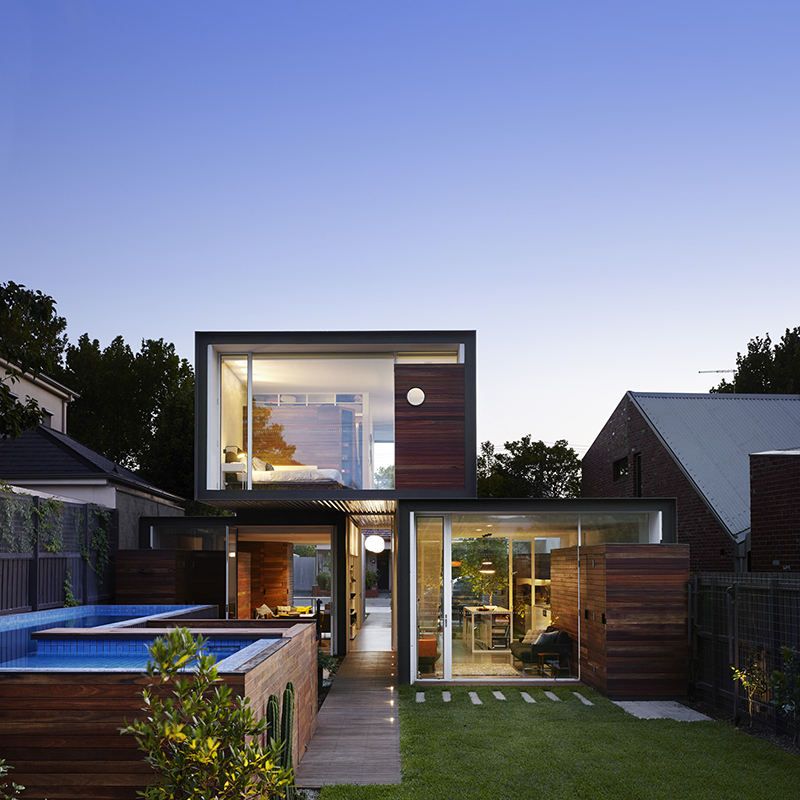
Architectural Features: The base area typically measures 65 square meters but can be expanded to 167 square meters through splicing or vertical stacking to meet different living needs. The houses are equipped with a rich array of features, such as deck pools and underwater bedrooms. The underwater bedroom is a transparent cylinder with a diameter of 4 meters, situated below the water level, allowing occupants to observe marine life and adding to the living experience. Some villas also feature yacht-like propulsion systems, enabling a certain degree of mobility. Designs from different countries and regions showcase unique characteristics, such as the triangular concept design by a company under the UK Maritime Technology Group; the three-story floating villa launched by the Netherlands in 2007, complete with a rooftop terrace and waterproof shell; and the three-story villa developed by Dubai's Kleidisent Group, with a total area exceeding 300 square meters and an underwater level leading directly to an artificial coral park.
Design Philosophy: Partly driven by the need to address climate change, such as rising sea levels, and the scarcity of land resources, these houses also aim to provide a living experience in harmony with nature, emphasizing sustainability. Many floating villas utilize renewable energy sources like solar, wind, and tidal power for electricity and are equipped with water purification and waste treatment systems, enabling energy-efficient, environmentally friendly off-grid or low-carbon operation.
Background and Origins: Their emergence is closely tied to global climate change, rising sea levels, and the scarcity of land resources. The Netherlands, with its unique geographical environment, has been one of the early adopters in systematically exploring and promoting floating residences. In 2006, the Dutch government launched the 'Room for the River' program, providing a policy framework for the development of floating architecture.