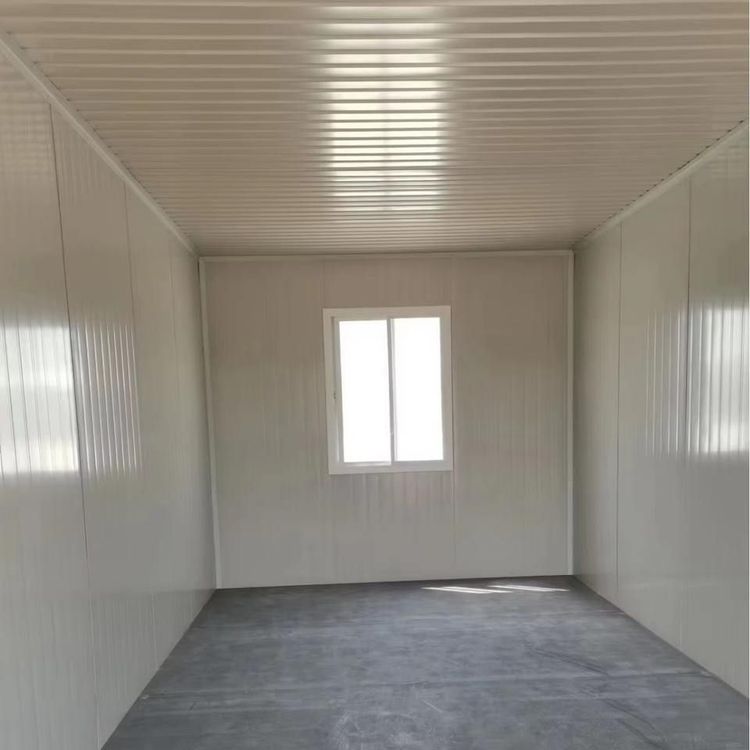
Prefabricated Finished Housing
Prefabricated finished housing is a form of construction that utilizes industrialized production of building components, which are then assembled on-site. It offers advantages such as short construction periods, controllable quality, energy efficiency, environmental protection, and ease of maintenance, but it requires a high level of industrial infrastructure. Currently, Chinese-made prefabricated houses are selling well overseas, indicating a promising market outlook.

Prefabricated finished housing, also known as prefabricated modular construction or modular buildings, involves breaking down a building into independent modules that are manufactured in a factory and then transported to the construction site for assembly. It encompasses various types such as panel-based, box-based, and frame-based prefabrication, with technologies including prefabricated concrete structures and steel structures. The components include prefabricated products such as beams, slabs, walls, and columns, with common forms being steel, concrete, and wooden structures.
Compared to traditional construction methods, prefabricated finished housing offers significant advantages:
- Short construction period: Factories employ parallel operations, combined with automated vertical warehouses and intelligent production lines, enabling construction periods to be shortened by more than 60%. For example, a public housing project in Shenzhen, Guangdong, saw its completion and delivery time reduced from 2.5 to 3 years to just 1 year.
- Controllable quality: The positioning of each steel bar is precise, with errors and precision controlled in millimeters. The design is meticulous, akin to producing industrial products.
- Energy efficiency and environmental protection: Most construction processes are completed in factories, with on-site casting for connections, significantly reducing noise, dust, construction waste, and traffic congestion at construction sites. Regions like Fujian Province have established industrial bases through policy support, achieving a reduction in construction waste of over 70%.
- Ease of maintenance: Maintenance is flexible, and application scenarios continue to expand.
However, this model places extremely high demands on industrial infrastructure, requiring support from technological systems, production systems, and industrial clusters. China's prefabricated concrete technology originated in the 1950s, undergoing development, stagnation, and recovery. Currently, Chinese-made prefabricated houses are selling well overseas. According to customs data, in the first four months of 2026, the Guangzhou Customs District exported movable houses worth 1.4 billion yuan, a year-on-year increase of 38.1%; the Shenzhen Port exported movable houses worth 1.68 billion yuan, a year-on-year increase of 19.6%. According to market research firm predictions, the global modular construction market is expected to exceed $142.8 billion by 2030.